
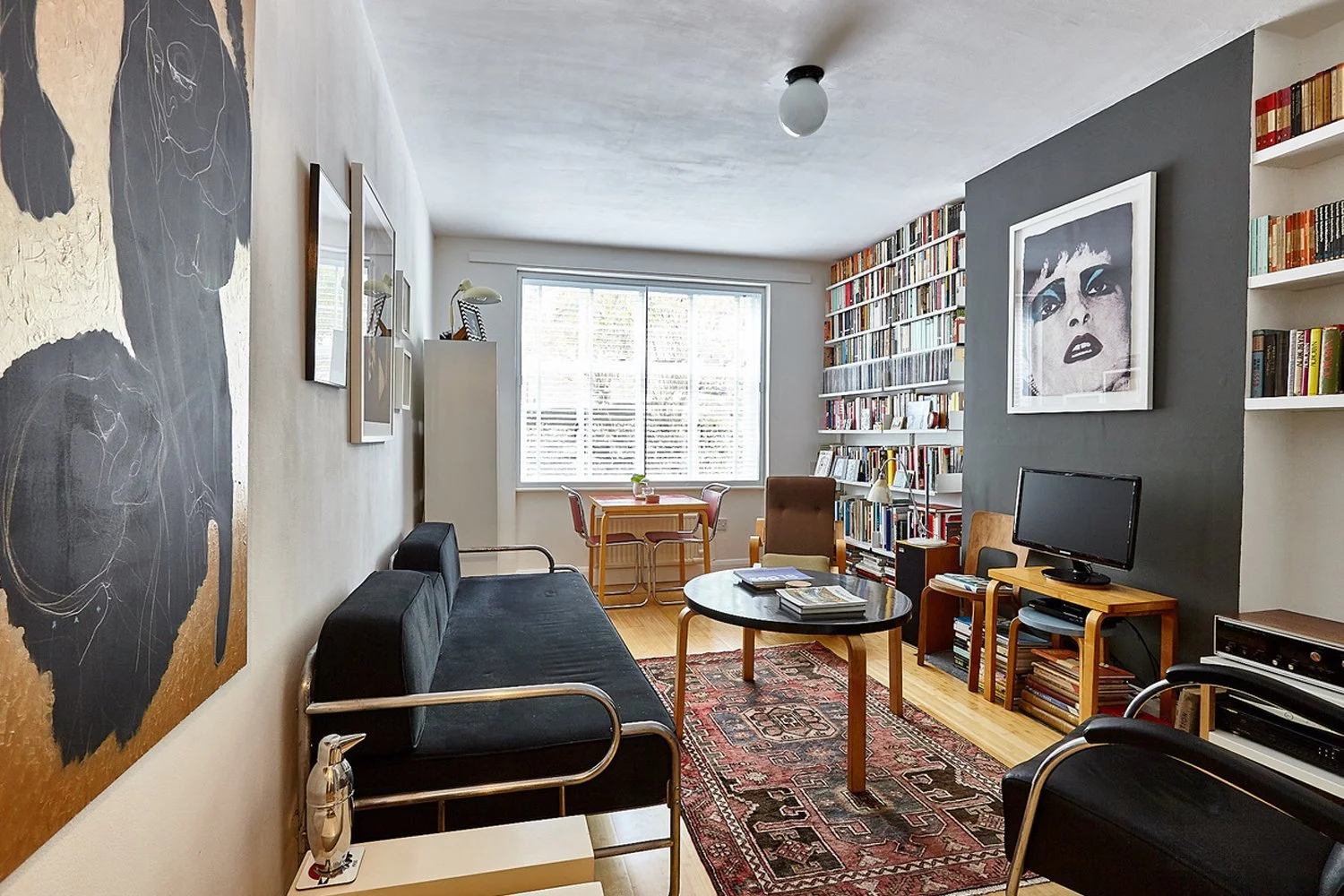
1930s Dressing Table by UP Brno, attributed to Jindrich Halabala
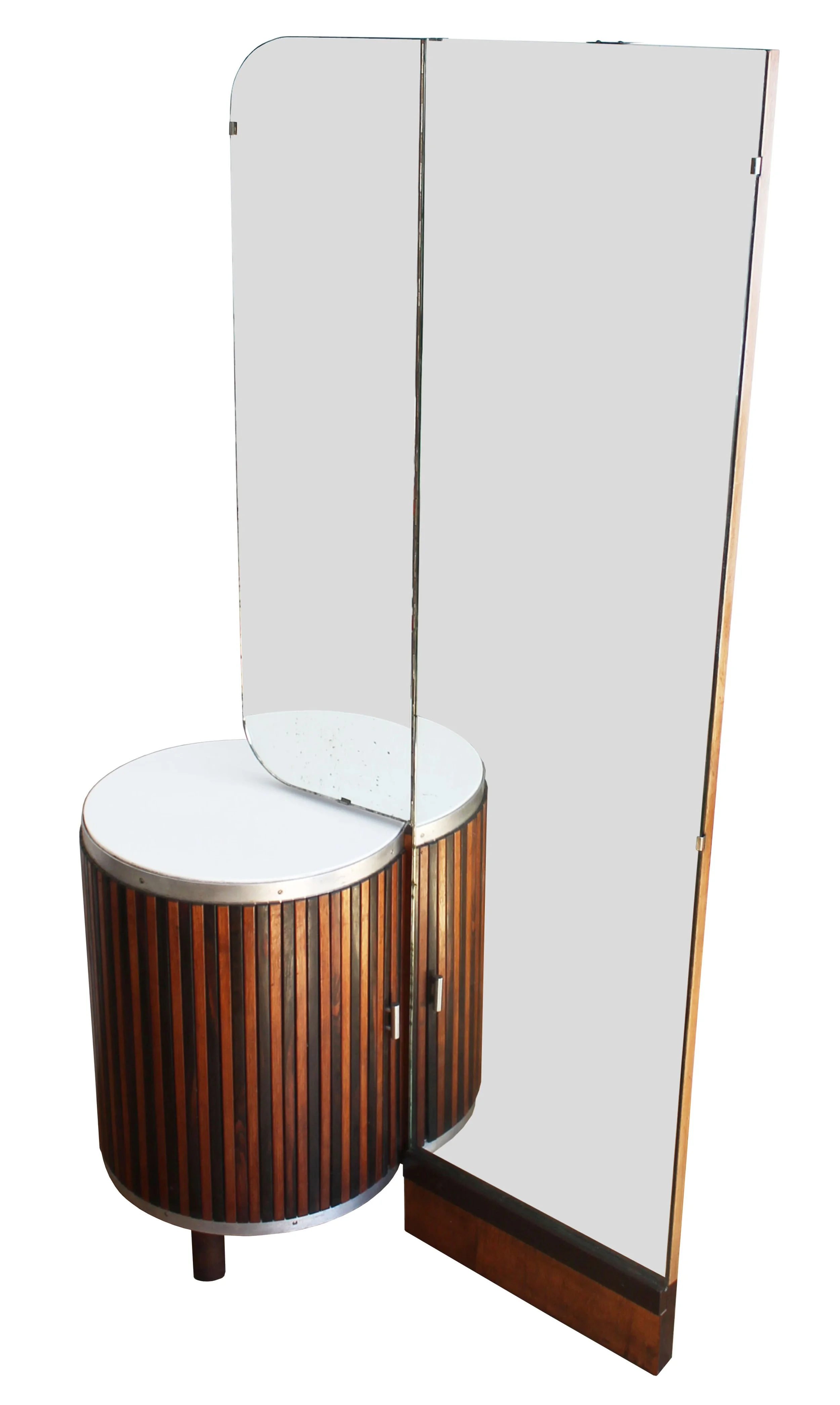
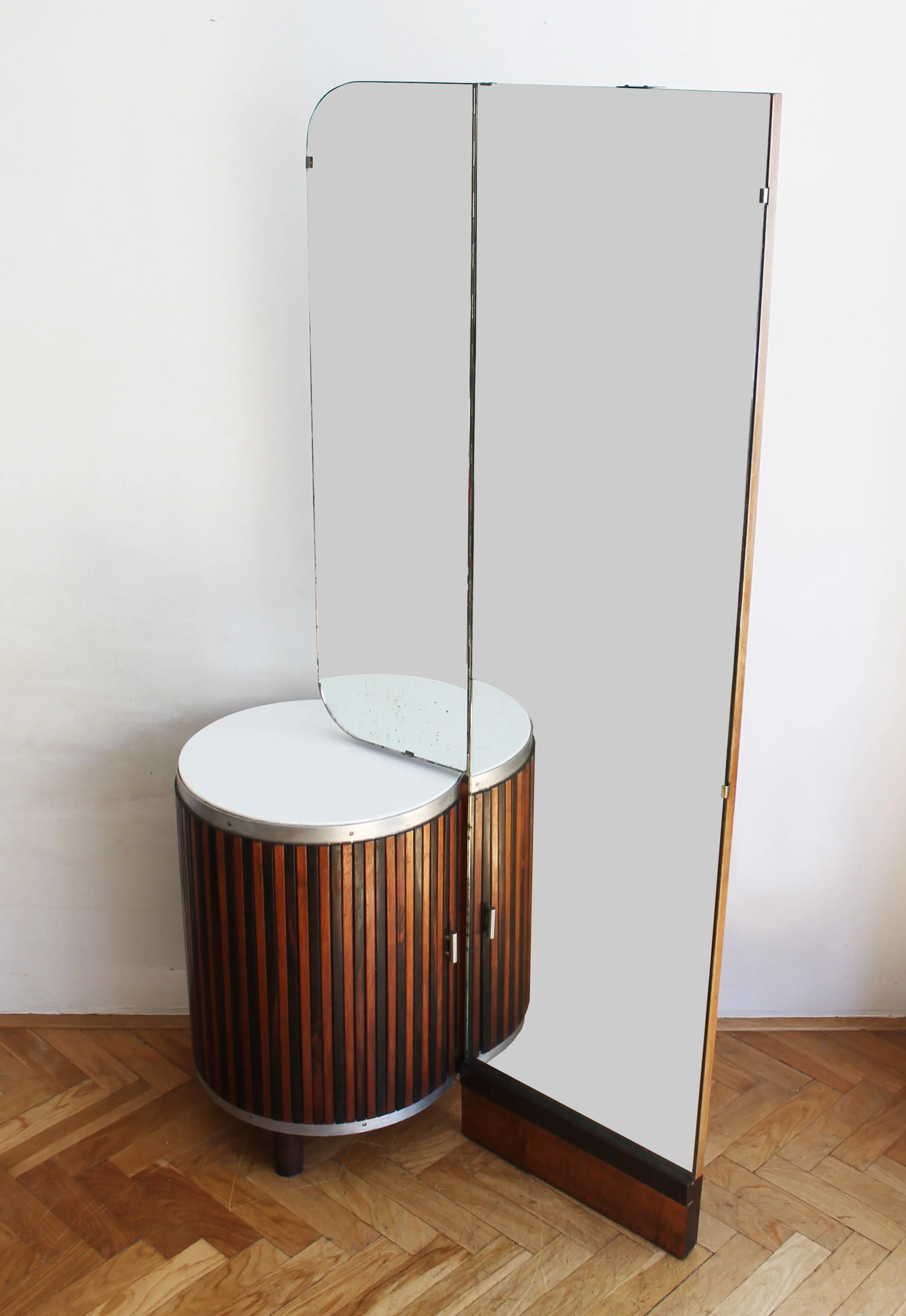
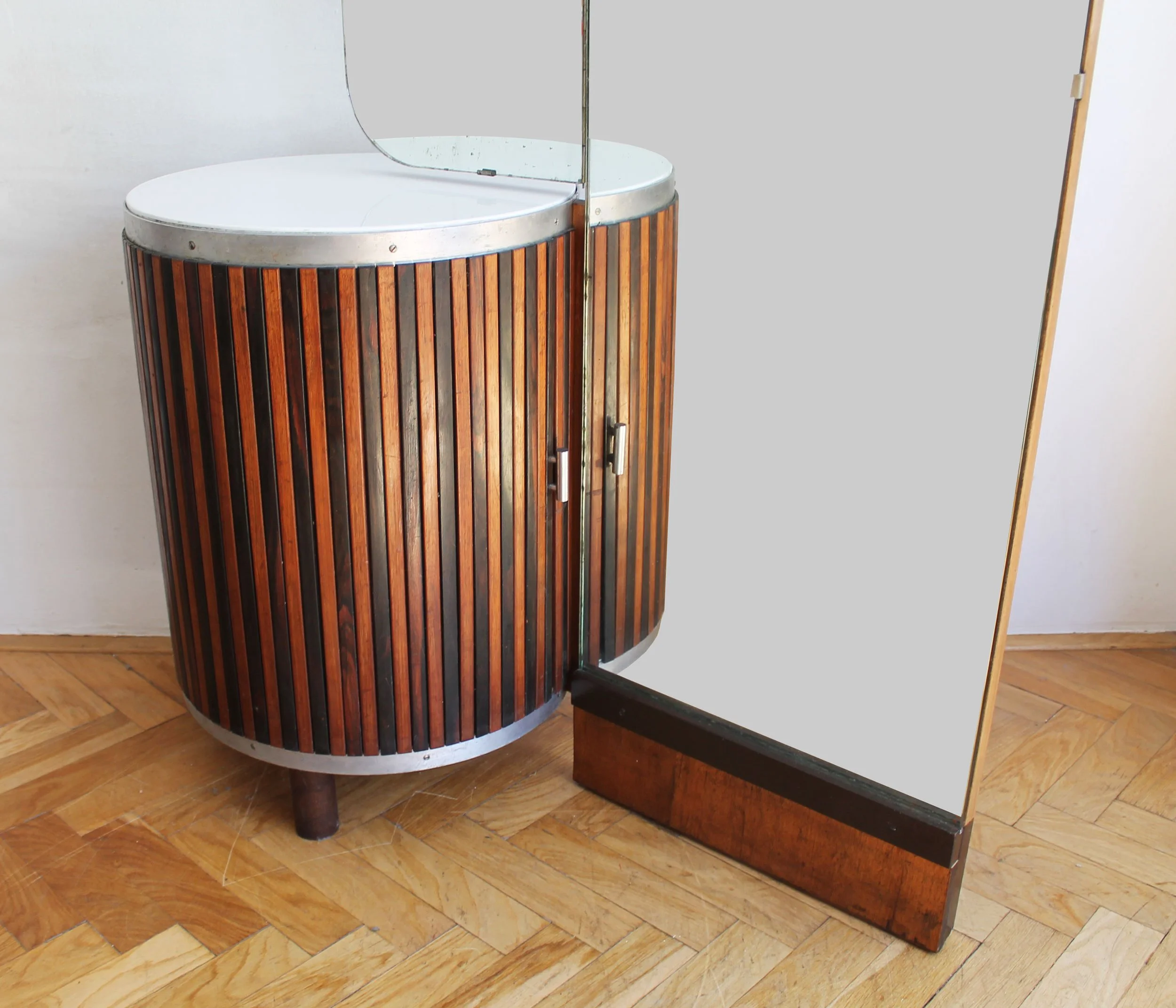
1930s Dressing Table by UP Brno, attributed to Jindrich Halabala
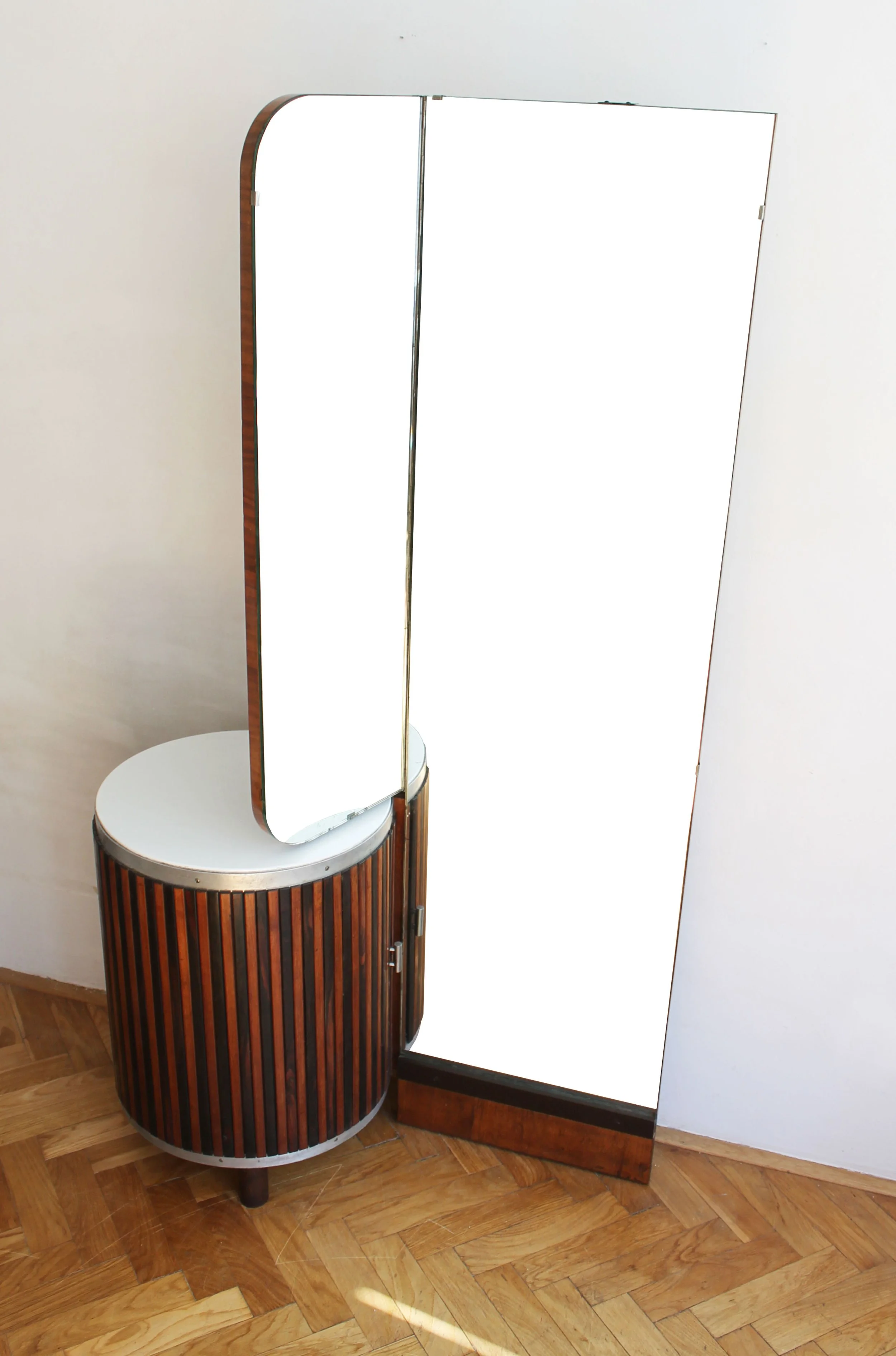
This dressing table is a rare 1930s piece, believed to be designed by Jindřich Halabala for UP Brno in the late functionalist period. It reflects the clear formal language of interwar Central European modernism, where proportion, material clarity, and functional composition were central principles.
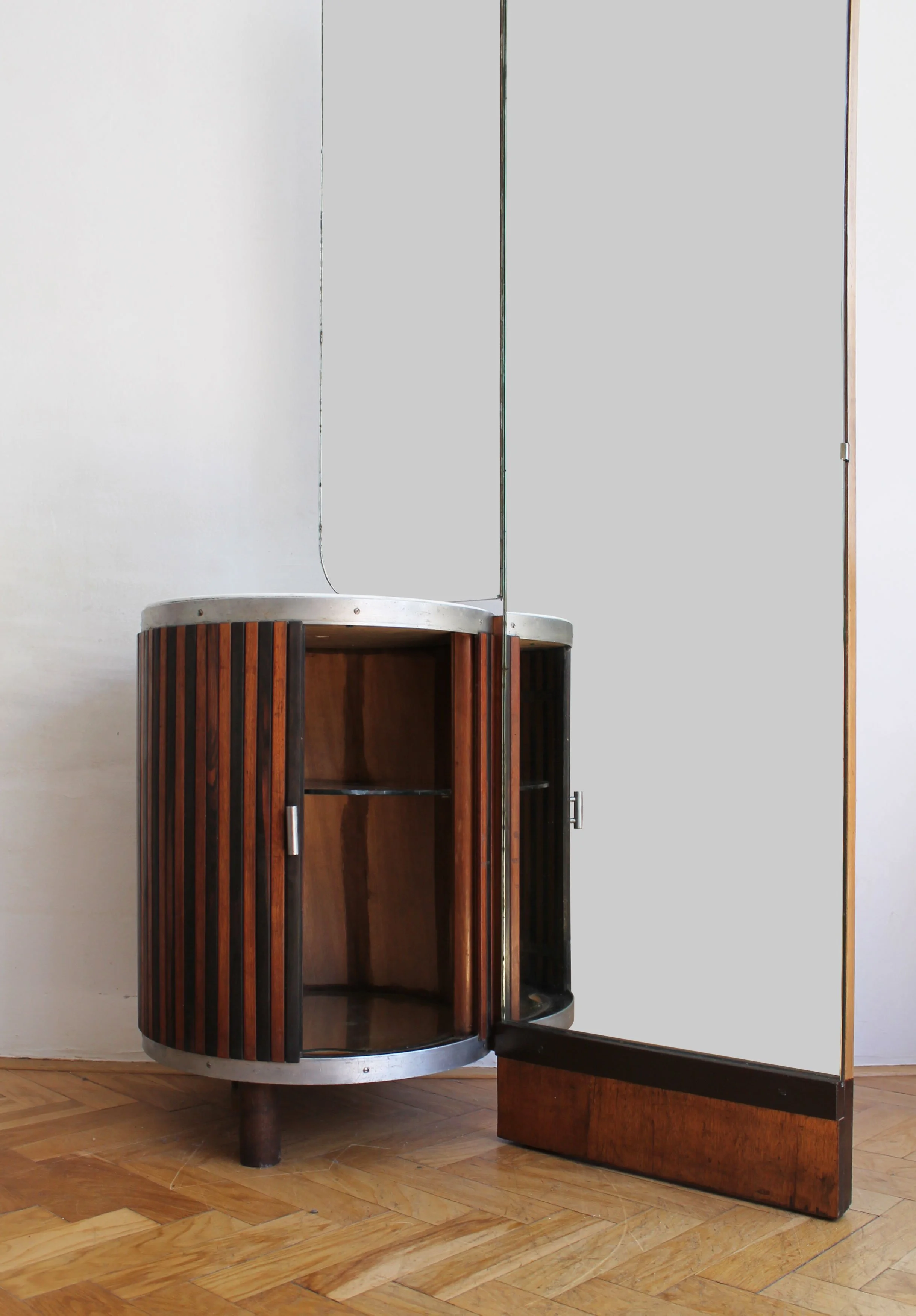
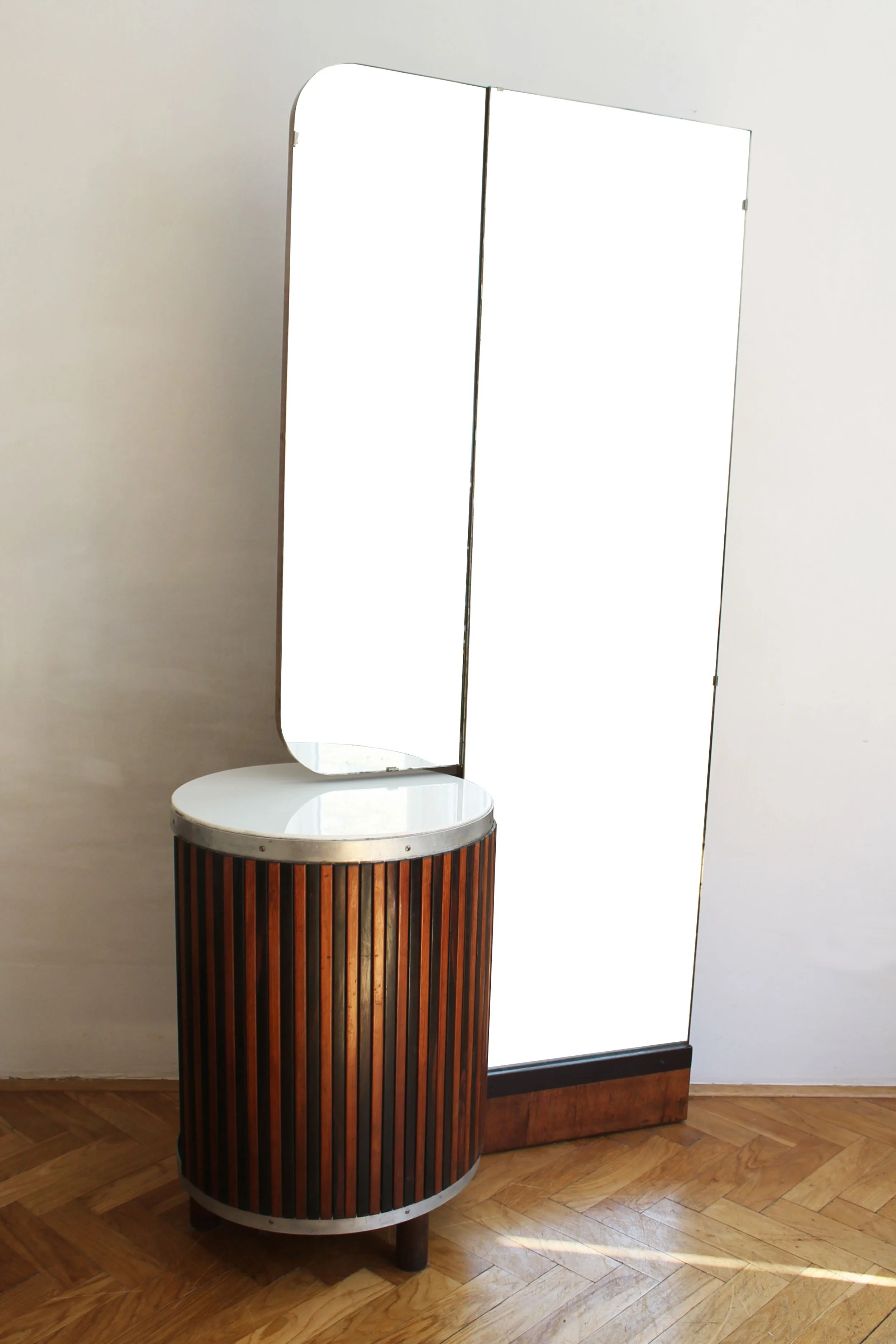
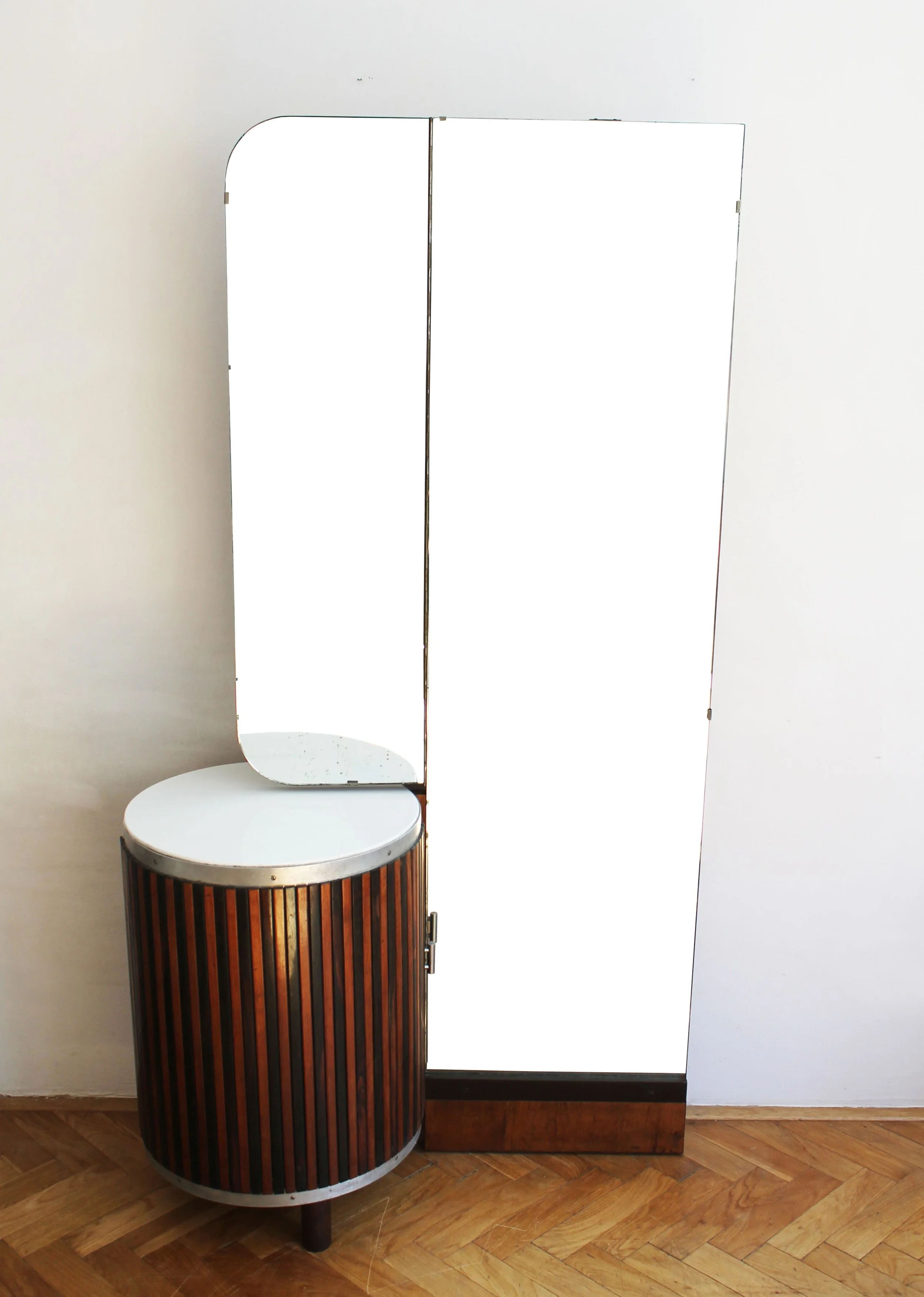
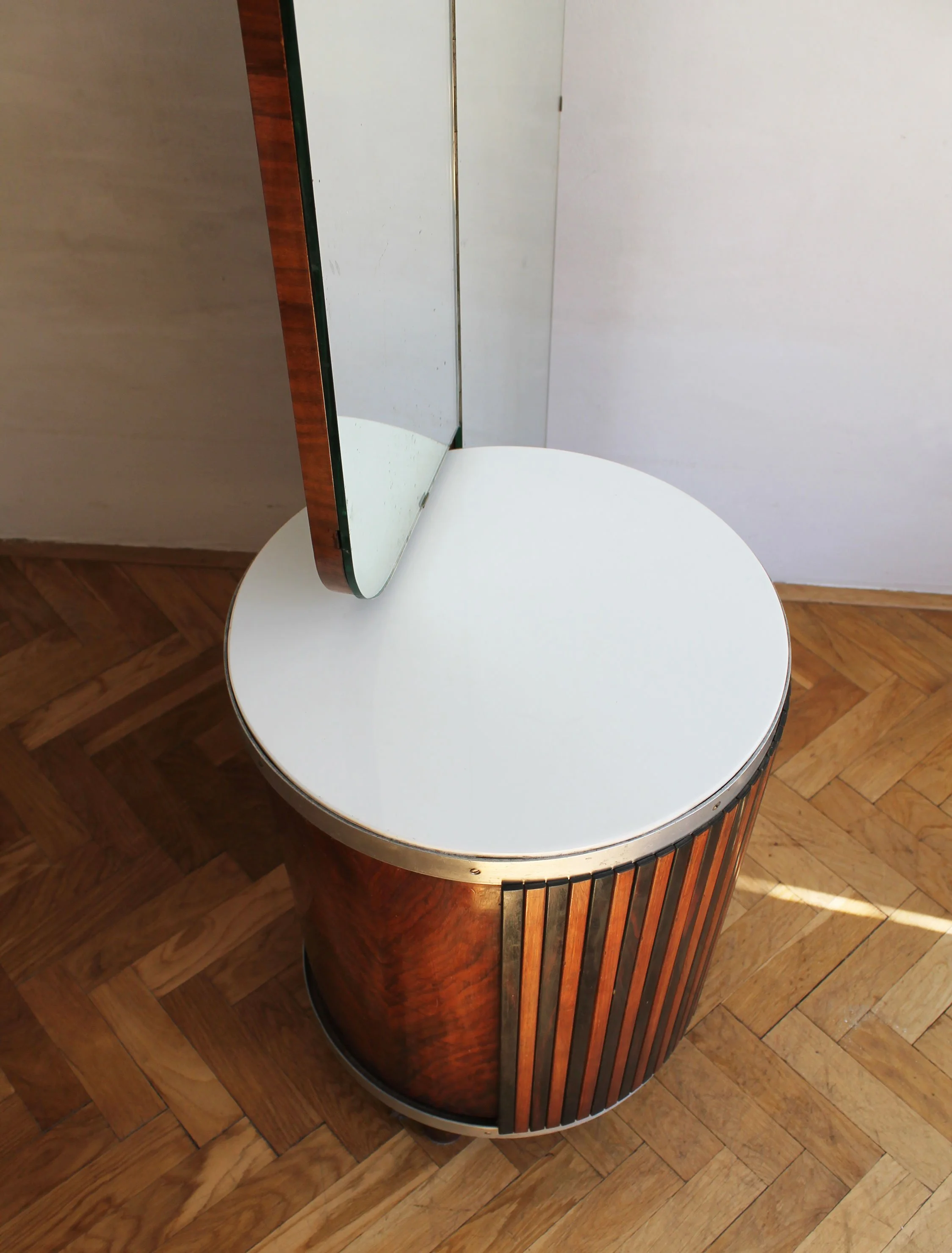
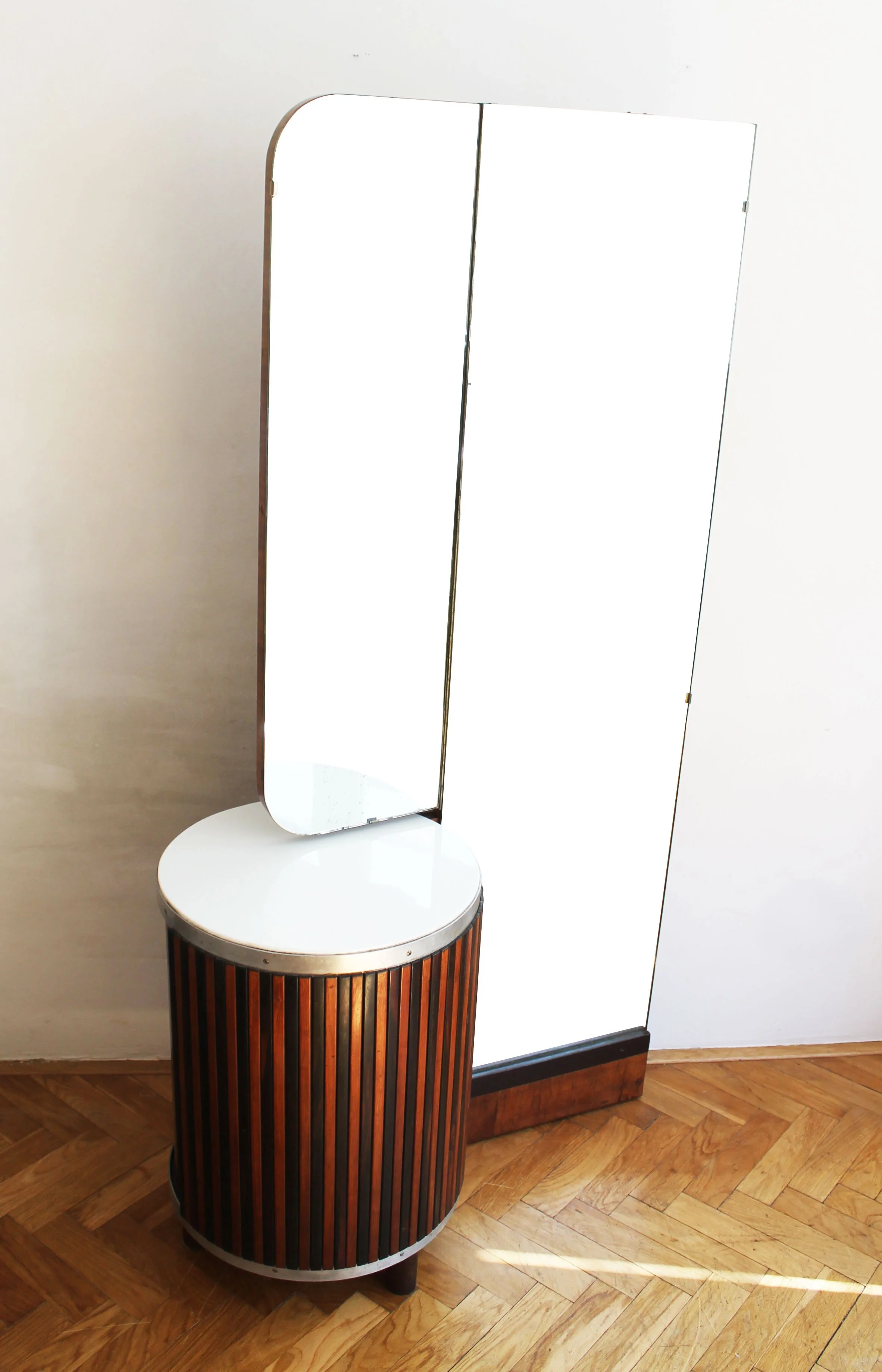
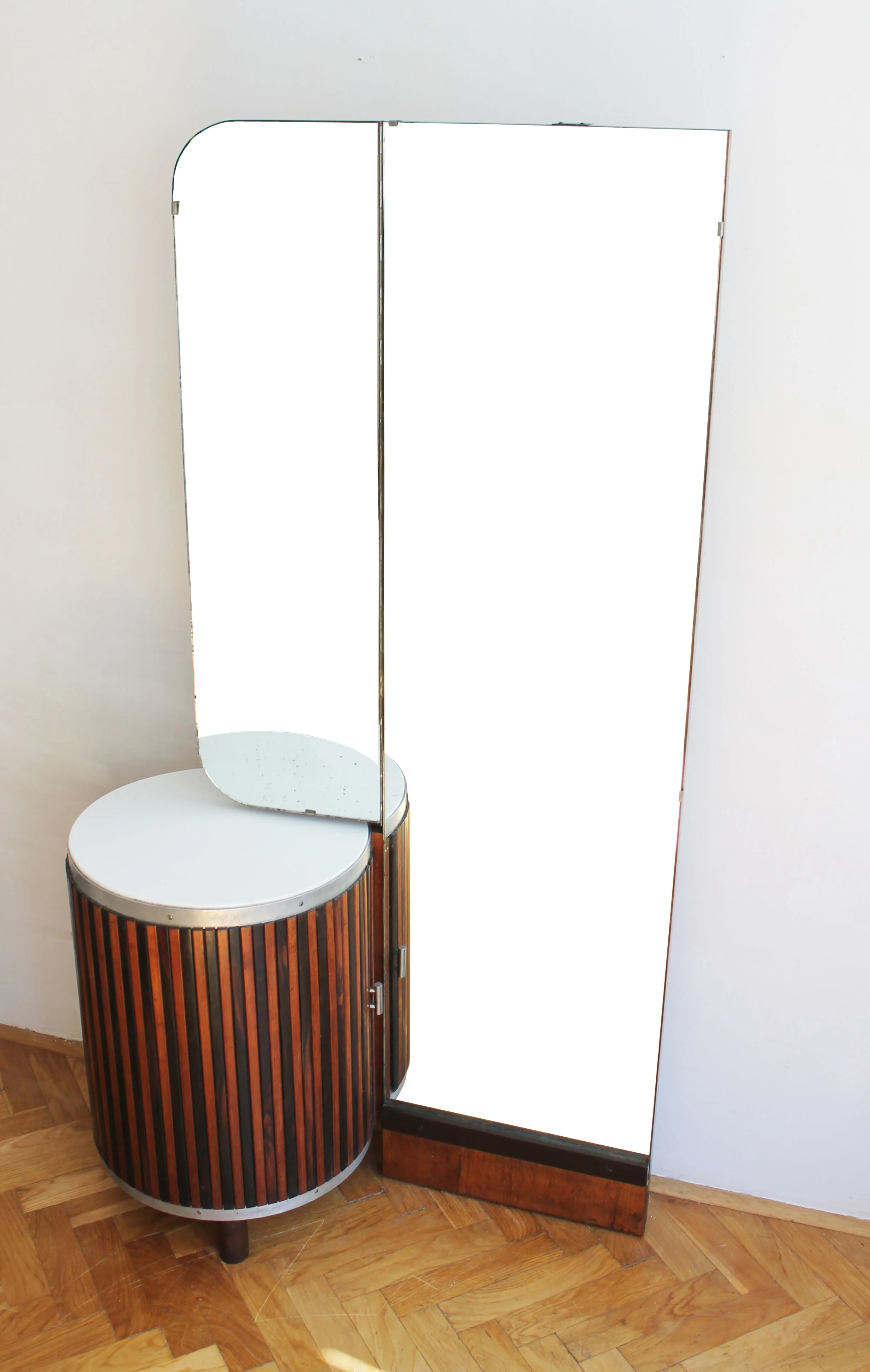
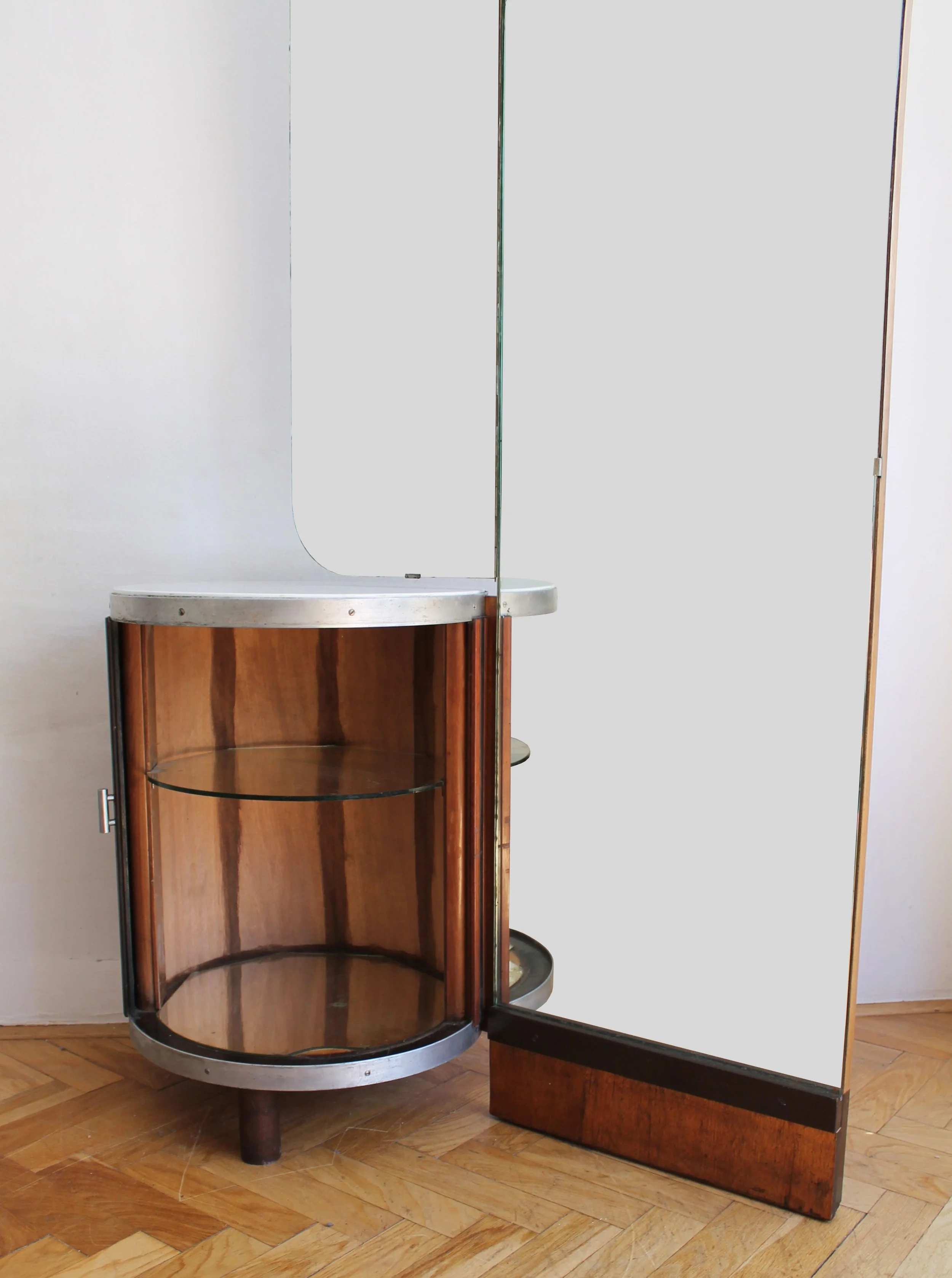
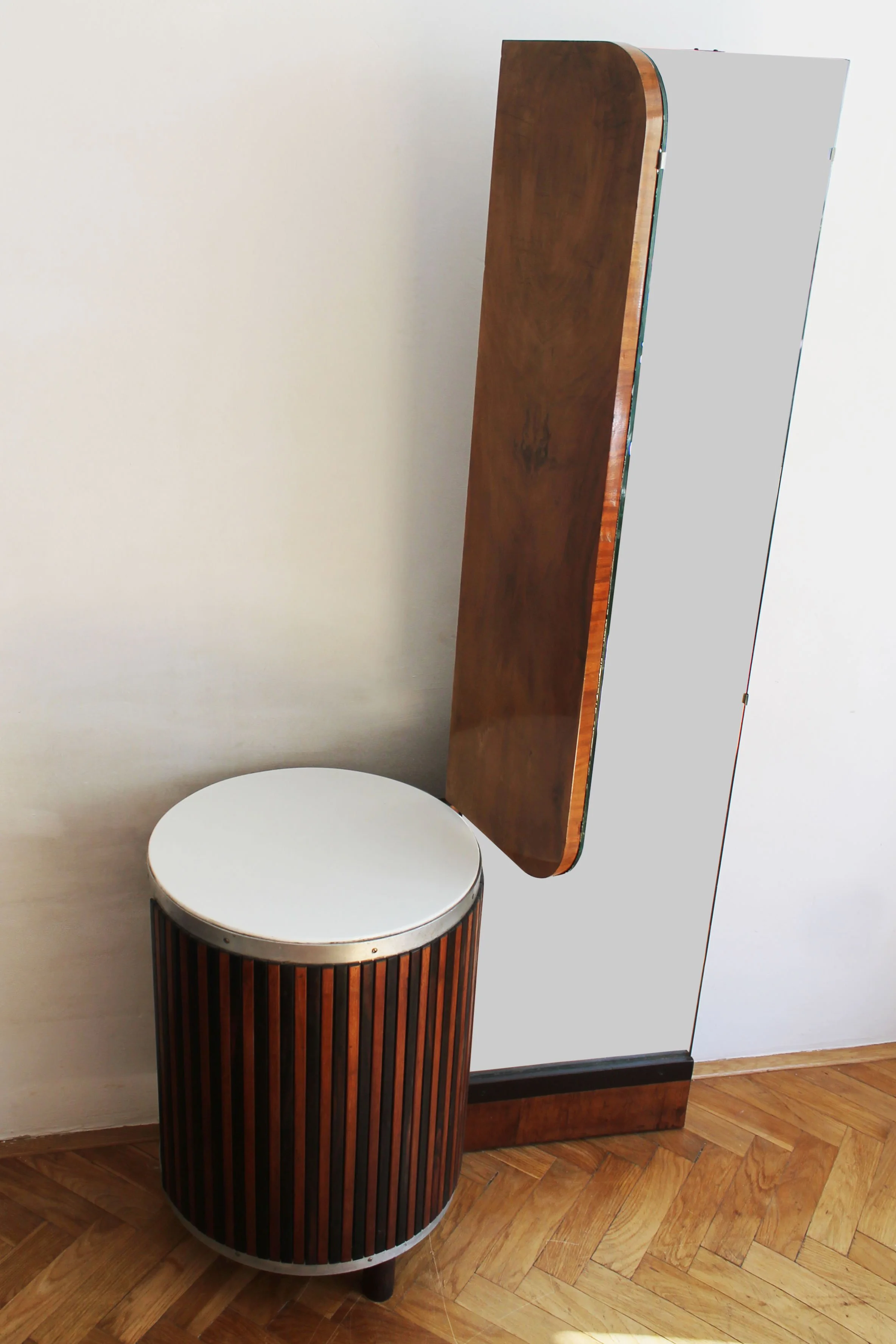
The structure is organised around a strong geometric contrast between a vertical mirror element and a curved storage base. The main mirror is rectangular and mounted within a solid wooden structure, fixed with visible metal fittings along the top and side edges.
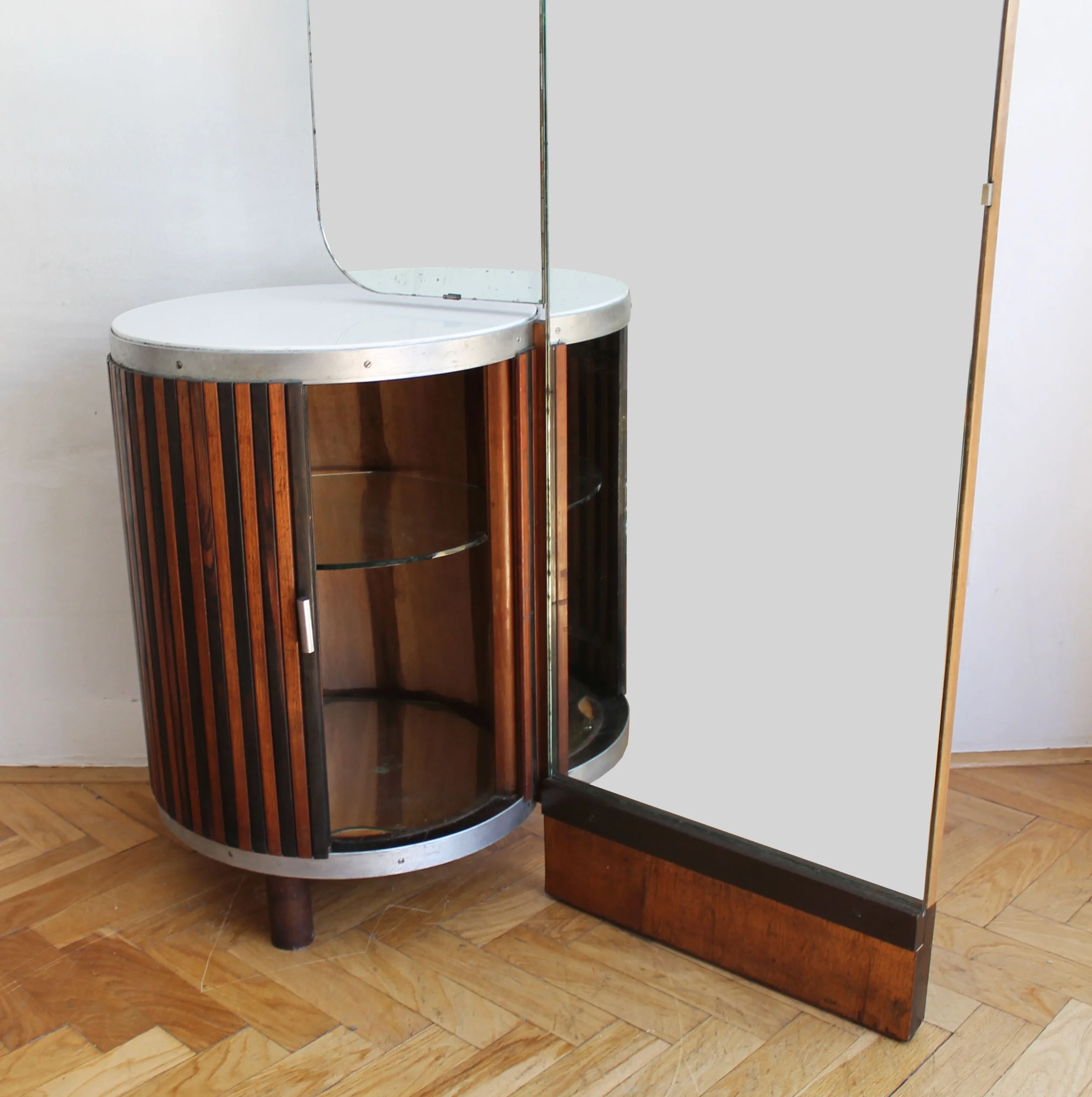
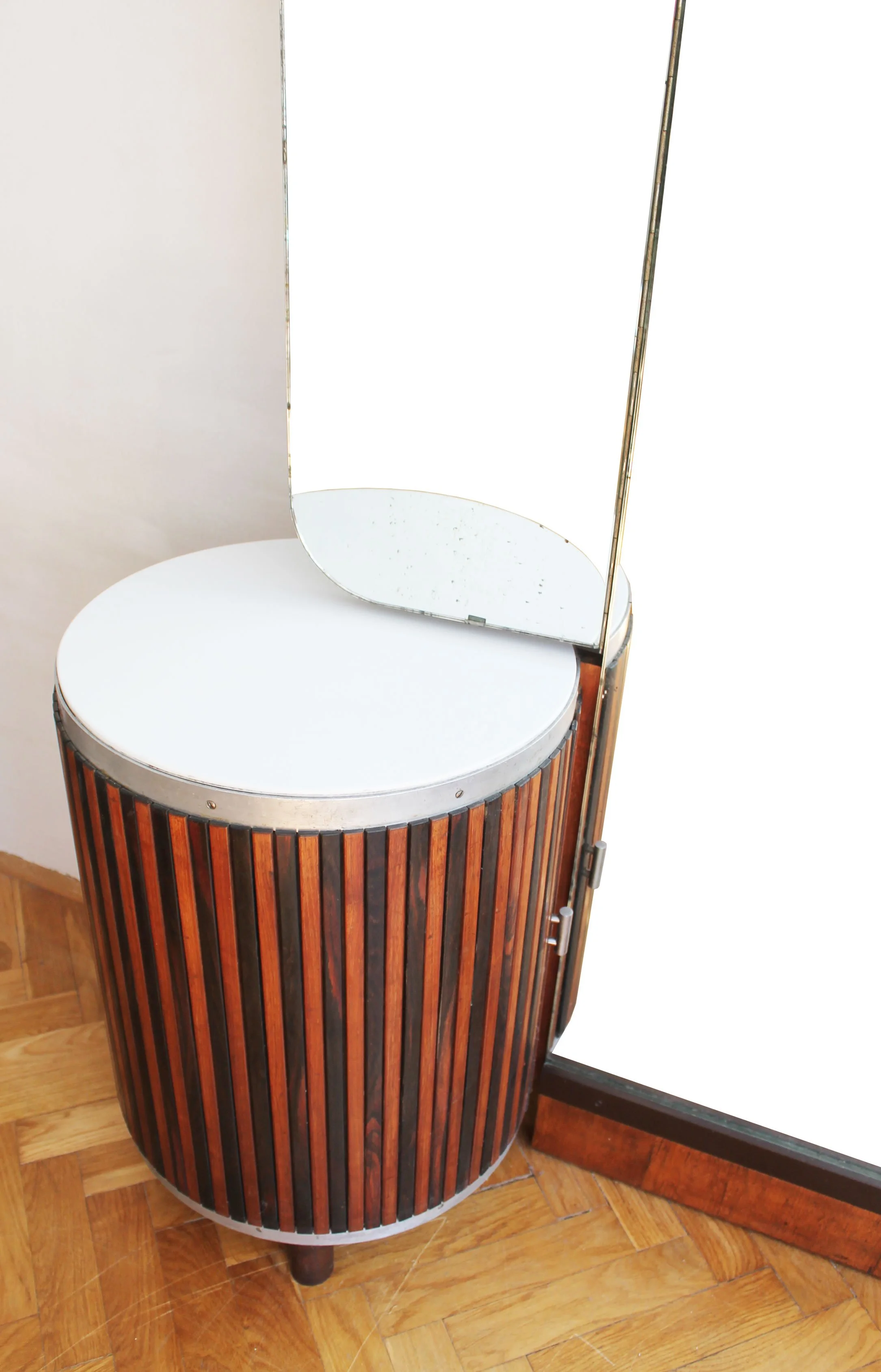
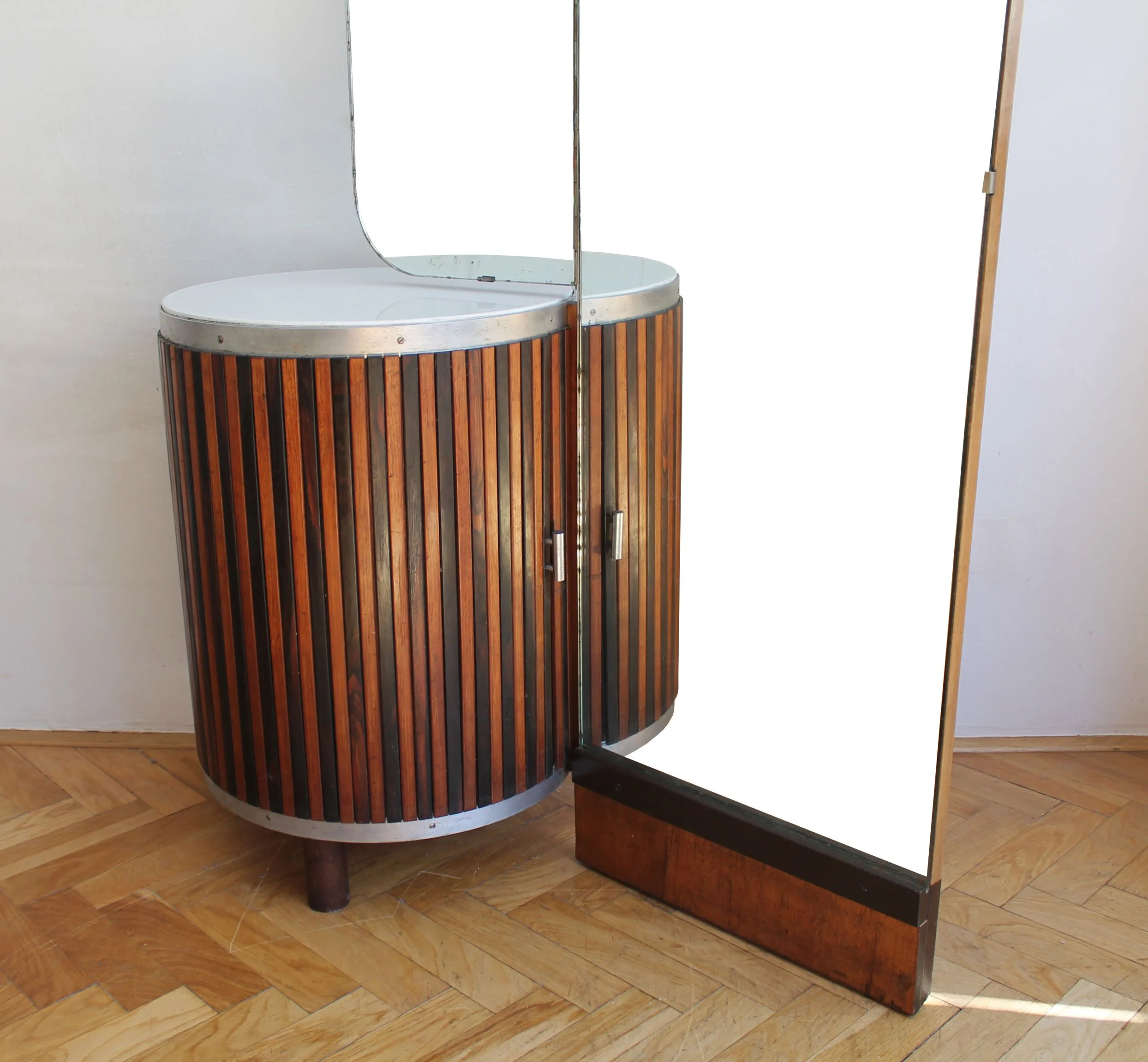
A smaller side mirror is attached to one side of the main mirror assembly via a long metal hinge screwed directly into the solid wood. It can be aligned in line with the main mirror or angled forwards and backwards, functioning in a similar way to a pivoting door element. This introduces both practical flexibility and a subtle sense of movement within the otherwise rigid composition.
A key functional element is the adjustable side mirror attached to one side of the main mirror. It is mounted on a pivoting mechanism, allowing it to be angled forwards and backwards. This introduces both usability and a subtle kinetic quality to the composition.
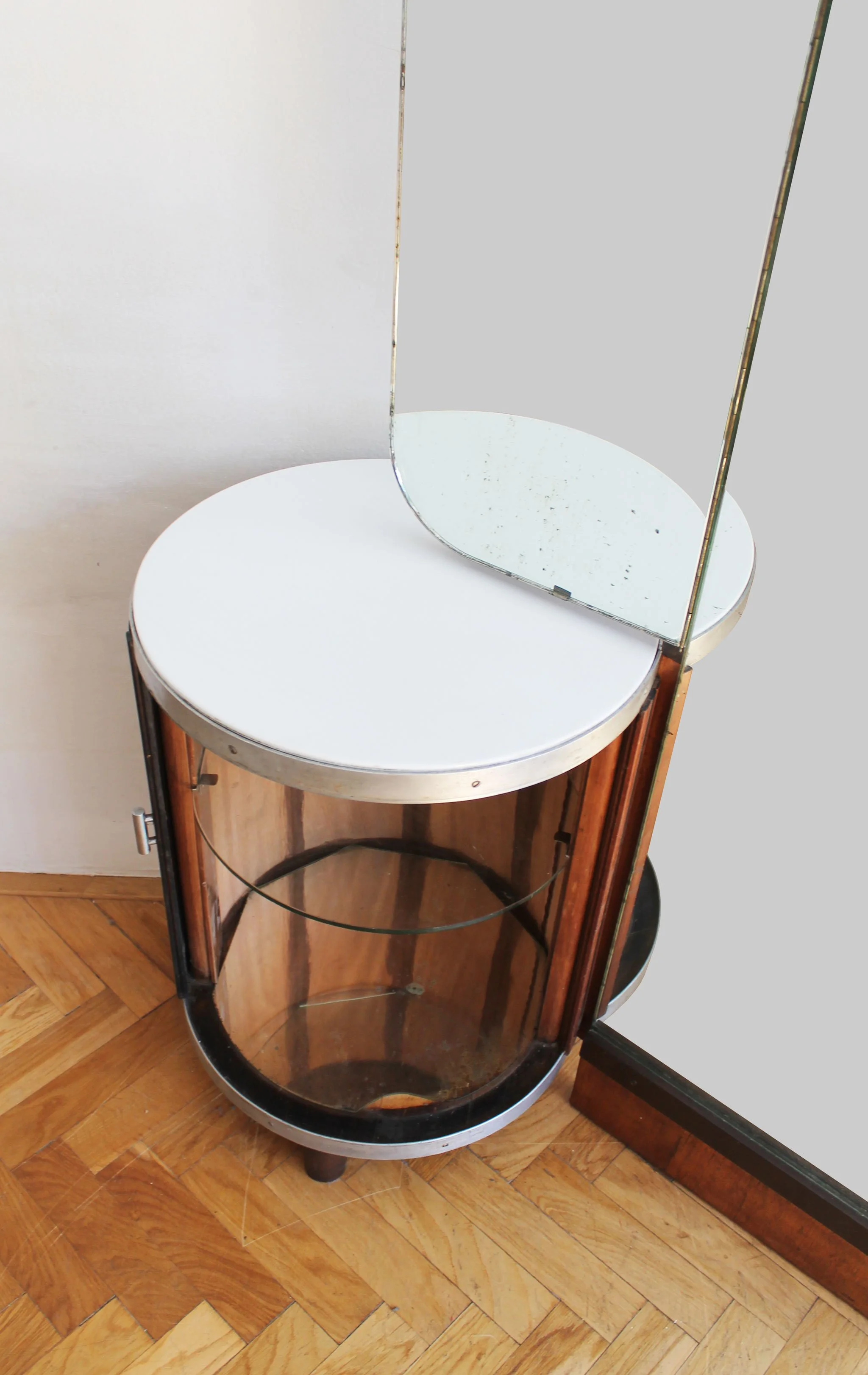
The mirror assembly connects directly to a circular cabinet volume, creating a clear interplay between orthogonal and curved forms. This compositional approach is typical of late Bauhaus-influenced furniture, where complex functionality is resolved through simple, interlocking geometries.
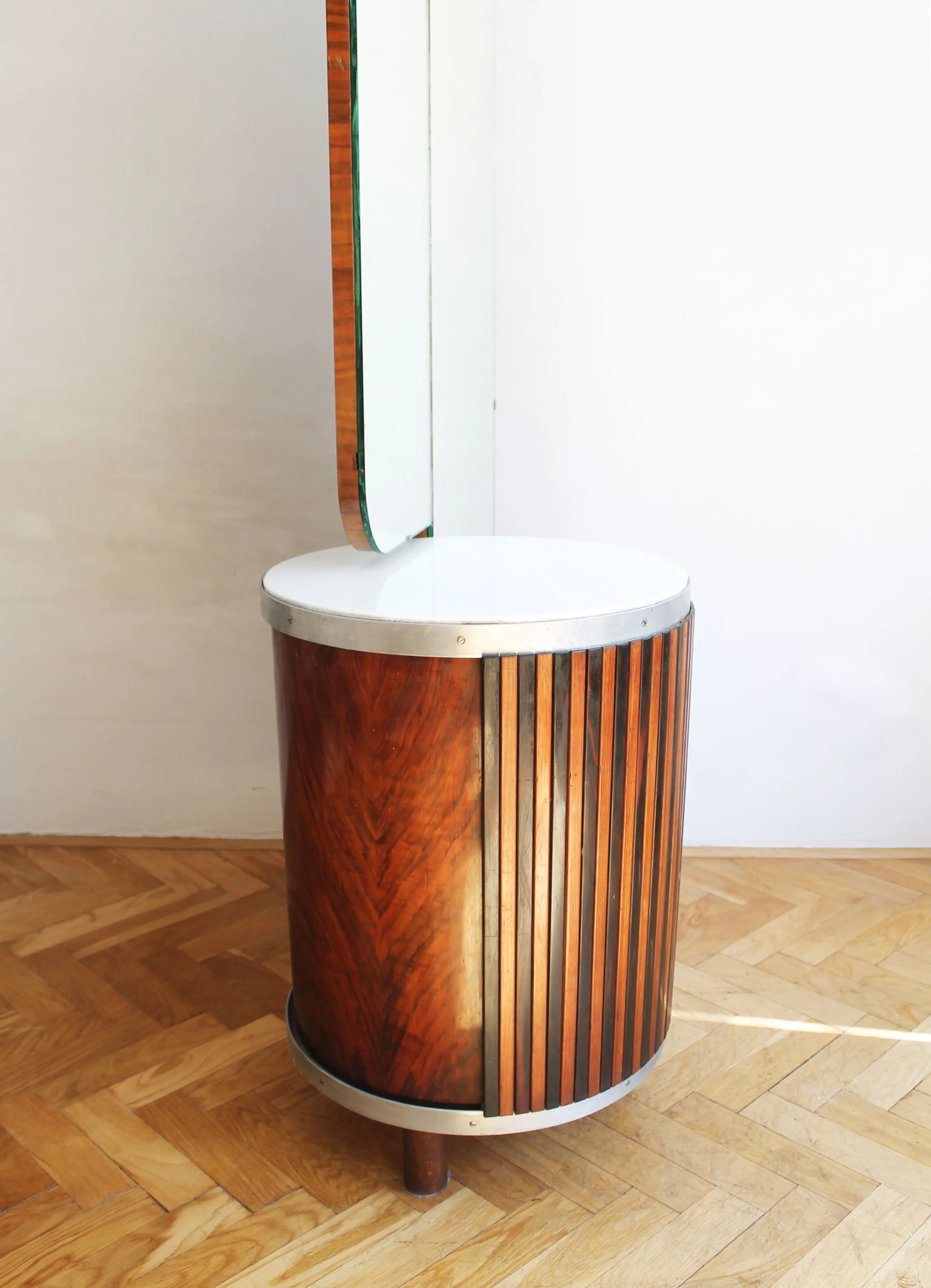
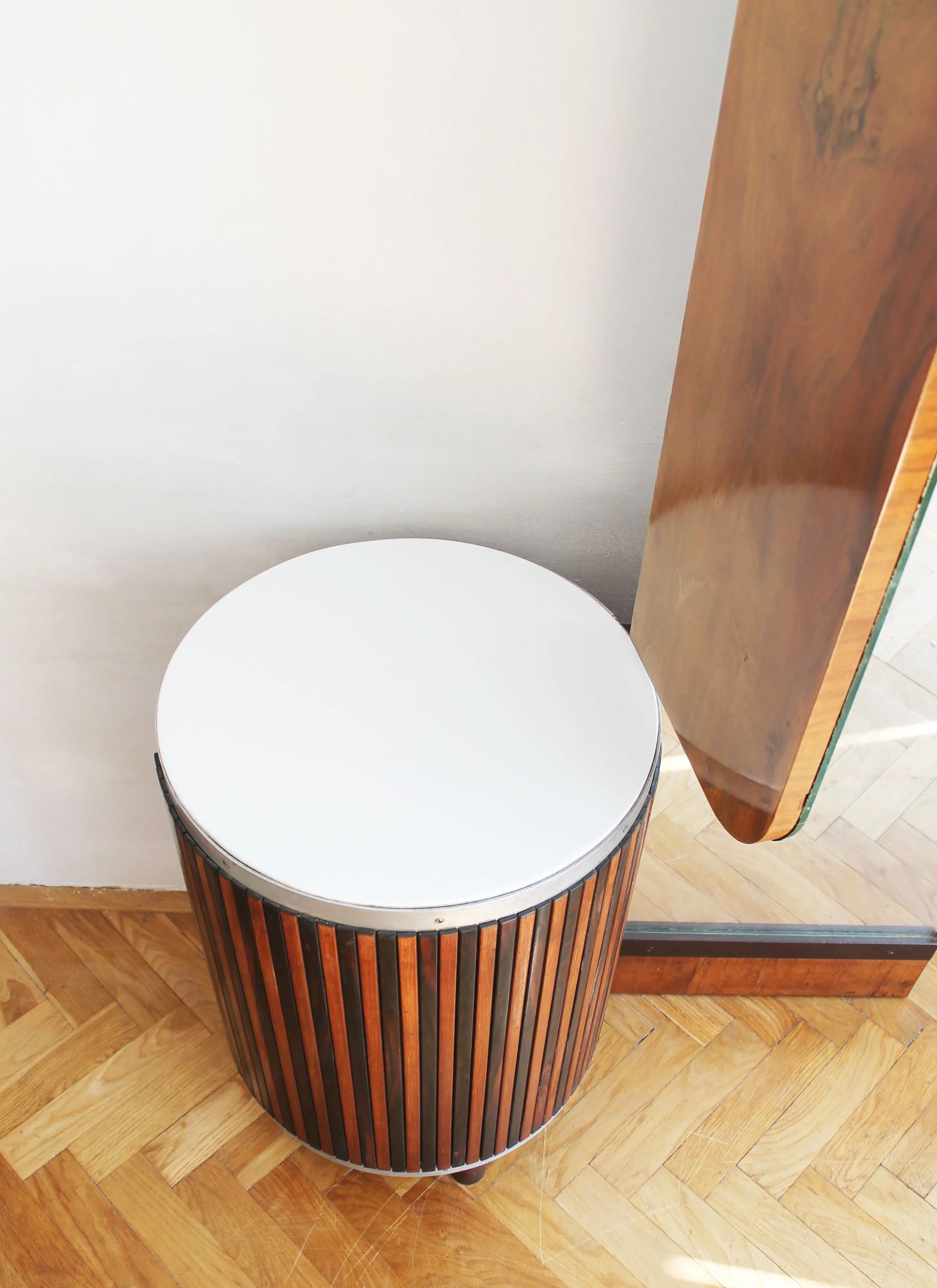
The cabinet is executed in walnut veneer and features sliding doors composed of alternating light and dark wooden slats. The top surface is finished with white opaxite glass, forming a smooth, lightly reflective surface that completes the circular cabinet. Inside, the cabinet provides open storage with a single removable glass shelf. The cabinet stands on two cylindrical wooden legs, giving the composition visual lightness and balance.
The piece remains in original vintage condition. The decision has been made to preserve the original mirrors and glass elements rather than replace them. Both mirror surfaces show a natural patina developed over time. The lower internal glass shelf has a chipped corner. The wooden structure is in very good condition, with only minor wear consistent with age.
Overall, this is a well-preserved example of late 1930s Central European modernist furniture, where functional adaptability, material contrast, and compact spatial organisation are resolved within a single integrated form.
Quantity: 1
Period: 1930’s
Designer: attributed to Jindřich Halabala
Producer: attributed to UP Brno, Czechoslovakia
Dimensions: w 92 cm, d 46 cm, h 170 cm, cabinet h 67 cm, cabinet dia 46 cm
Materials: Beech, Walnut, Glass, Steel
Please note delivery cost is not included in the price. Each item's delivery is calculated individually at the checkout. The cost of delivery of this item is 220 Euro to the EU.
Safe delivery worldwide: If you are based outside the EU or in the US, please email us at info@bybarnabas.com for a delivery quote.