
Exceptional Pair of H-373 Chairs by Jindrich Halabala, UP Brno, 1930s
Exceptional Pair of H-373 Chairs by Jindrich Halabala, UP Brno, 1930s
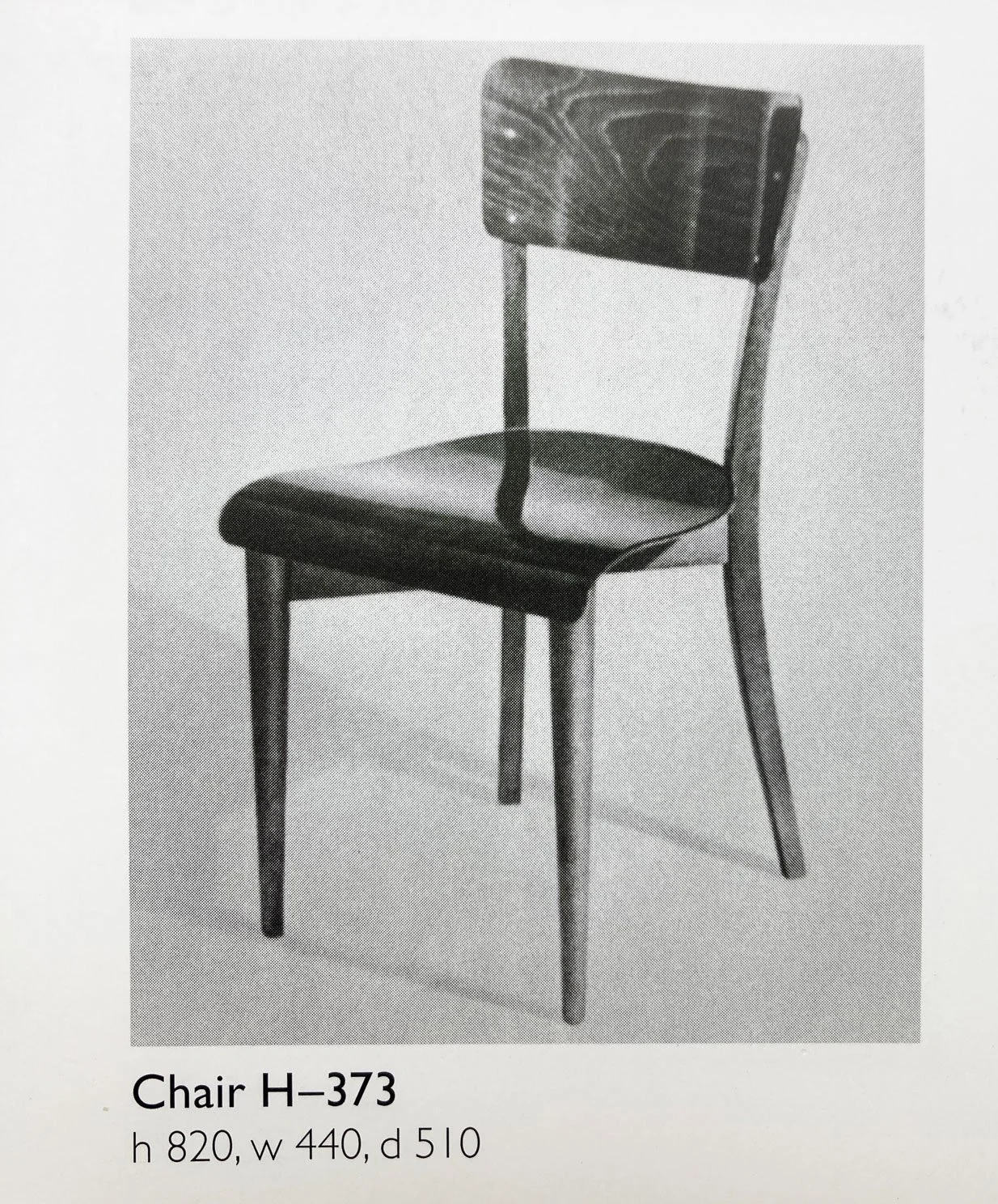
A rare pair of H-373 chairs designed by Jindřich Halabala and produced by UP Brno during the 1930s - an important period in the development of Czechoslovak Modernist furniture.
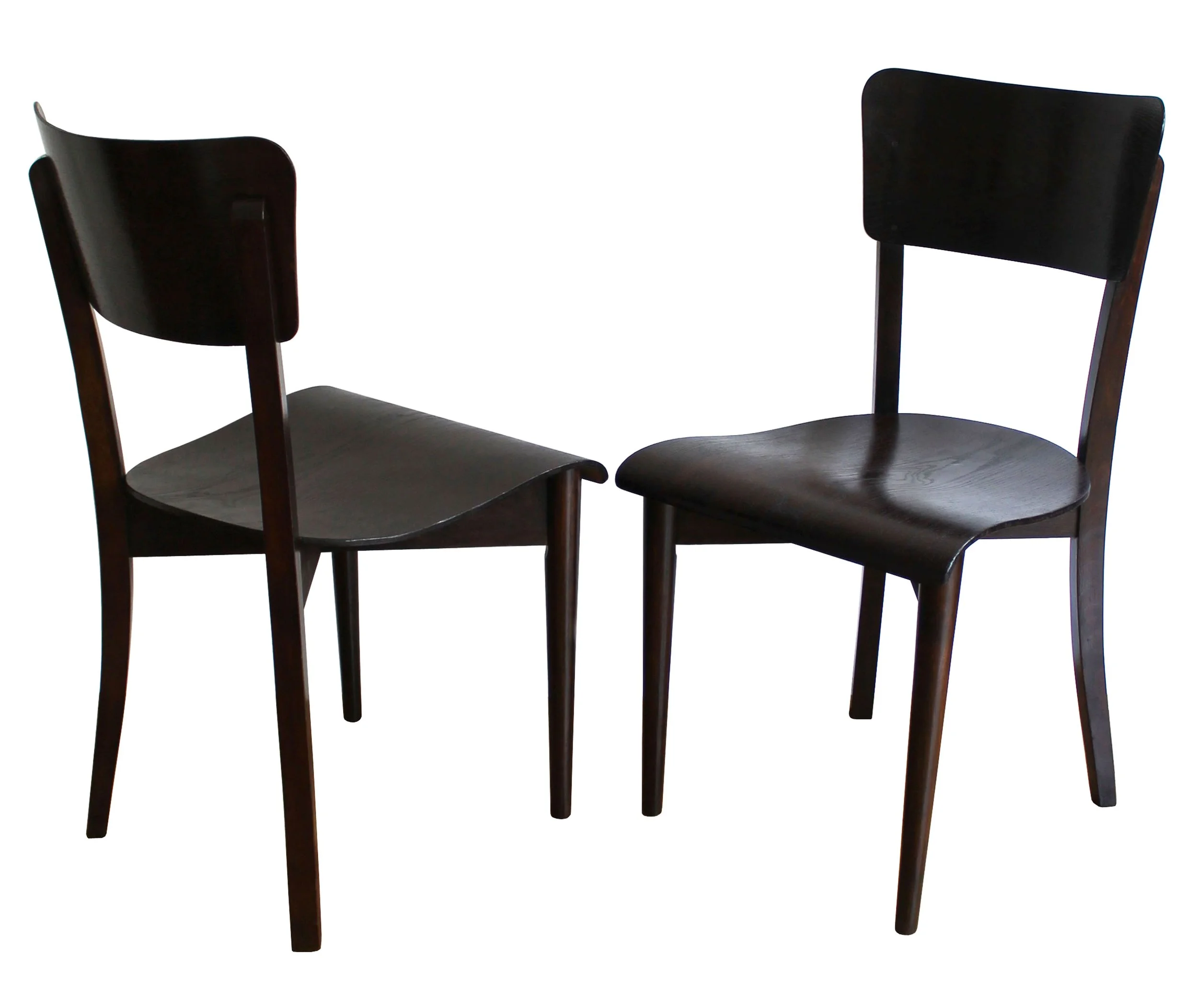
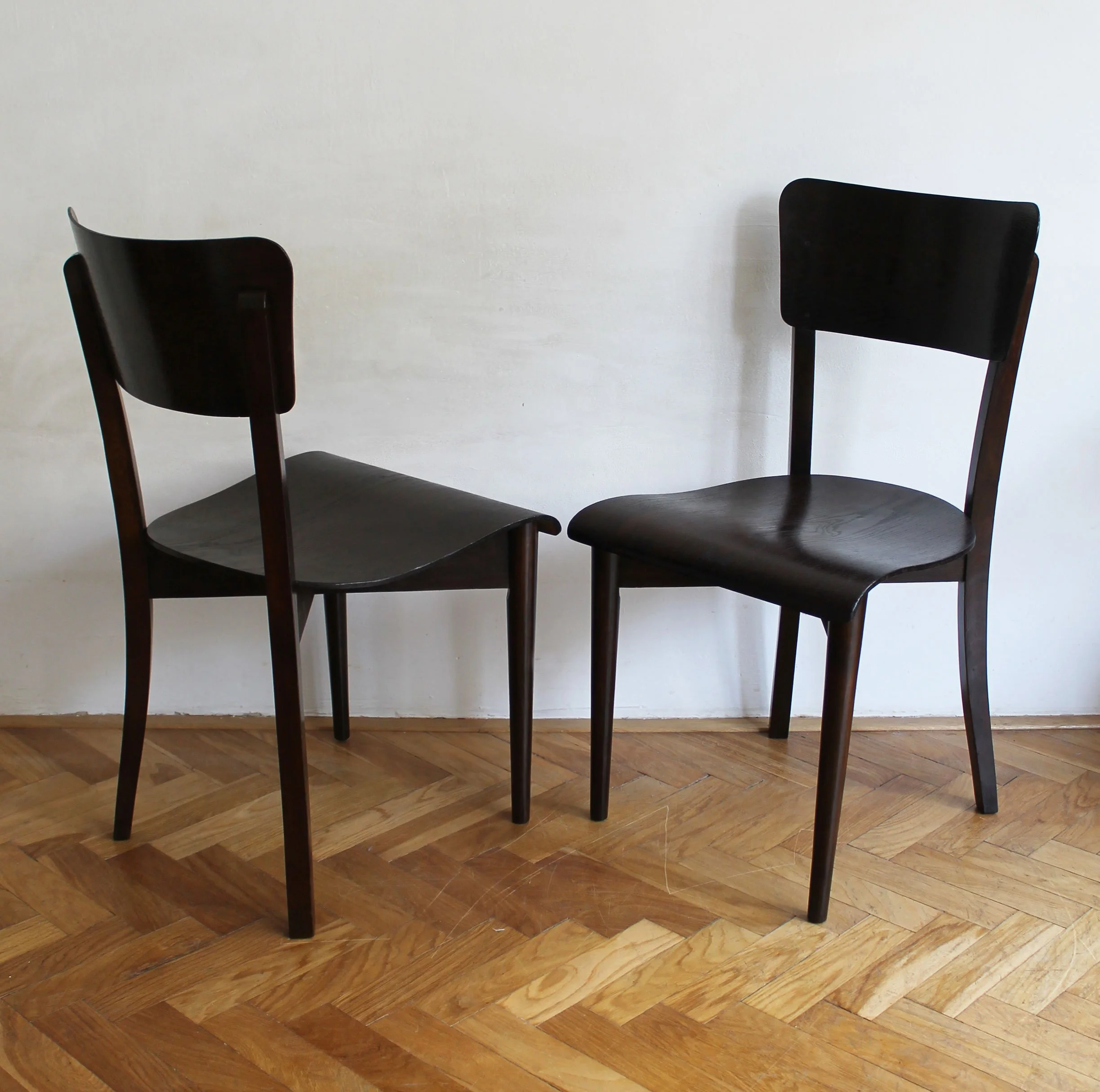
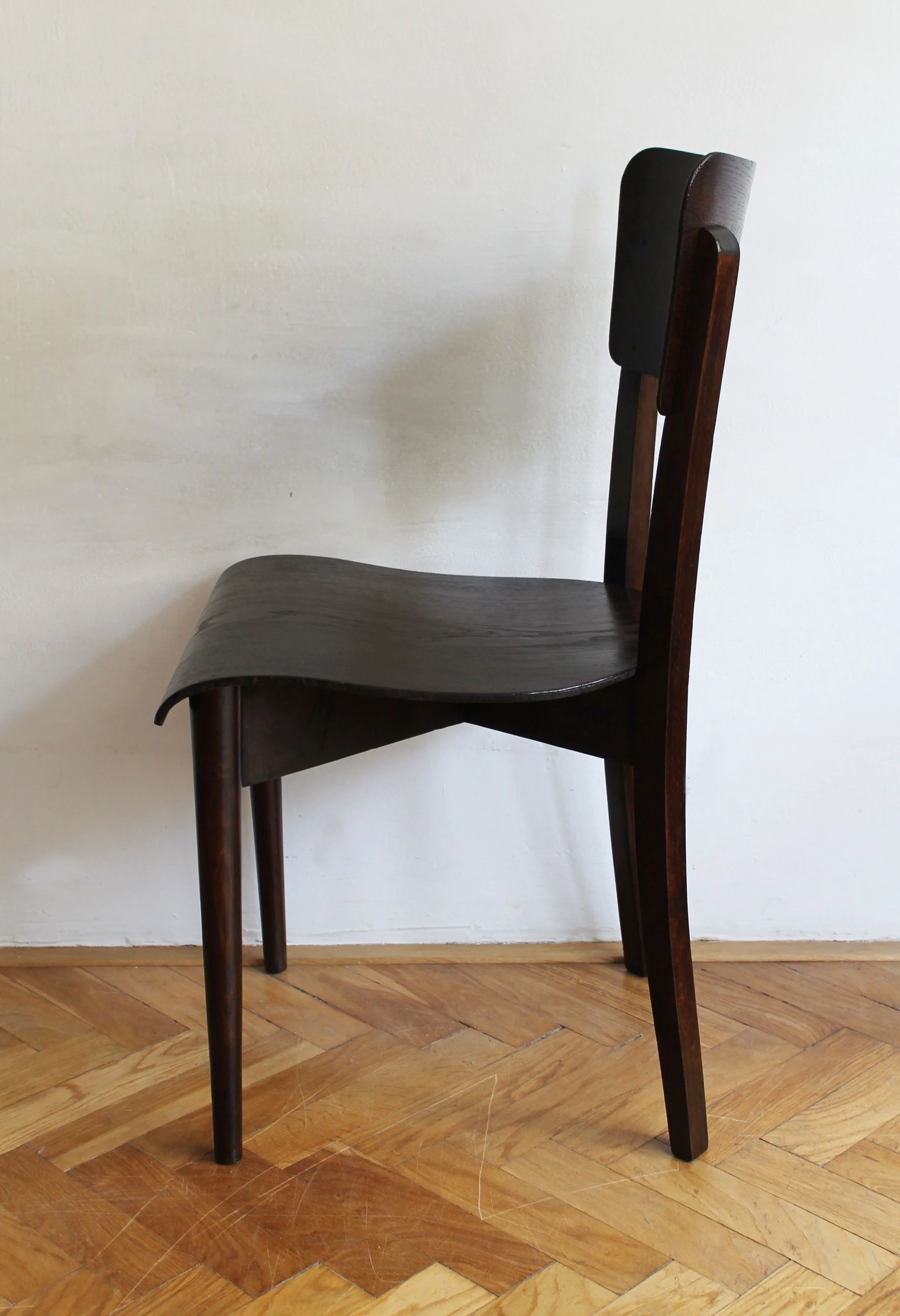
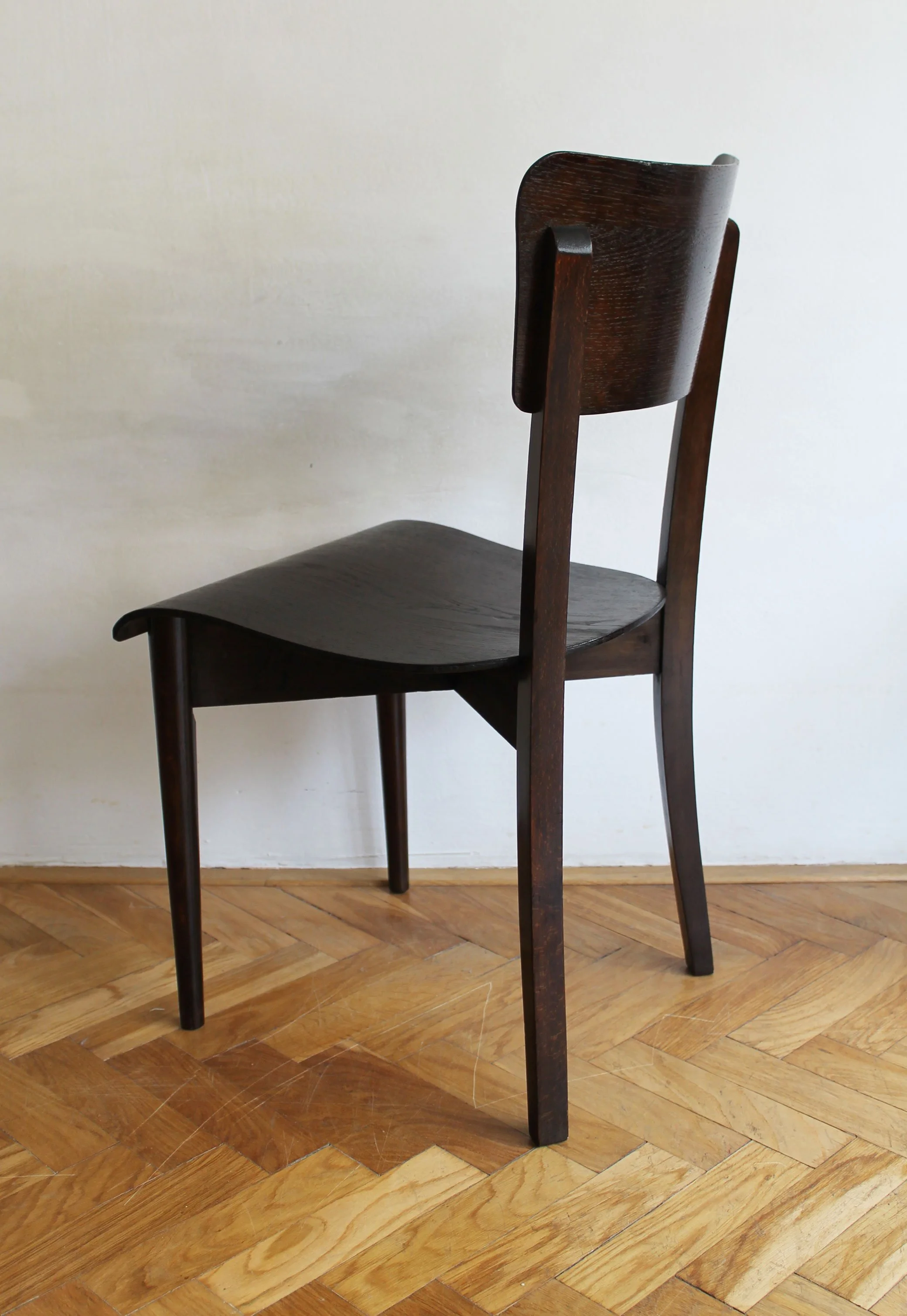
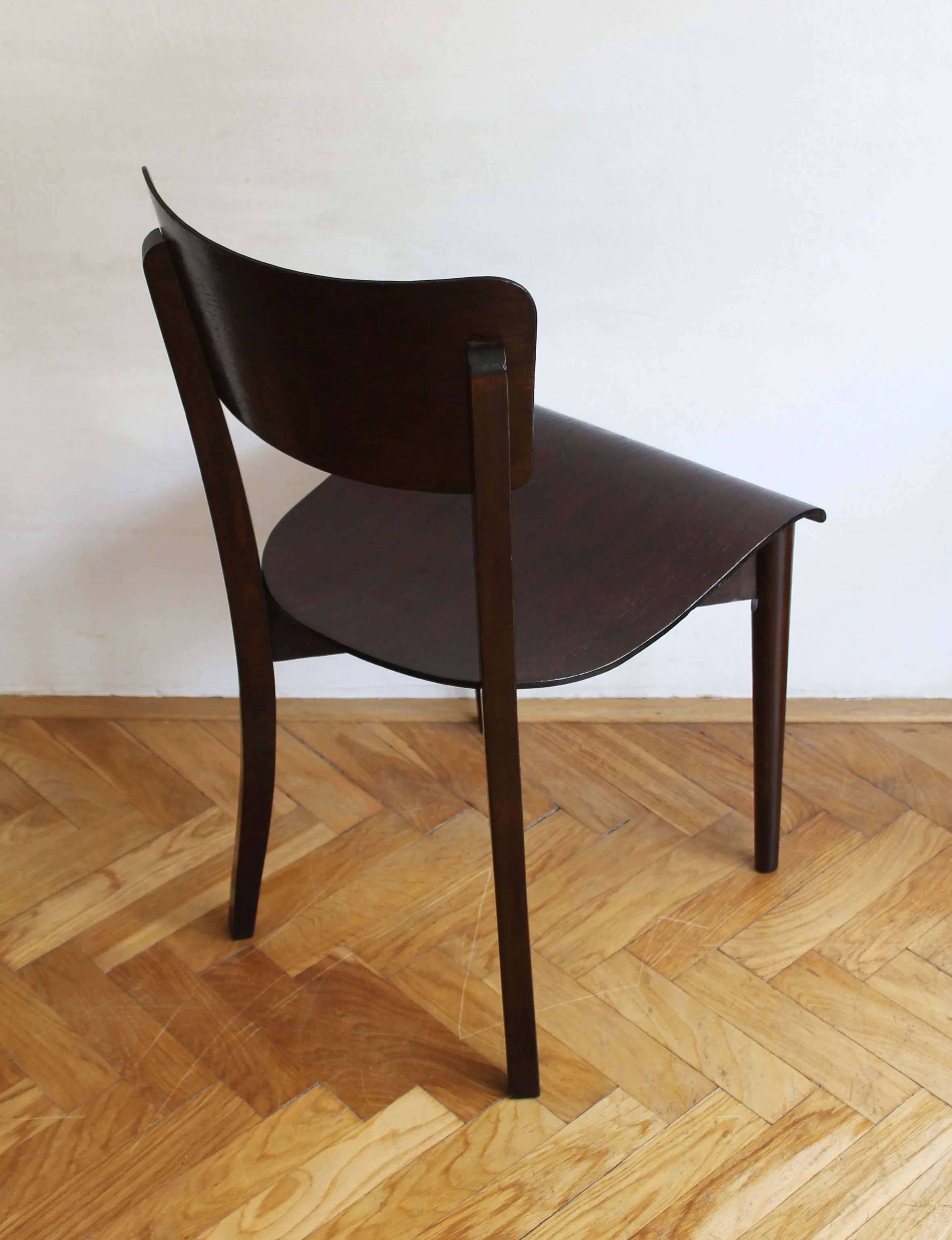
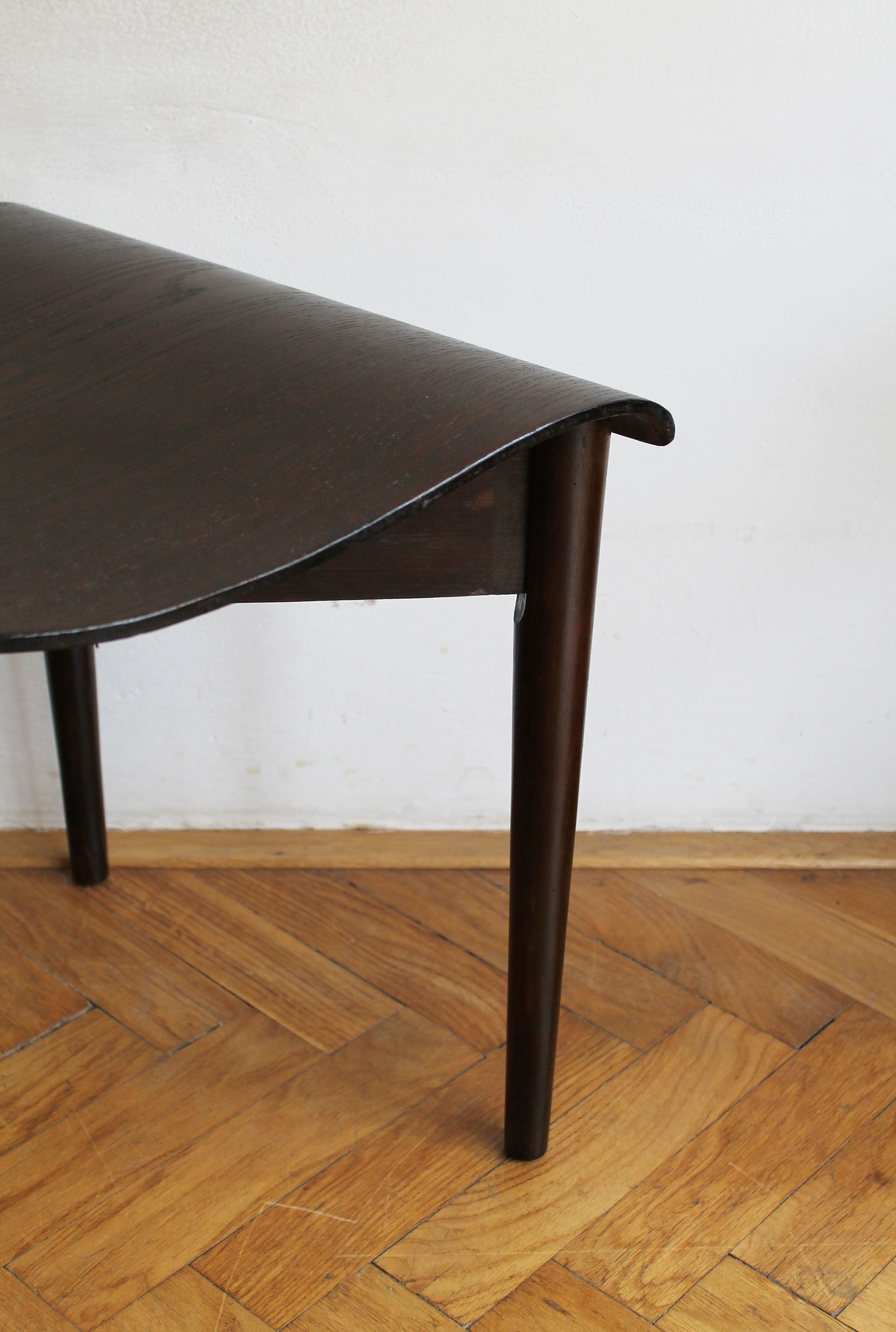
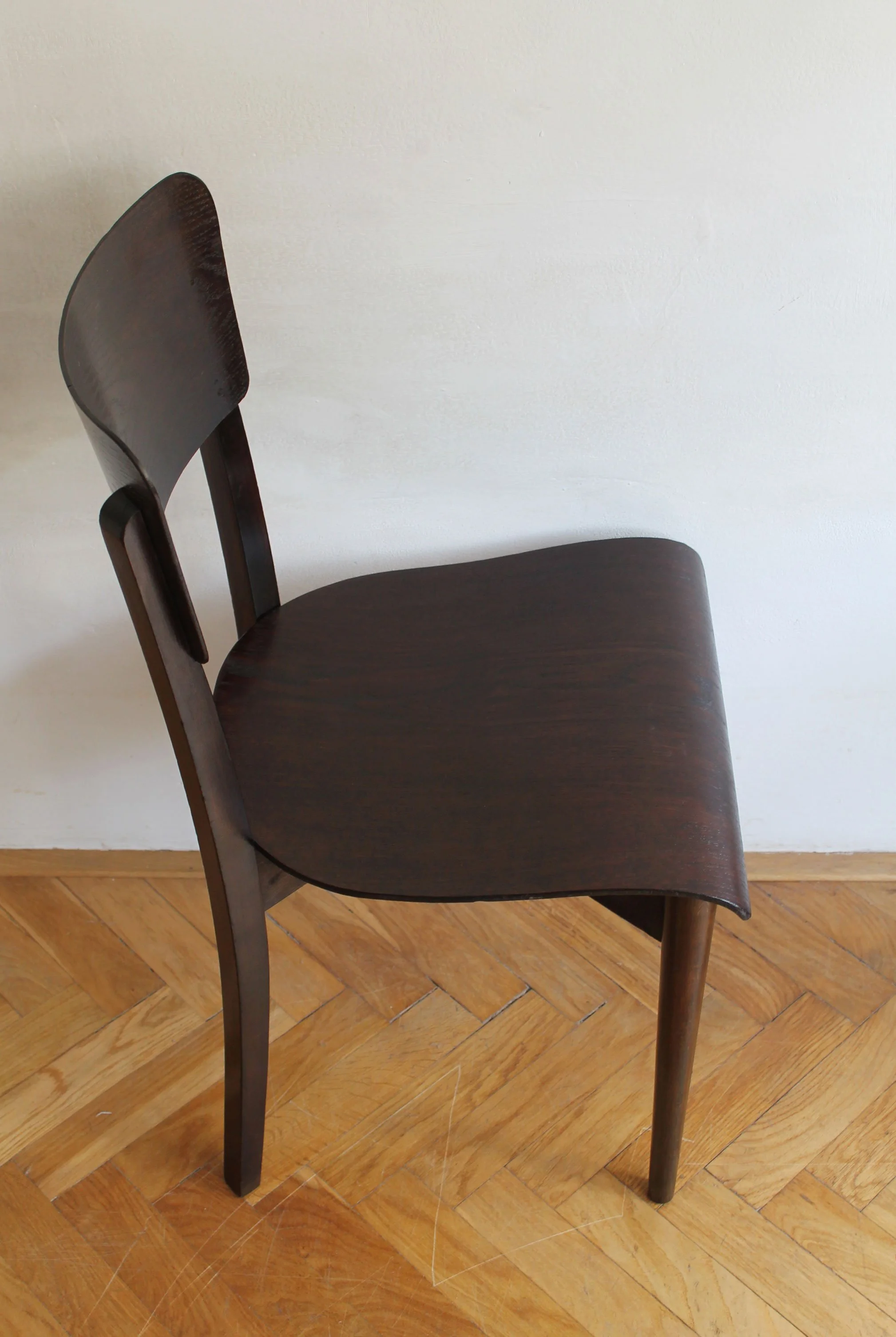
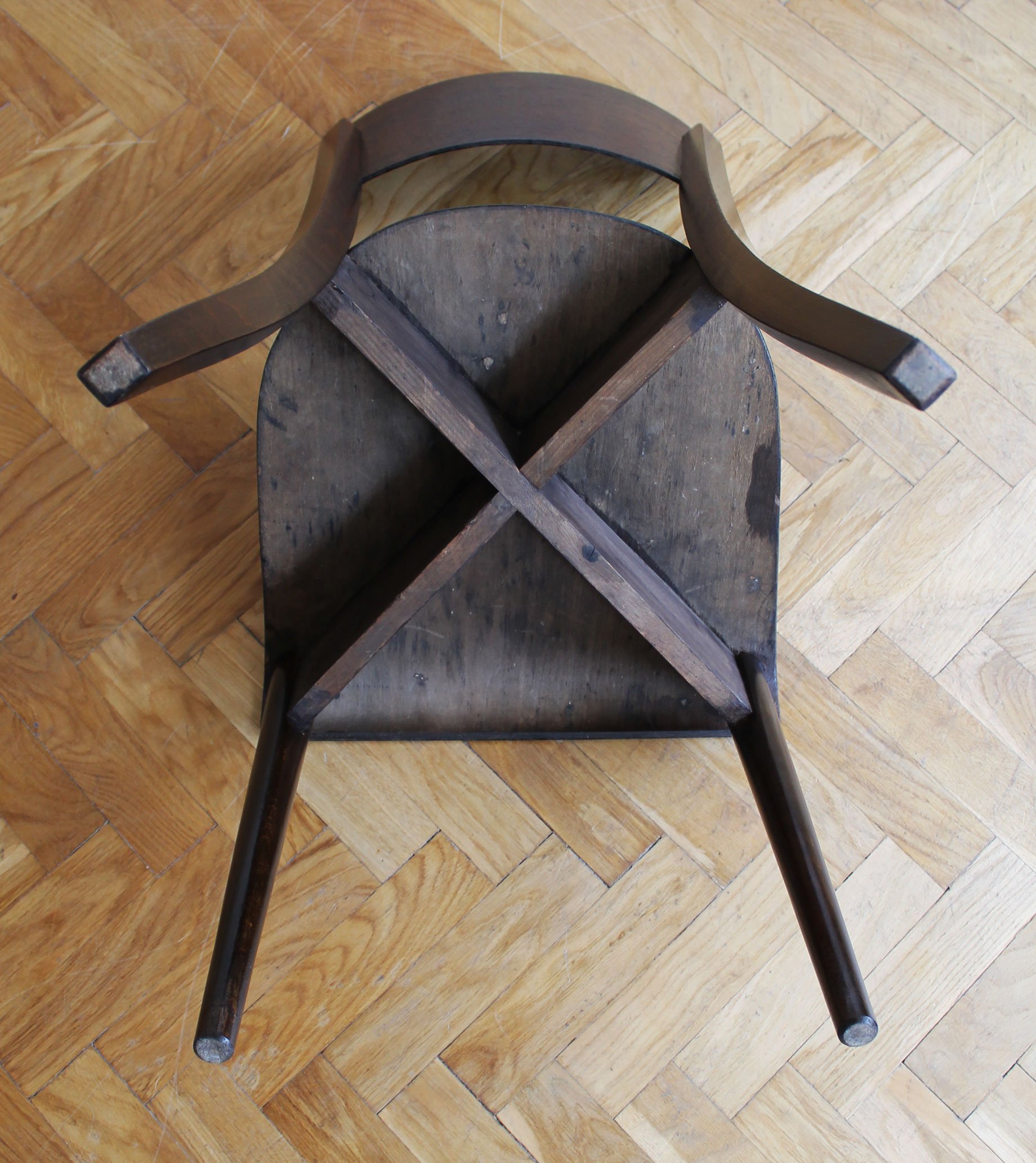
Their generously curved seats appear to float within elegant crossed beech frames, giving the chairs a sculptural yet remarkably light presence. The price is for the complete pair.
About the Chairs
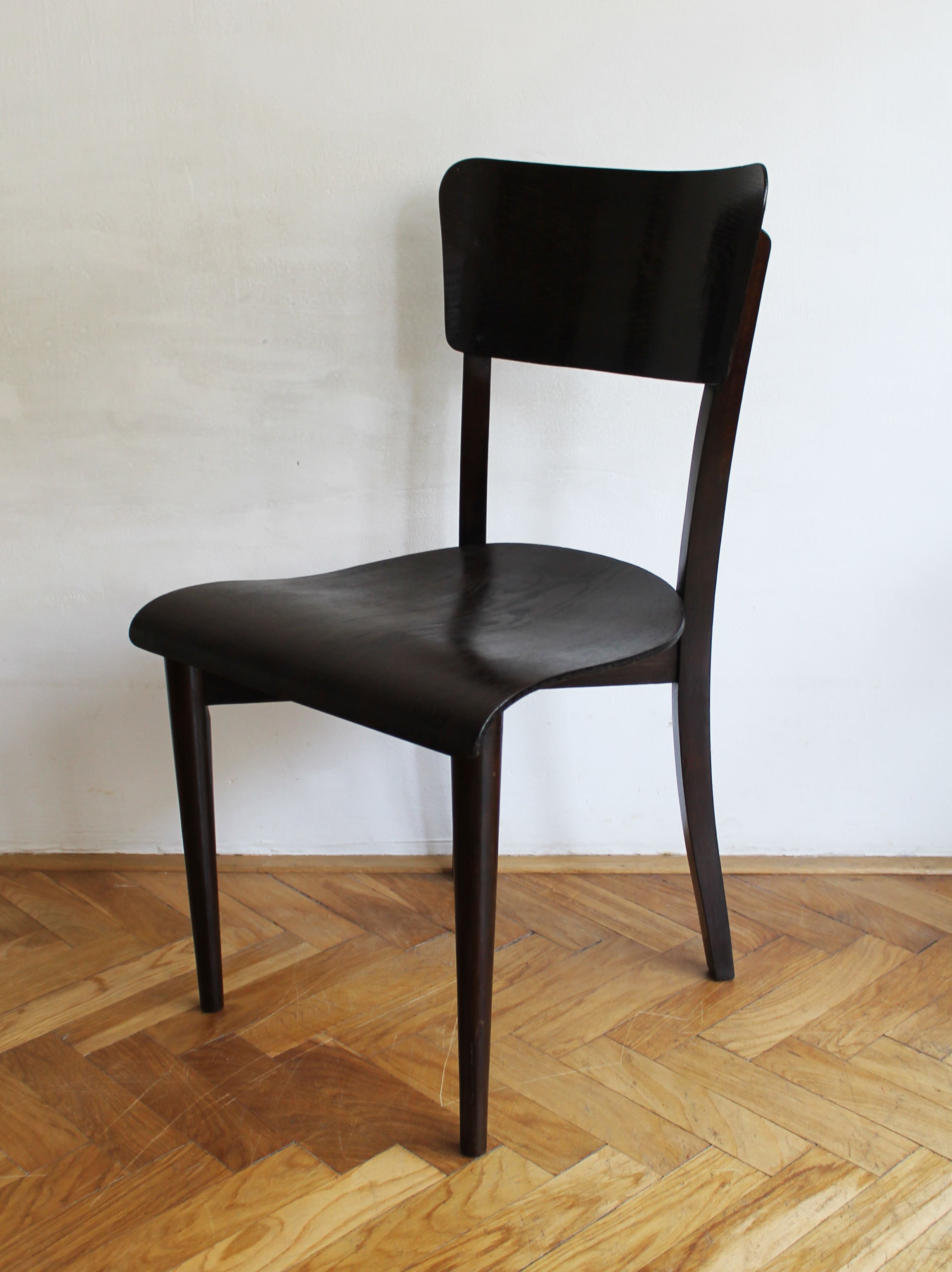
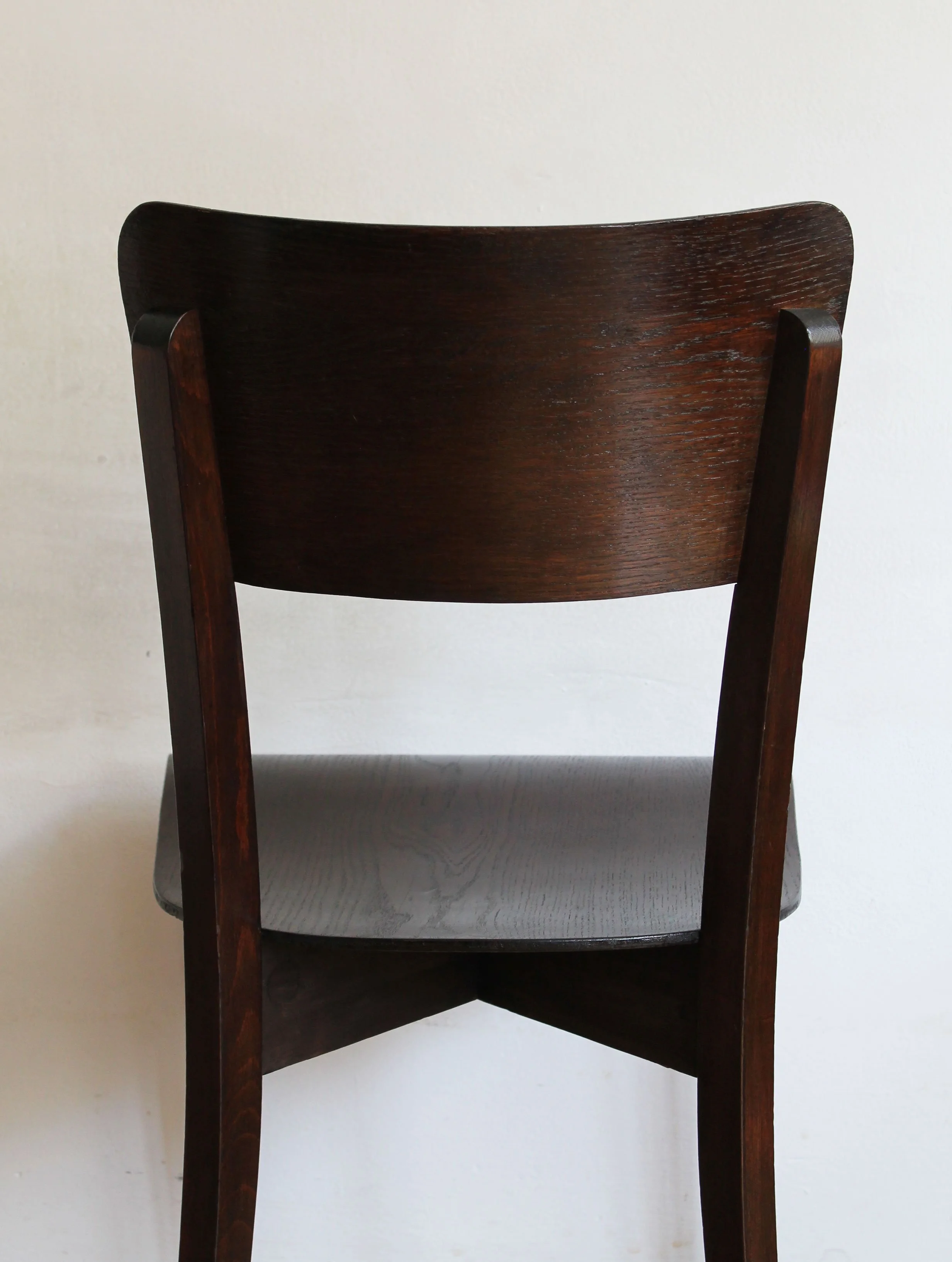
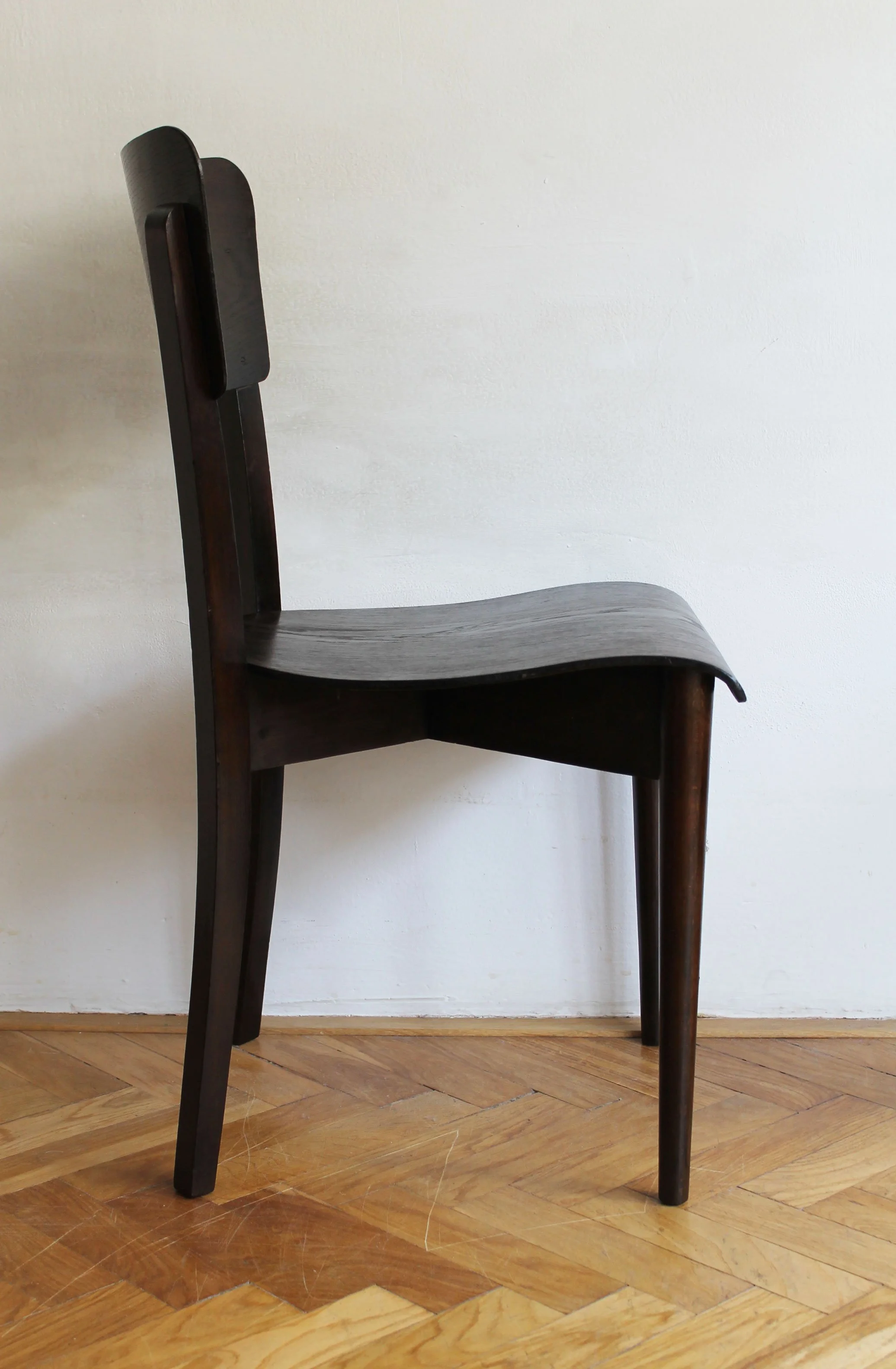
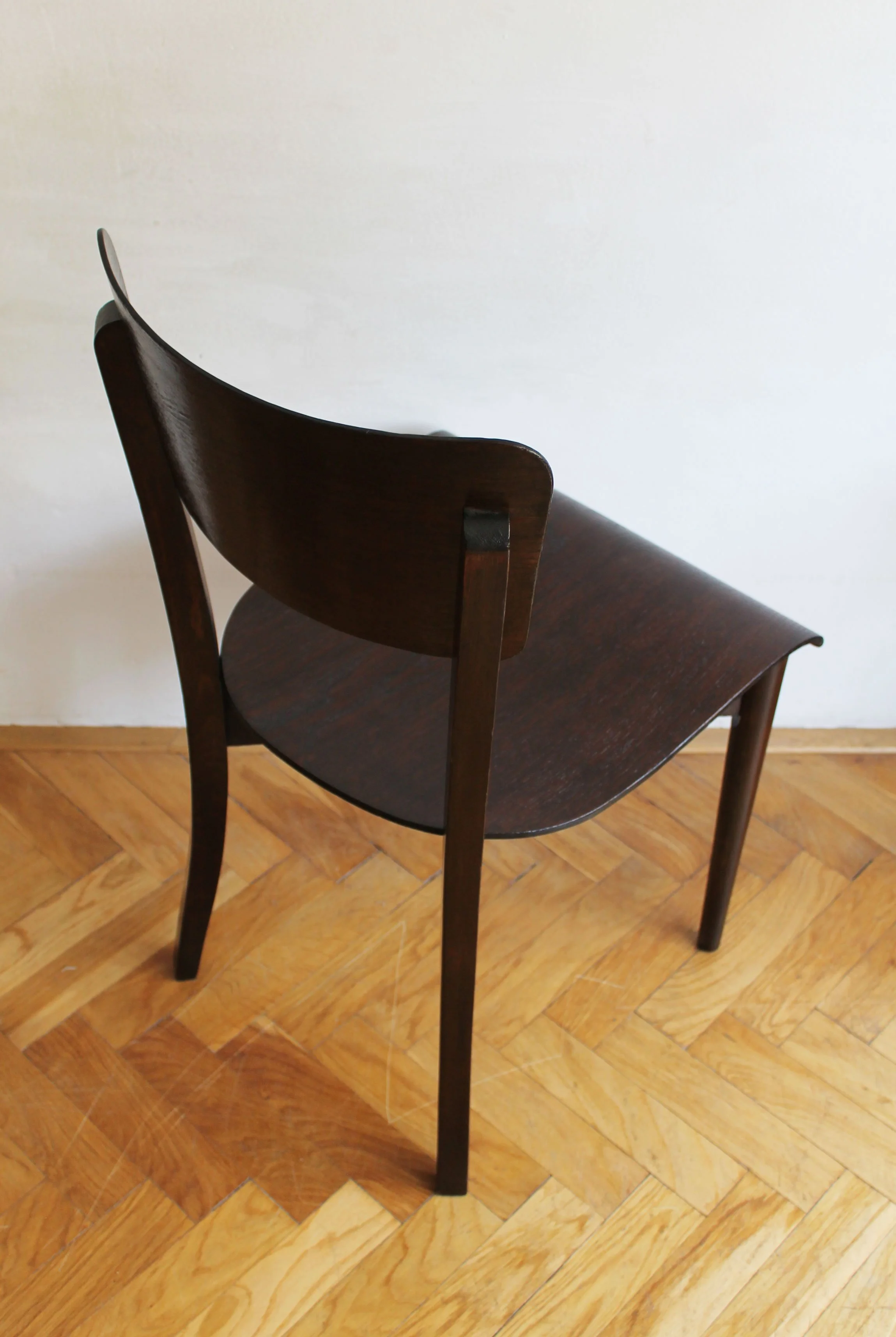
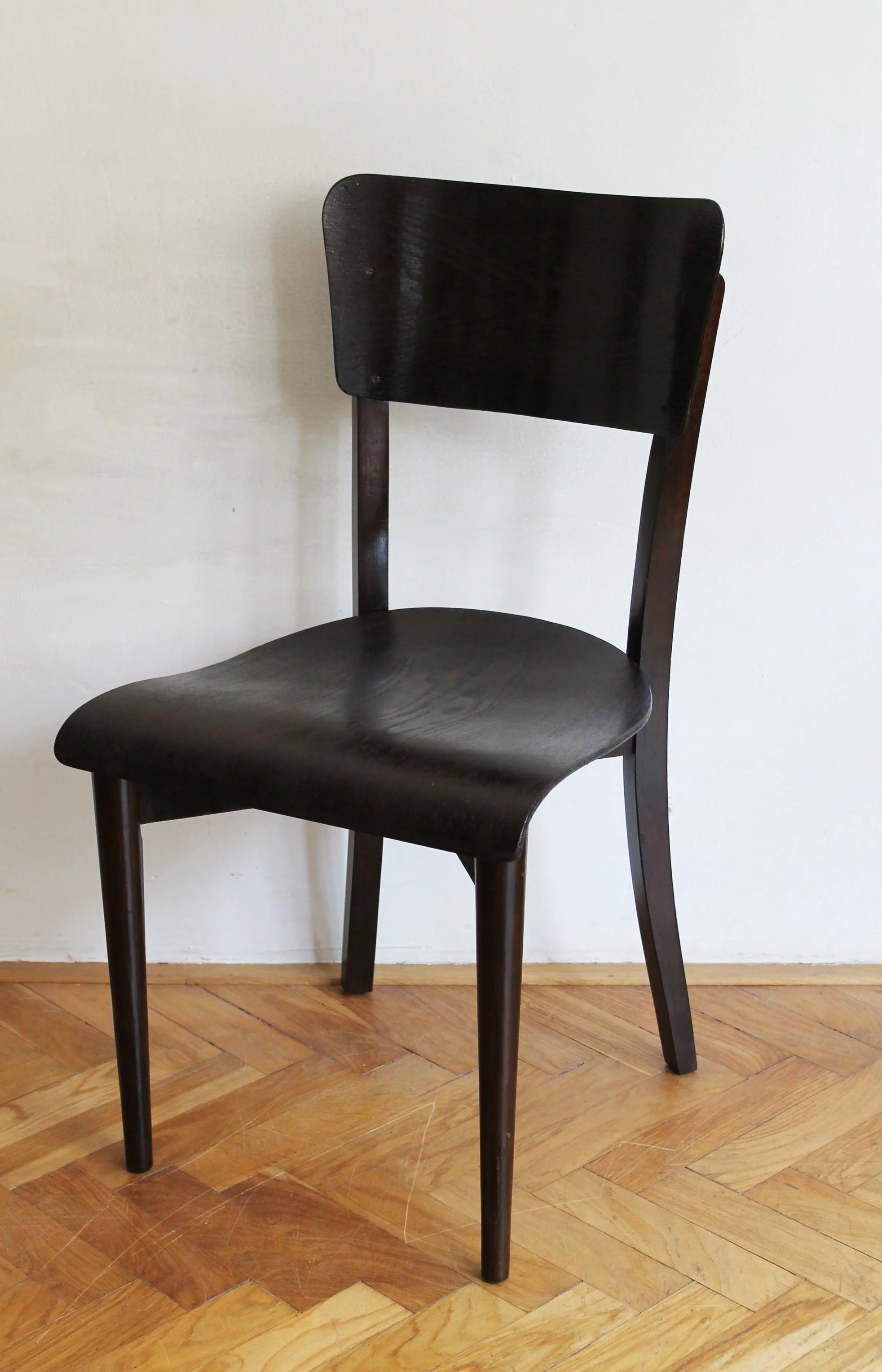
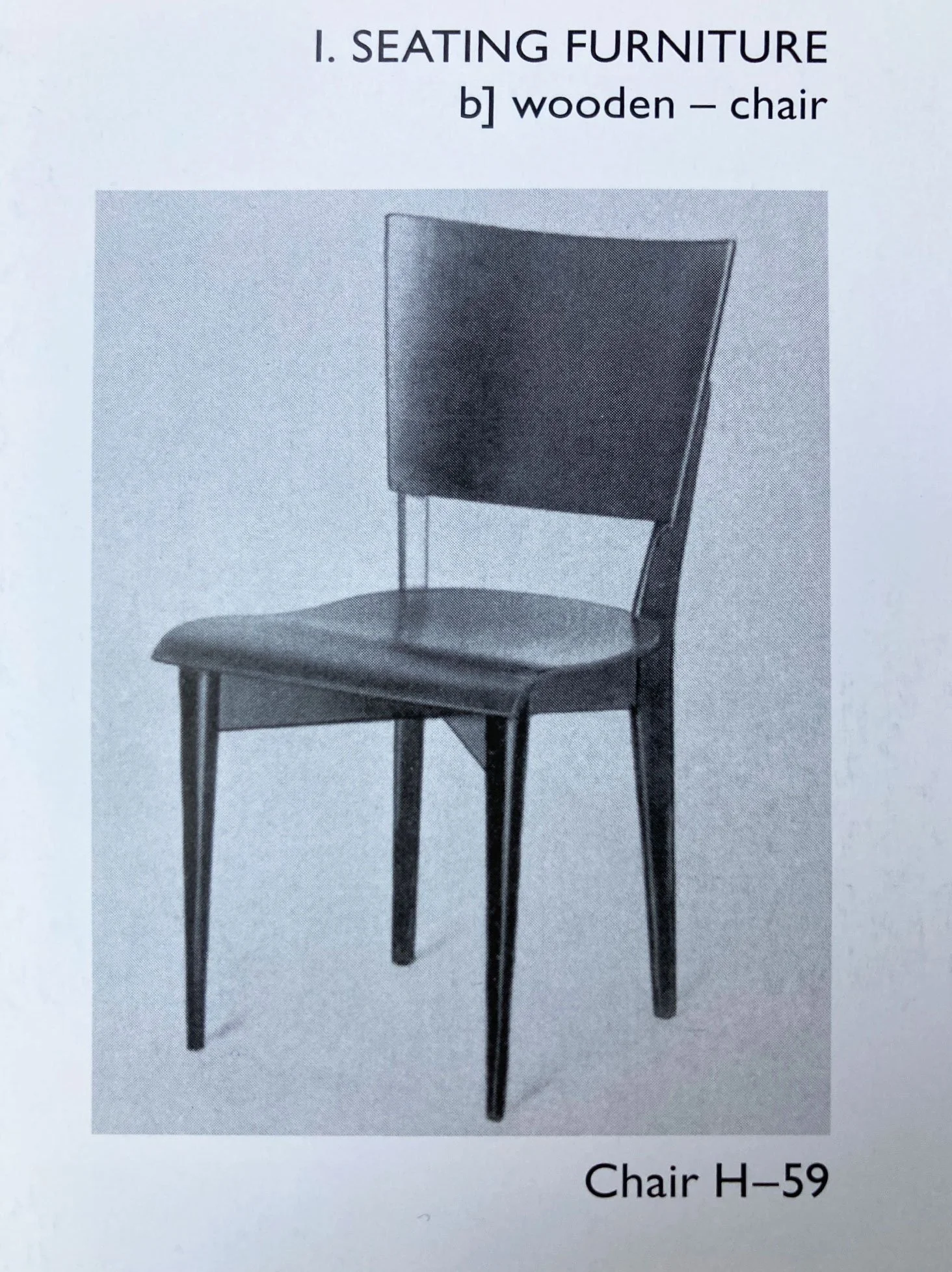
The H-373 is among the less frequently encountered chair designs created by Jindřich Halabala for UP Brno. Although related to his better-known H-59, it is distinguished by its more compact backrest and particularly refined proportions.
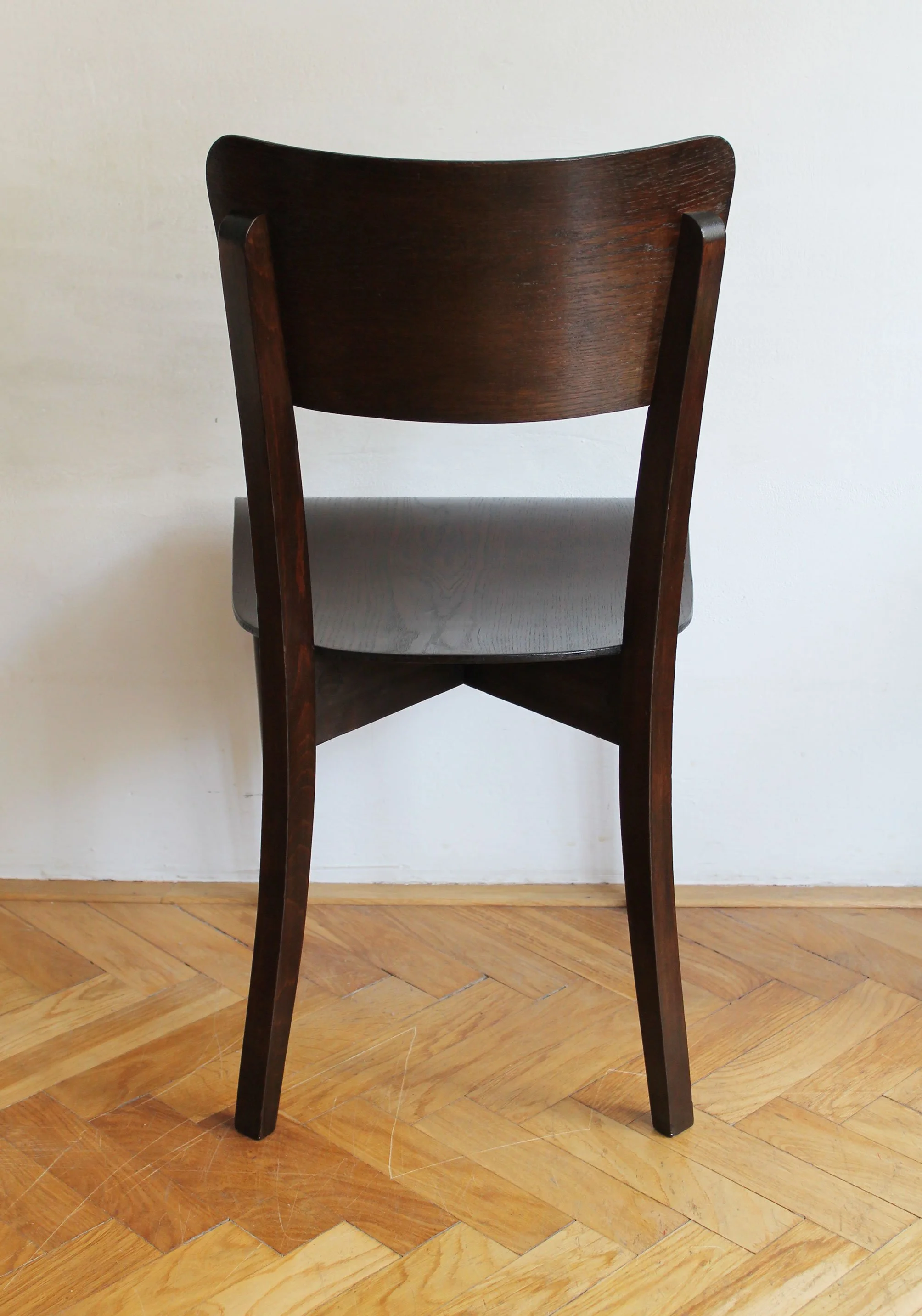
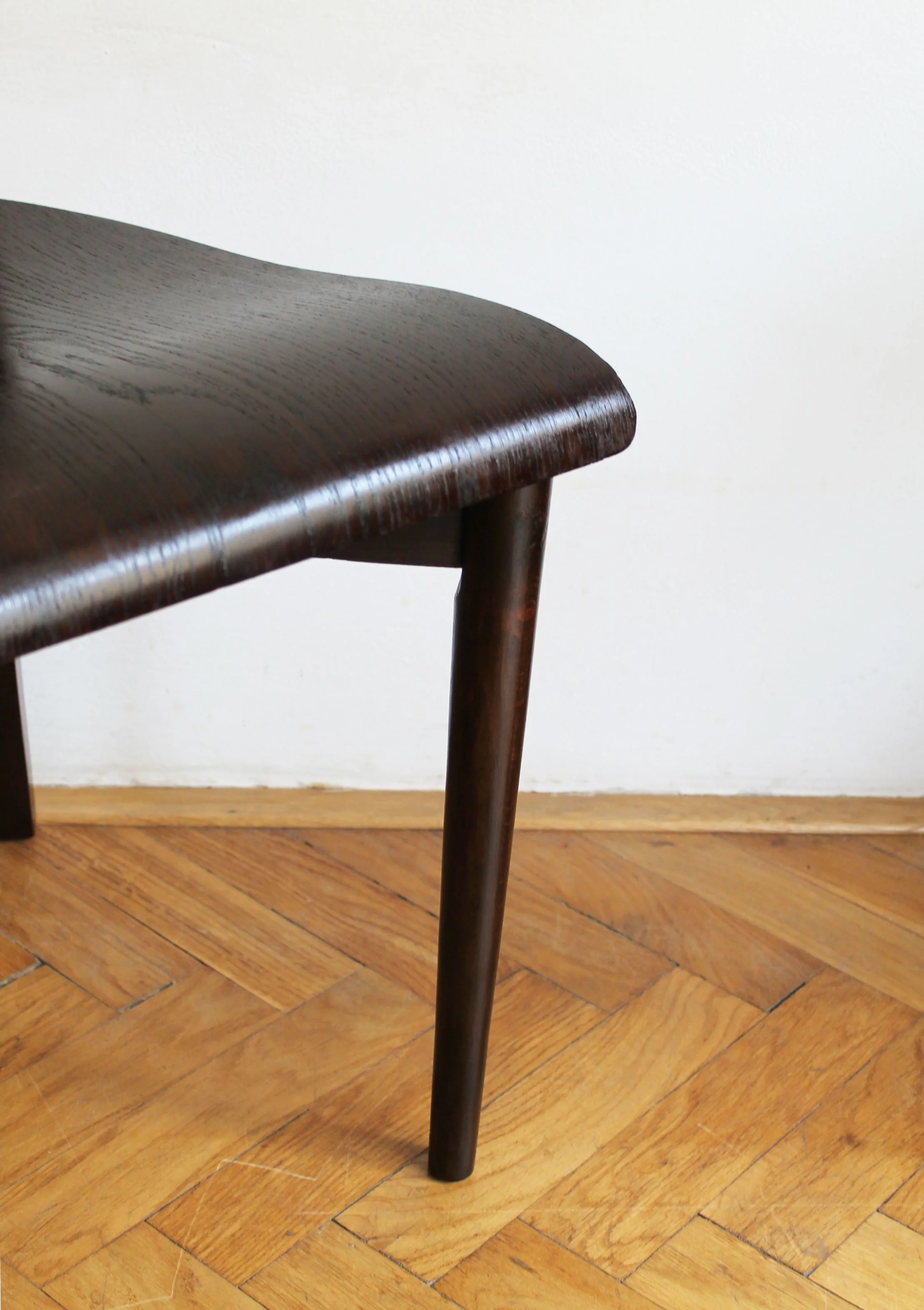
The most remarkable feature is the ingenious crossed frame. Formed from a small number of carefully shaped wooden elements, it creates the front and rear legs before extending upwards to support the backrest. Within this architectural structure sits a broad, softly curved seat that appears almost suspended.
The rich dark-brown finish accentuates the sculptural silhouette and natural grain of the beech. Rational construction is balanced by expressive curves—a characteristic combination in Halabala’s finest work.
Designed for practical everyday use, the chairs remain visually distinctive from every angle. Their compact proportions make them particularly suitable as dining chairs, occasional seating or statement pieces in a contemporary interior.
Original examples of the H-373 are considerably less common than many of Halabala’s better-known designs. Preserved together as a pair, these chairs offer a rare opportunity to acquire an important and highly individual example of interwar Czechoslovak furniture.
Details
Quantity: Pair
Designer: Jindřich Halabala
Model: H-373
Manufacturer: UP Brno
Period: 1930s
Origin: Czechoslovakia
Material: Beech
Style: Czechoslovak Modernism / Functionalism
Condition & Restoration
Both chairs have undergone careful professional restoration in our Brno workshop using traditional techniques and materials appropriate to their age.
The restoration was carried out with respect for the original construction, proportions and character of the chairs. Their dark-brown finish highlights the natural beech grain while preserving the warmth expected from furniture dating from the 1930s.
Both structures are stable and the chairs are ready for everyday use. Please examine the photographs carefully, as they form an important part of the condition description. We are also happy to provide further photographs or information before purchase.
Dimensions
Dimensions of each chair:
Width: 44 cm
Depth: 49 cm
Height: 84 cm
Seat height: 45 cm
Delivery & Returns
The chairs will be carefully packed and shipped from our studio in Brno, Czech Republic.
EU shipping: €60, confirmed at checkout
Estimated EU delivery: 3–5 working days
We also ship worldwide using trusted international couriers. Please contact us for a tailored shipping quote outside the EU.
EU customers have a 14-day right of withdrawal. Please see our Terms & Conditions for full details.
If you would like to check anything before ordering—from condition and dimensions to delivery—Martin and Amy are always happy to help throughout the process and after your chairs have arrived.
Design Note
Jindřich Halabala (1903–1978) was one of the most influential figures in twentieth-century Czech furniture design. As chief designer for UP Závody in Brno, he helped transform the company into one of Central Europe’s leading manufacturers of modern furniture.
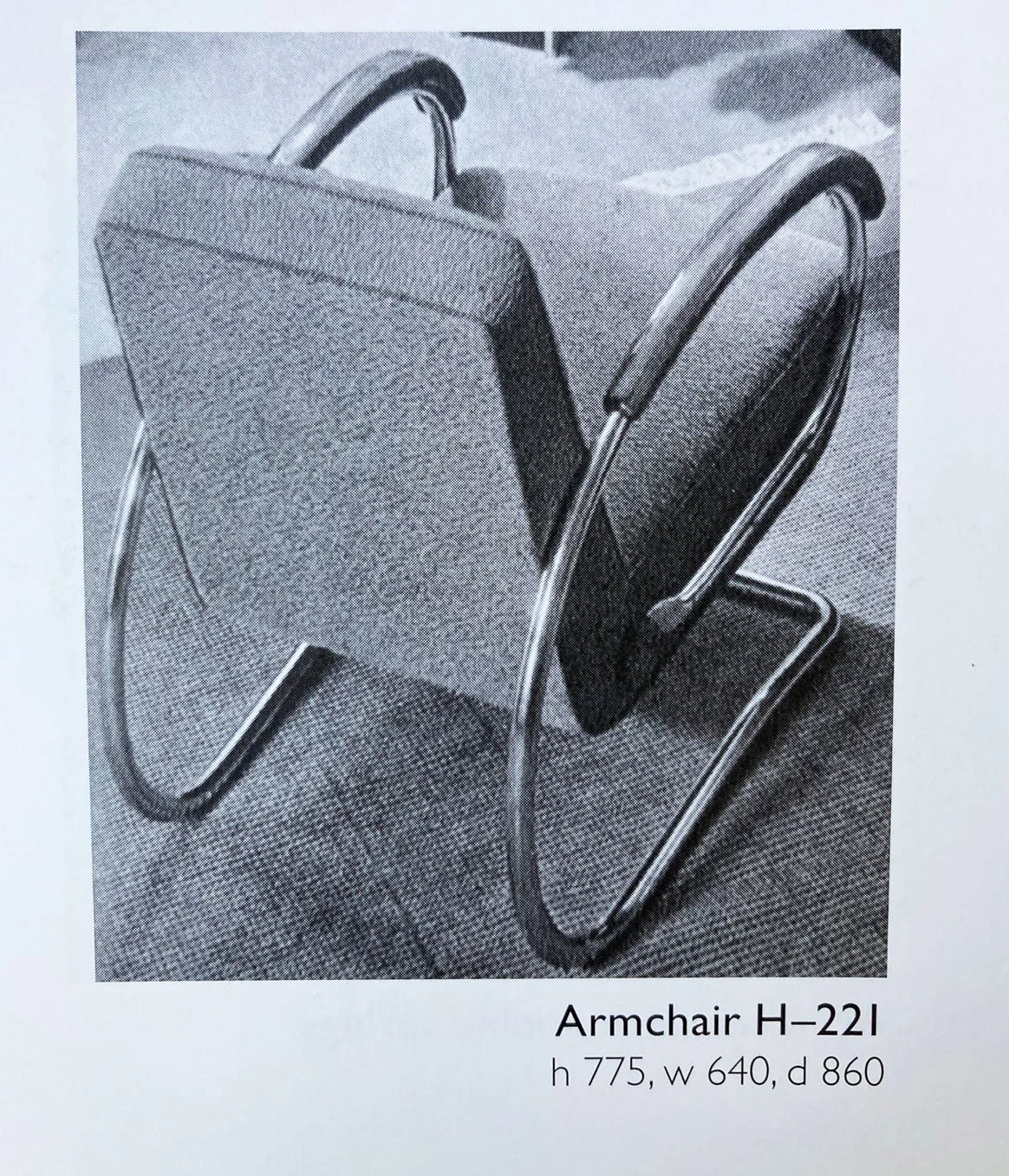
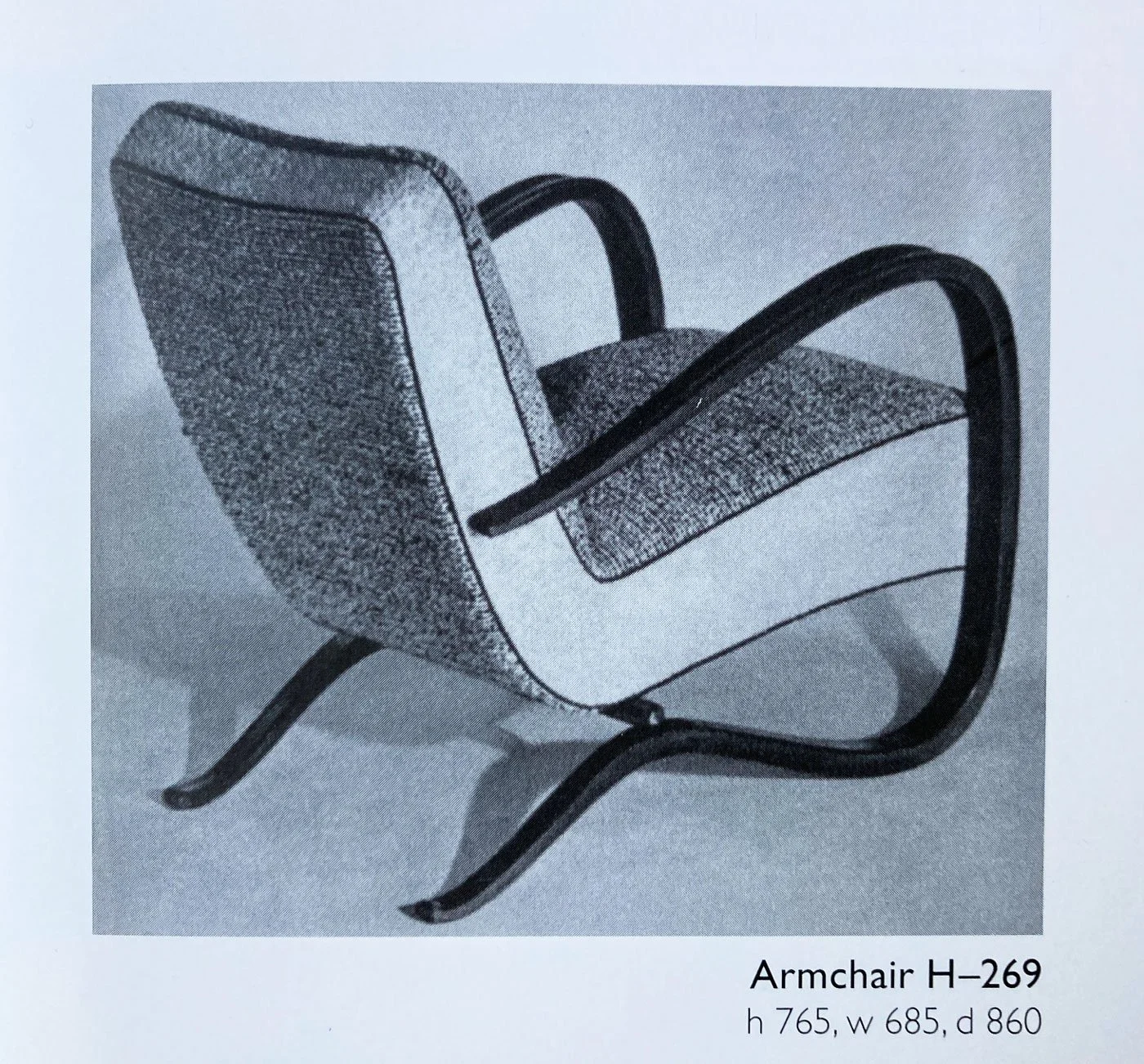
His designs combined efficient production with comfort, craftsmanship and a distinctly sculptural approach to form. While celebrated models such as the H-221 and H-269 have become internationally recognised, rarer pieces including the H-373 reveal the remarkable breadth of his work.
The H-373 demonstrates Halabala’s ability to transform a small number of functional components into an expressive and memorable structure. Its floating seat, crossed frame and balanced proportions make it both an accomplished piece of furniture and a particularly collectible example of Czechoslovak Modernism.
Discover more about Jindřich Halabala and his work.
Quisque iaculis facilisis lacinia. Mauris euismod pellentesque tellus sit amet mollis.