
Jindrich Halabala (1903–1978)
Few names are as closely associated with Czech furniture design as Jindřich Halabala. As one of the leading designers of the twentieth century, Halabala helped define the appearance of modern interiors in former Czechoslovakia and created furniture that remains highly sought after by collectors around the world.
Today, his work is celebrated for its elegant proportions, practical functionality and timeless modernist aesthetic. From iconic bentwood armchairs to sophisticated Art Deco cabinets and dressing tables, Halabala's designs continue to feel remarkably contemporary nearly a century after they were first introduced.
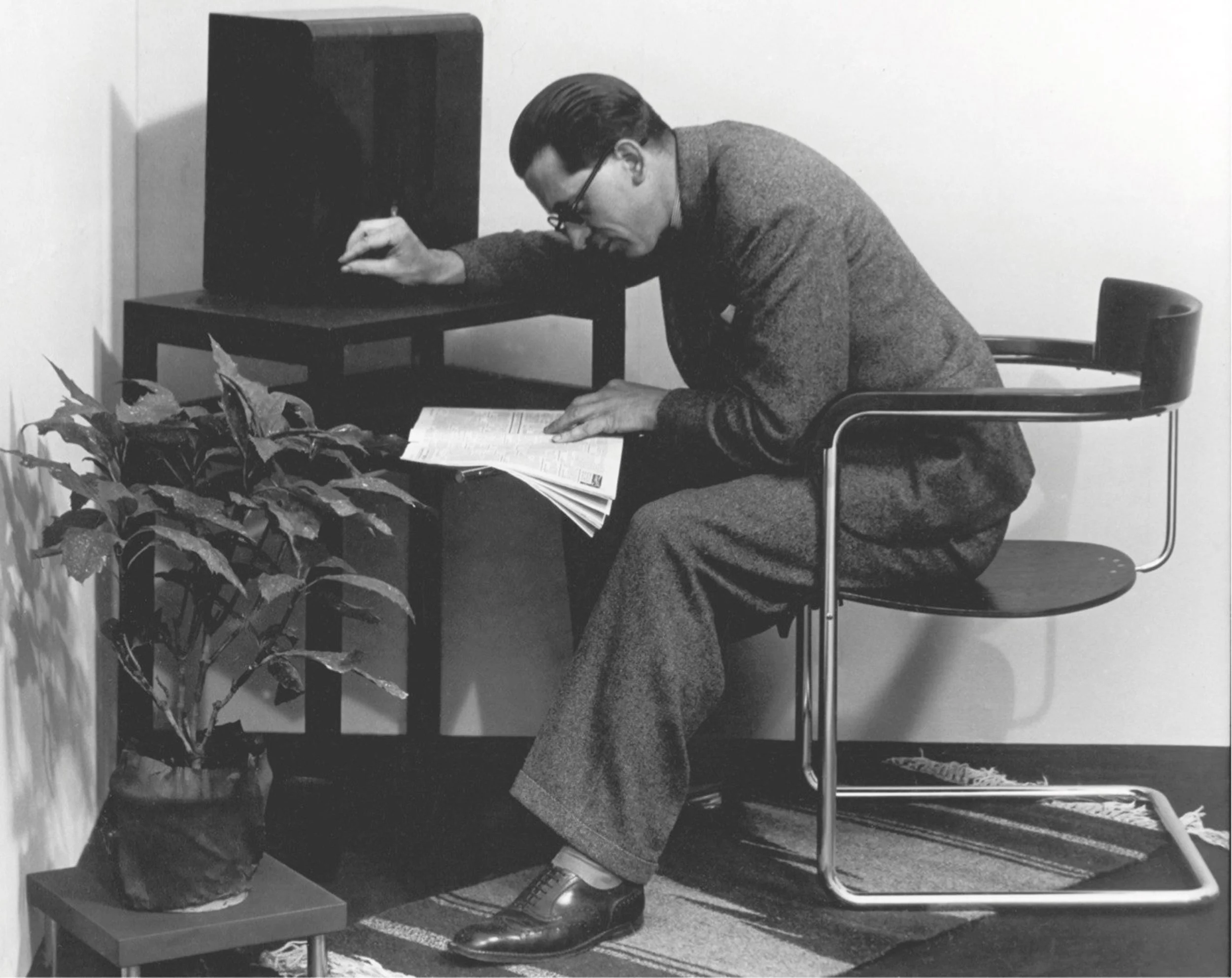
Jindřich Halabala seated in one of his armchair designs (model H-128) beside a radio table of his own design (model H-174) in an original UP Brno advertisement, Czechoslovakia, 1930s. By Barnabas archive.
Halabala and UP Brno
Jindřich Halabala spent much of his career working for UP Závody, the influential furniture manufacturer based in Brno. During the 1930s and 1940s, UP became one of the most progressive furniture producers in Central Europe, bringing modern design to a wider audience through innovative manufacturing techniques and extensive catalogue distribution.
Under Halabala's artistic direction, UP produced furniture that combined beauty, comfort and affordability. His designs reflected international modernist trends while retaining a distinctive Central European character.
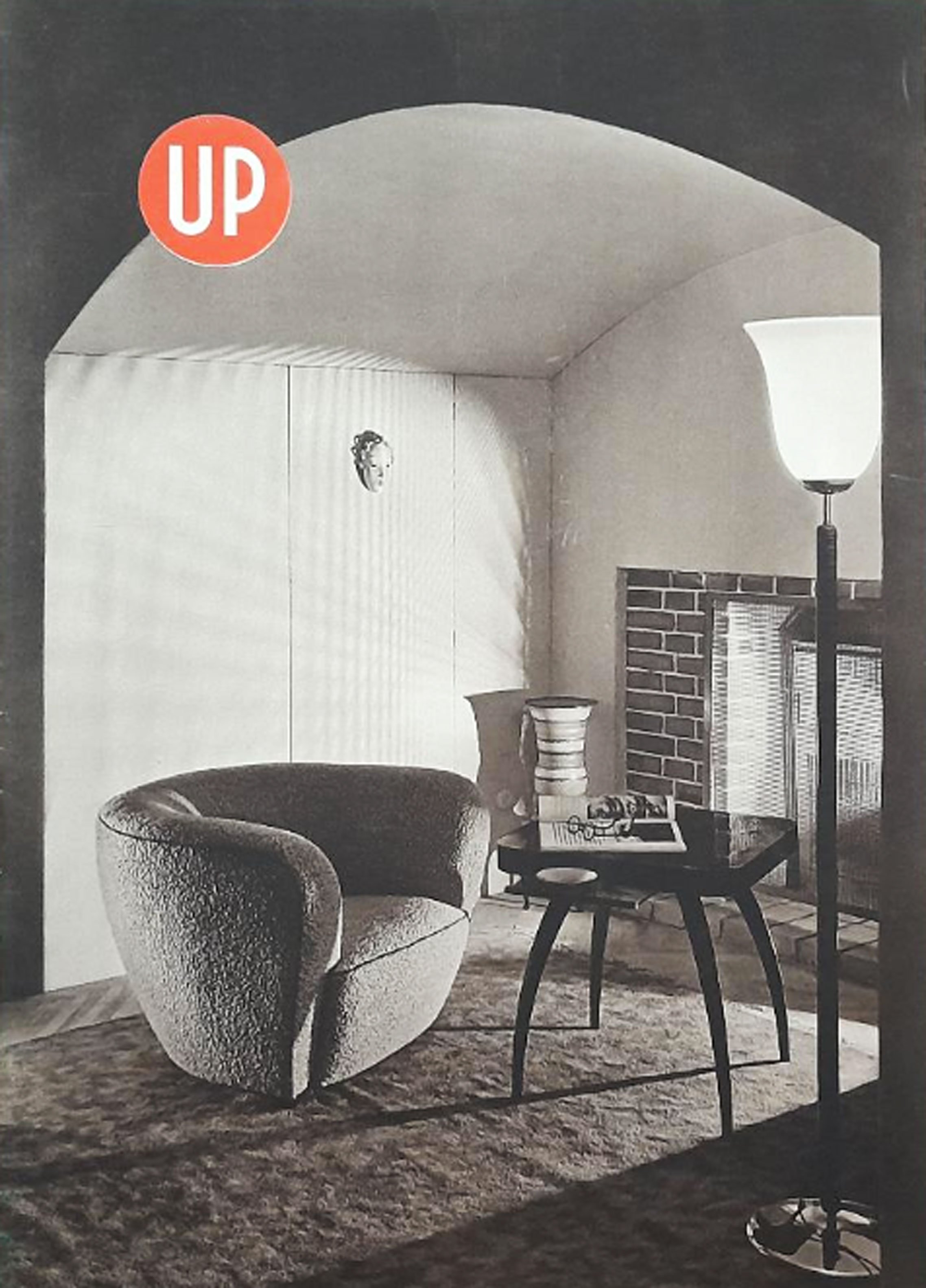
Original UP Brno furniture catalogue featuring designs by Jindřich Halabala, Czechoslovakia, 1930s. By Barnabas archive.
Iconic Designs
Among Halabala's most famous creations are the H-269 armchair, the H-70 lounge chair and a series of elegant cabinets, dressing tables and coffee tables produced by UP Brno during the interwar period.
His furniture often features flowing bentwood forms, carefully balanced proportions and thoughtful functional details. Whether designing a comfortable armchair or a practical storage piece, Halabala consistently sought harmony between form and function.
Many of these designs appeared in original UP Brno catalogues, several examples of which are shown below alongside pieces that have passed through our collection at By Barnabas.
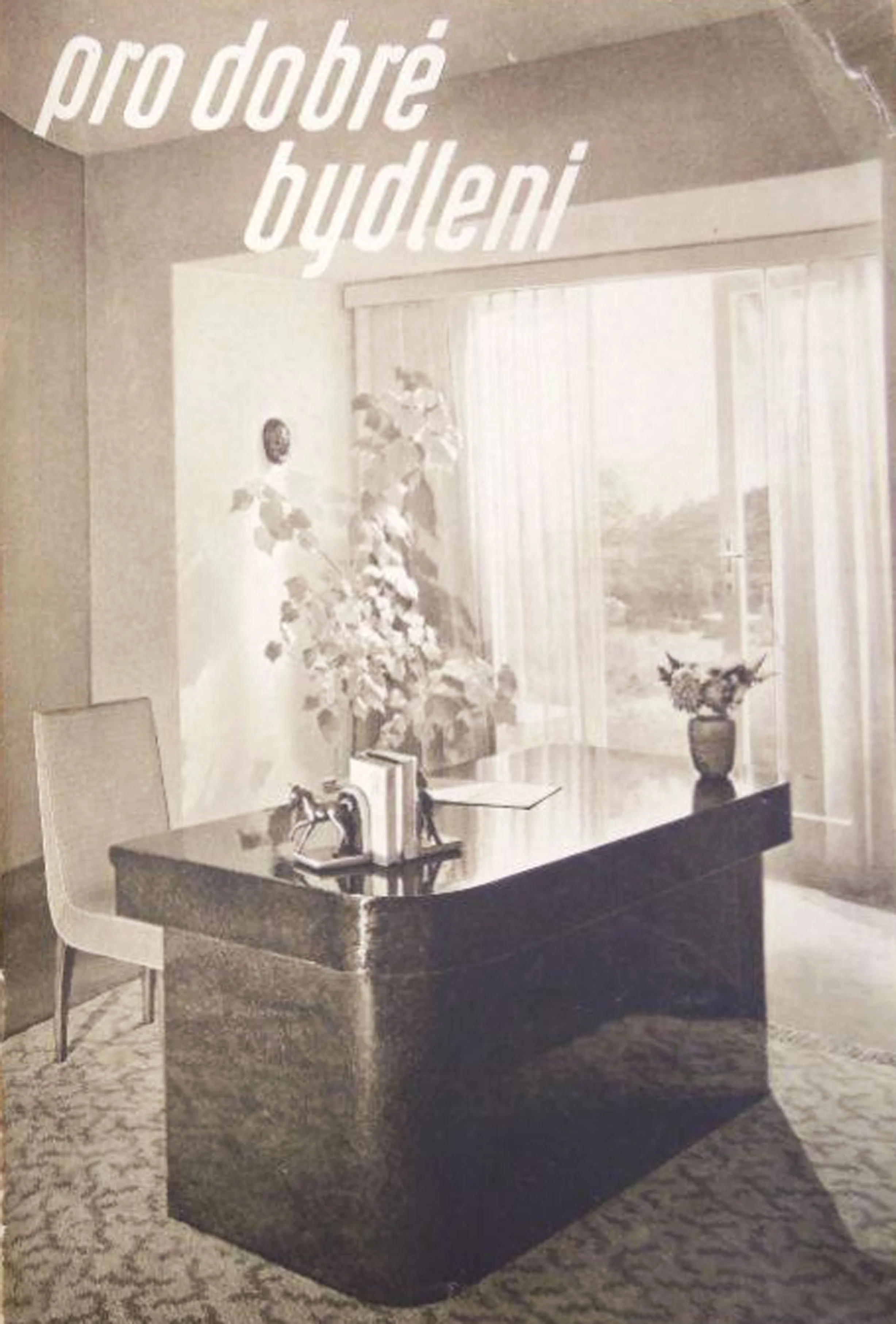
Modern interior furnished by UP Brno, featuring furniture designed under the artistic direction of Jindřich Halabala, 1930s, By Barnabas archive
Original UP Brno Catalogues
The catalogue pages presented here offer a fascinating glimpse into how Halabala's furniture was originally marketed and displayed. They document a period when modern living, functional design and high-quality craftsmanship were becoming increasingly important elements of everyday life.
By comparing these historical catalogues with surviving examples, we can better appreciate the enduring quality and timeless appeal of Halabala's work.
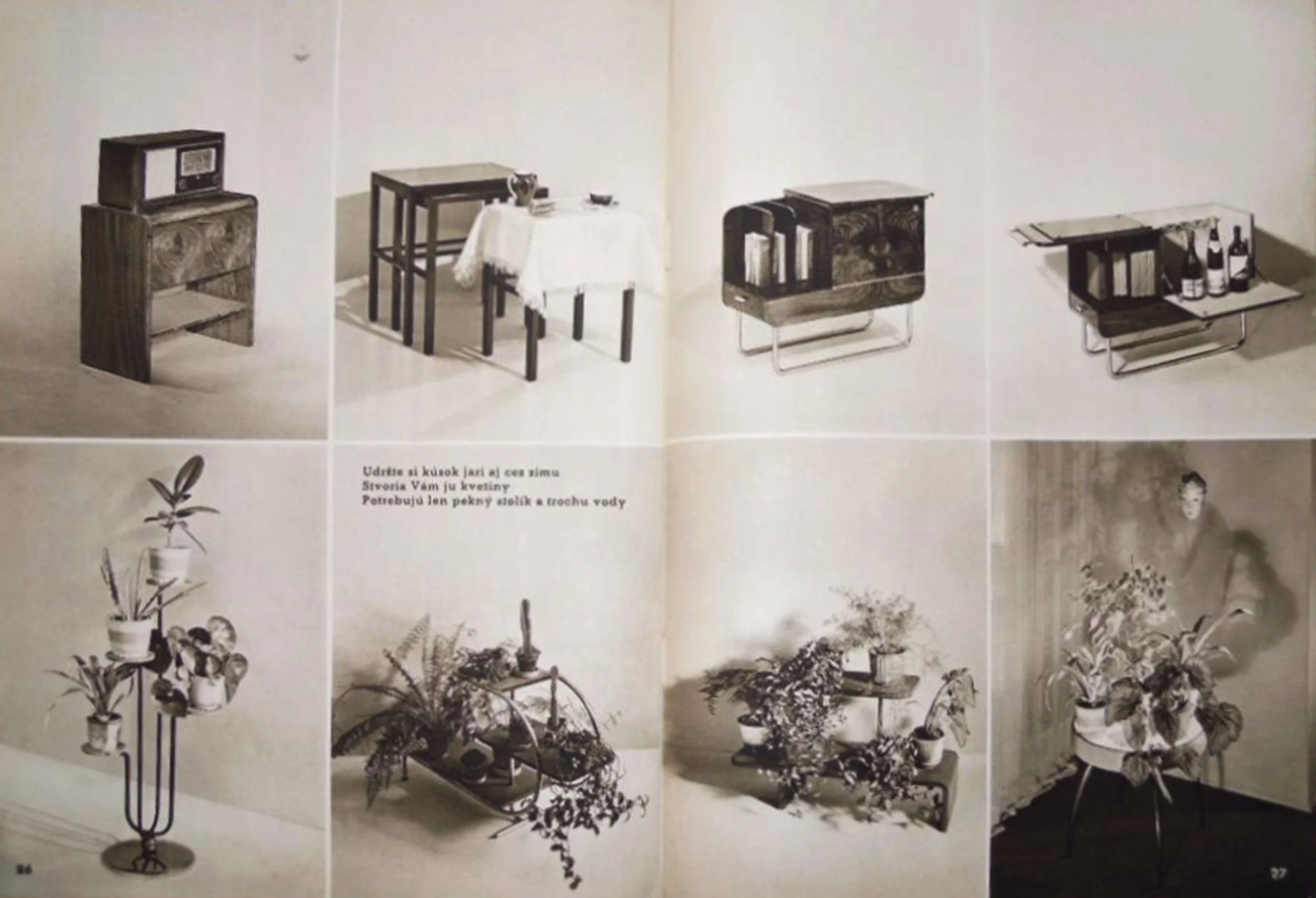
Original UP Brno sales catalogue illustrating furniture by Jindřich Halabala, Czechoslovakia, 1930s. By Barnabas archive.
Jindrich Halabala at By Barnabas
At By Barnabas, we actively seek out original furniture designed by Jindřich Halabala and produced by UP Brno. Over the years we have restored and delivered Halabala pieces to collectors, architects and design enthusiasts across Europe, North America and Asia.
Below you will find examples of both currently available and previously sold pieces from our collection, helping to illustrate the breadth and lasting popularity of Halabala's designs.
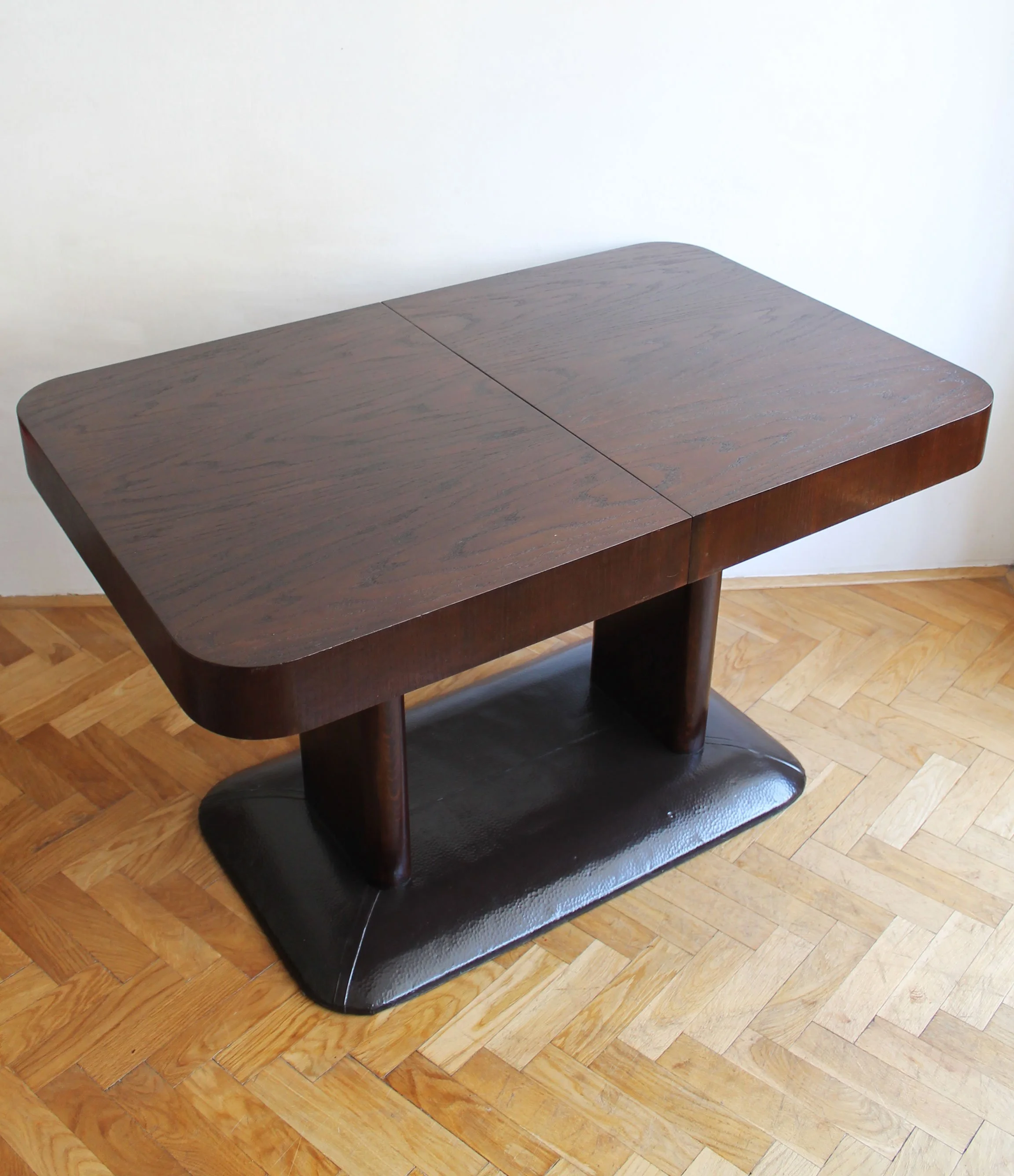
UP Brno Extendable Dining Table by Jindrich Halabala, 1930s
This extendable dining table by UP Brno is a practical and well-designed piece, made for both everyday use and larger gatherings. Whether it’s a family meal or a dinner with friends, it adapts easily to the occasion. Shop this piece here
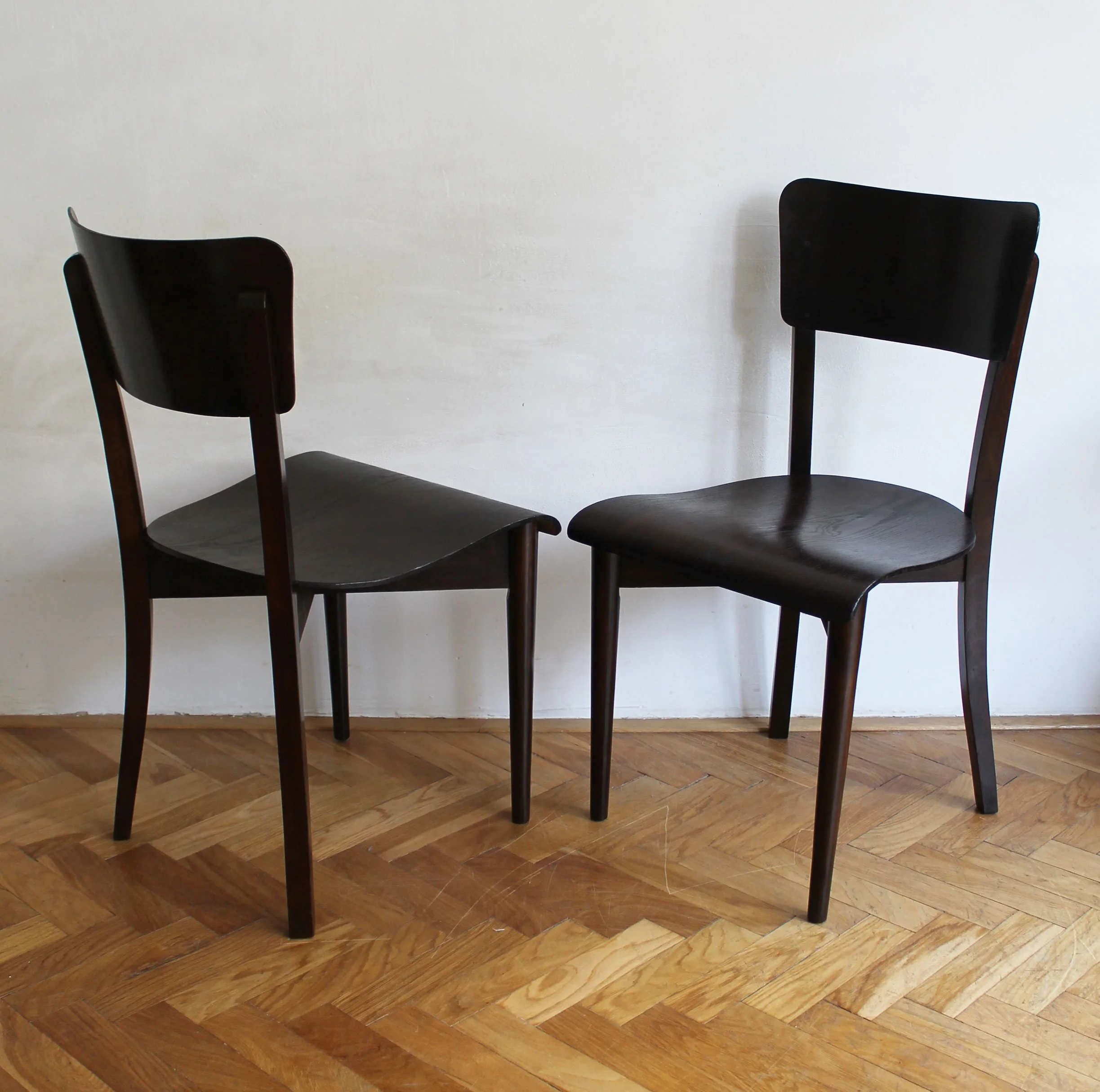
Pair of H-353 Chairs by Jindrich Halabala, UP Brno, 1930s
This extremely rare pair of H-353 chairs was designed by Jindřich Halabala and produced by UP Brno during the 1930s, a period widely regarded as the golden age of Czech modern furniture design. Shop this set here
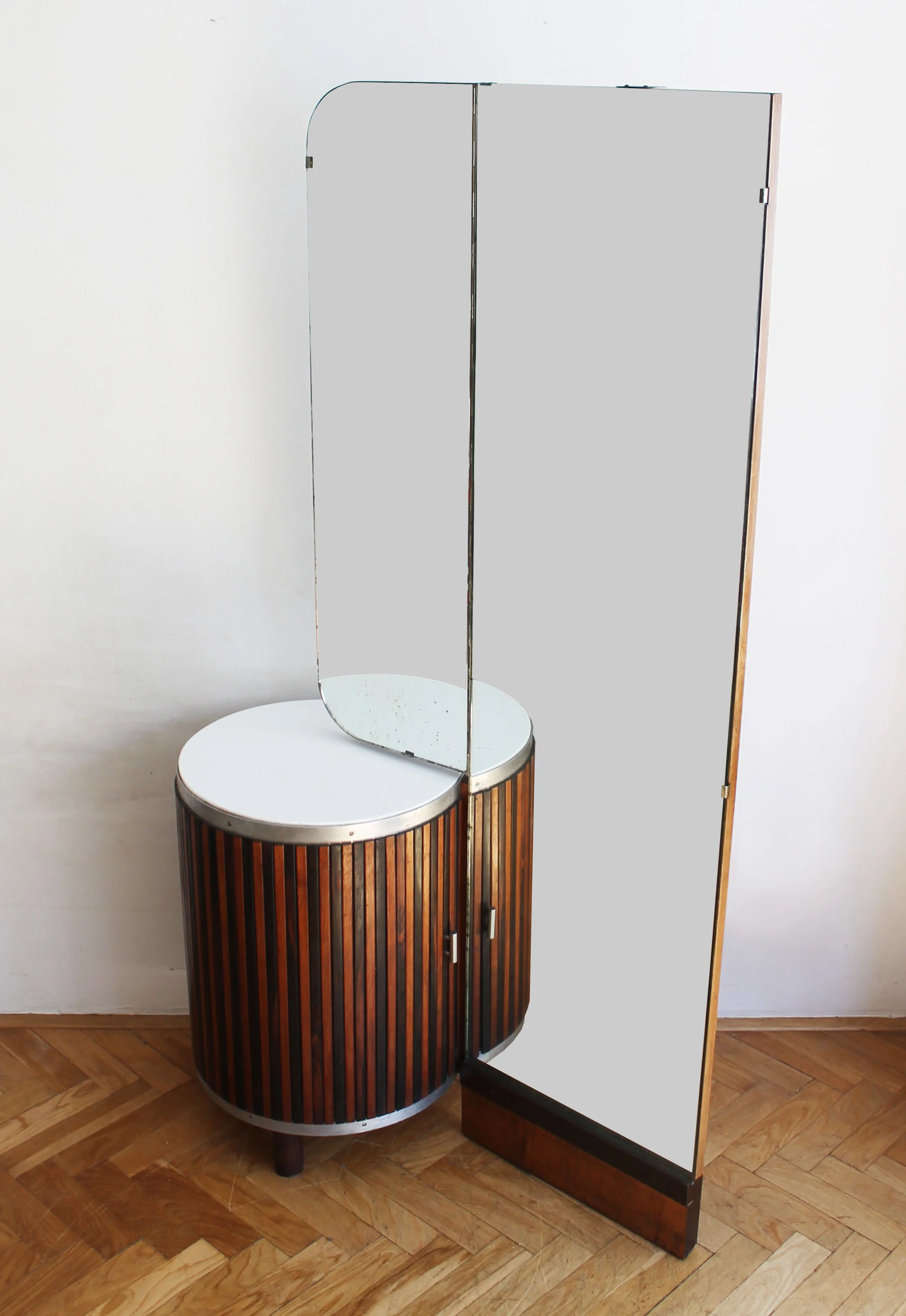
1930s Dressing Table by UP Brno
This dressing table is a rare 1930s piece, believed to be designed by Jindřich Halabala for UP Brno in the late functionalist period. It reflects the clear formal language of interwar Central European modernism, where proportion, material clarity, and functional composition were central principles. Shop this piece here
Jiri Jiroutek (1928–2023)
Jiří Jiroutek was one of the most important Czech furniture designers of the post-war period, best known for his iconic U-450 series of modular furniture designed for Interiér Praha in the late 1950s and early 1960s. With its distinctive combination of natural wood, colourful surfaces and elegant splayed legs, the U-450 became one of the defining expressions of the Czech Brussels Style and remains among the most recognisable examples of Czech Mid-Century Modern design.
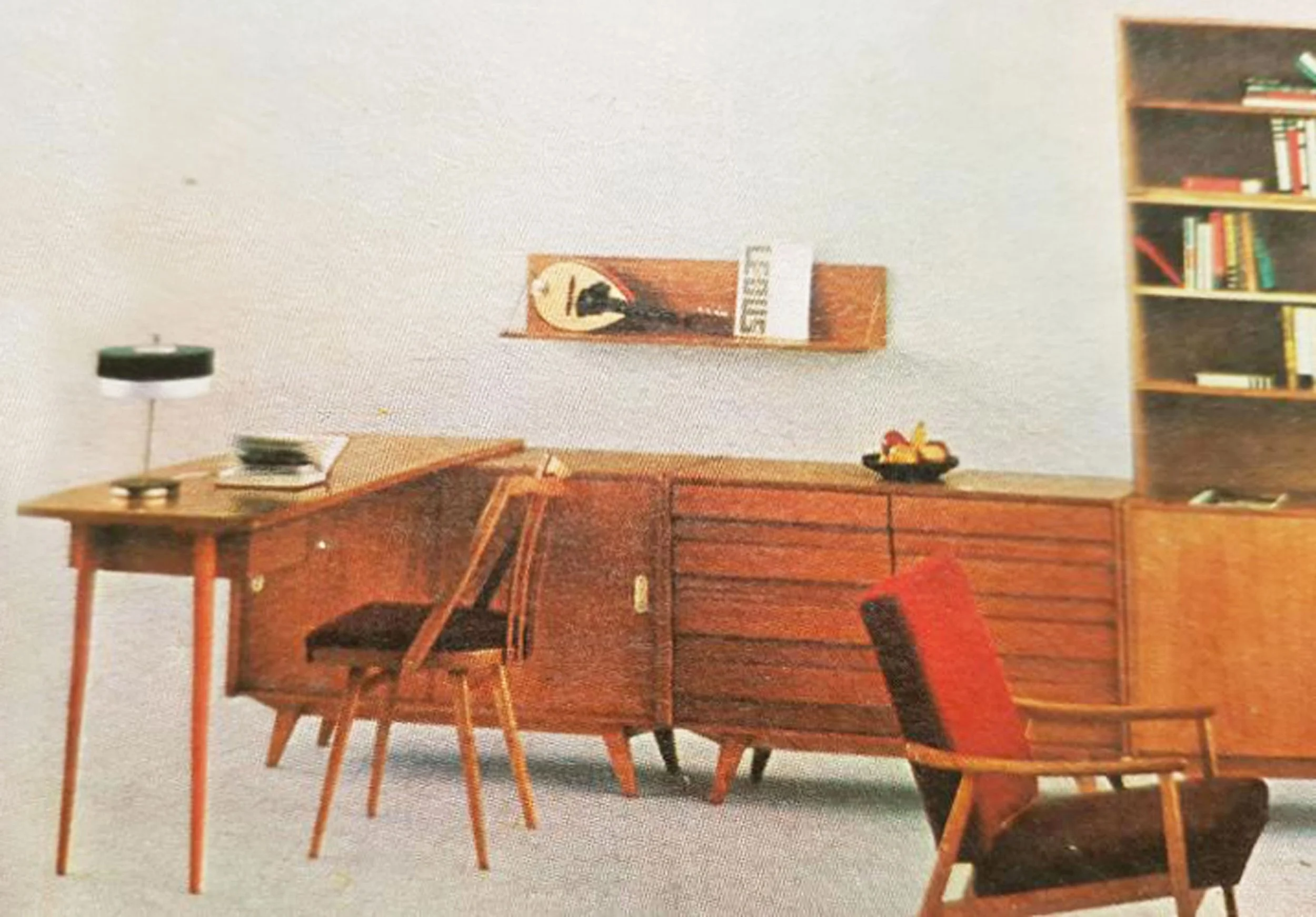
Jiří Jiroutek’s U-450 modular furniture series for Interiér Praha, Czechoslovakia, 1960s. By Barnabas archive.
Born in Pardubice in 1928, Jiroutek developed a close relationship with furniture and craftsmanship from an early age. After the Second World War, he worked in his uncle’s joinery workshop, where he gained a practical understanding of materials and construction. This experience remained fundamental to his approach throughout his career: Jiroutek believed that good furniture should not only look attractive, but also be practical, affordable and suitable for everyday life.
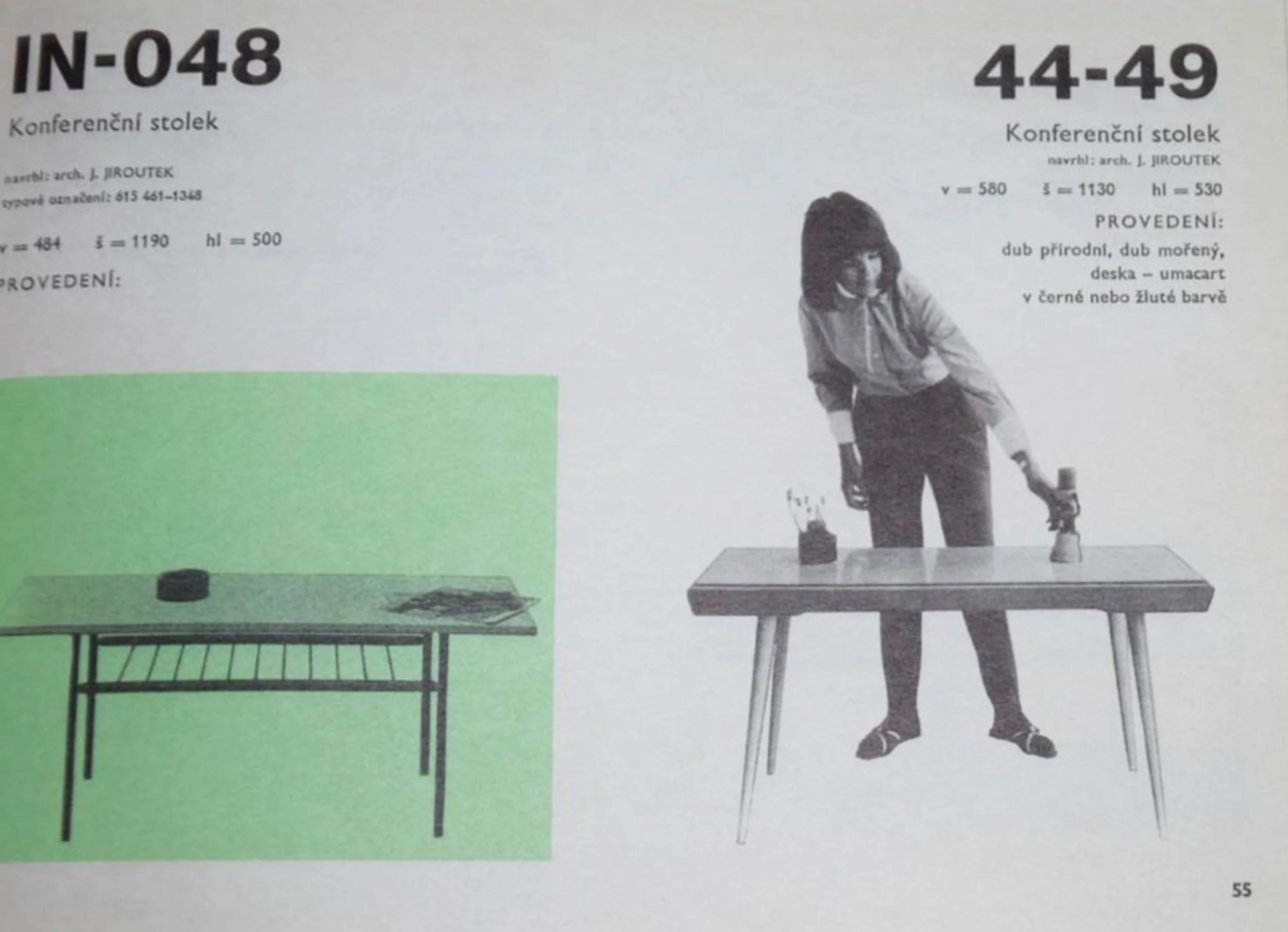
Formica and wood occasional table designed by Jiří Jiroutek for Interiér Praha, Czechoslovakia, 1960s. By Barnabas archive.
Jiroutek joined Interiér Praha in the early 1950s, where he became increasingly involved in the development of modern furniture for the rapidly changing Czechoslovak home. In 1954, he designed one of the country’s early modular kitchen systems. His experience with modular construction would later become central to his most famous work.
The breakthrough came at the end of the 1950s. Inspired by the atmosphere and visual language surrounding the 1958 Brussels World’s Fair, Jiroutek began experimenting with stronger colours, new proportions and a lighter, more playful approach to furniture. His U-453 chest of drawers, designed in 1958, became the starting point for the wider U-450 series. The combination of contrasting colours – famously black, grey and pink on the original U-453 – with warm wood veneer and angled legs gave the furniture a distinctly modern character.
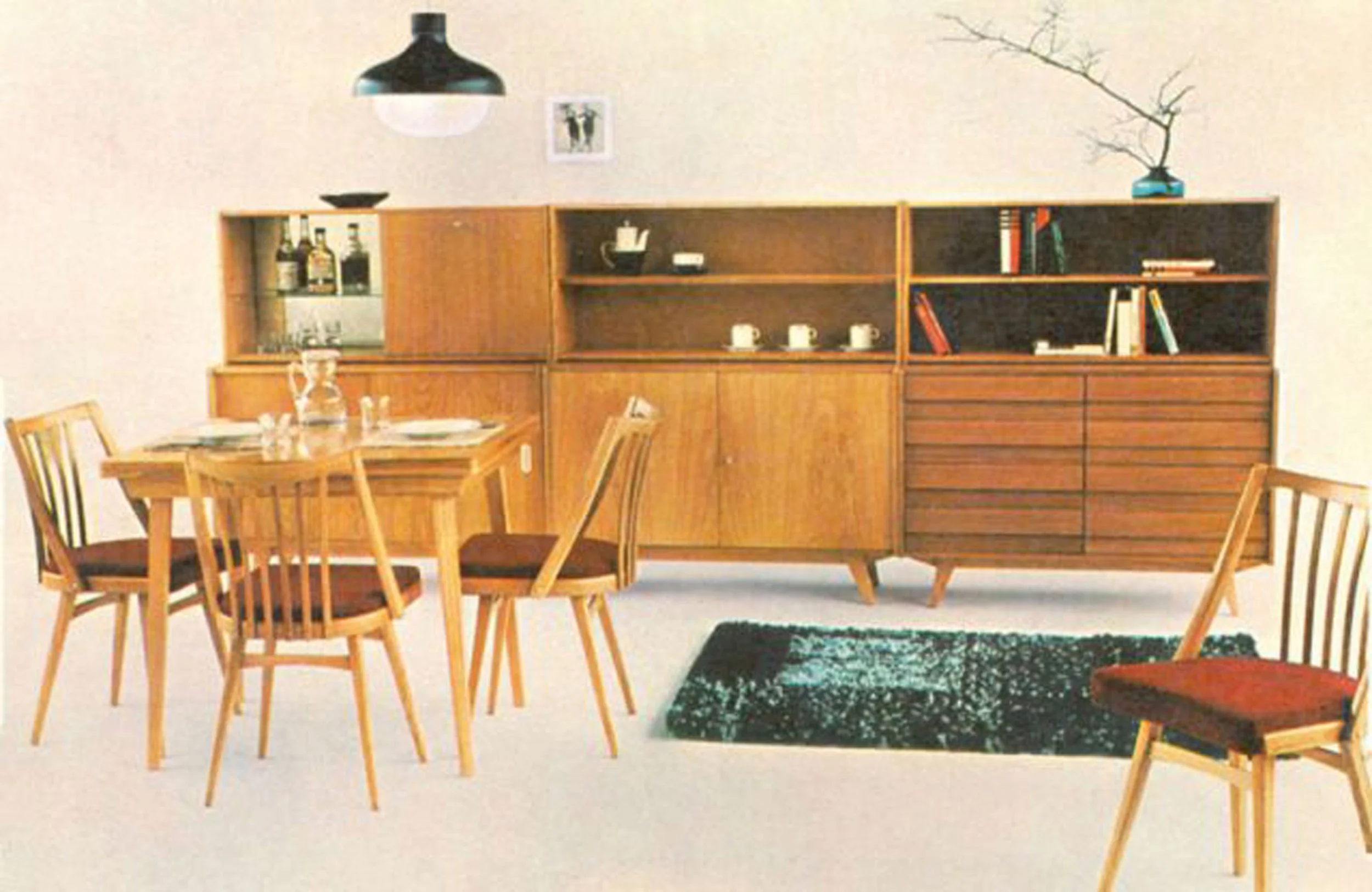
Living room furnished with Jiří Jiroutek’s modular designs for Interiér Praha, Czechoslovakia, 1960s. By Barnabas archive.
Rather than designing isolated pieces, Jiroutek approached furniture as a system. The U-450 series consisted of numerous individual components that could be combined according to the needs of different interiors. This modular approach made it possible to manufacture the furniture efficiently while offering customers considerable flexibility. It also helped make modern design more accessible to a much wider audience in Czechoslovakia. The U-450 range eventually became one of Interiér Praha’s most successful furniture programmes.
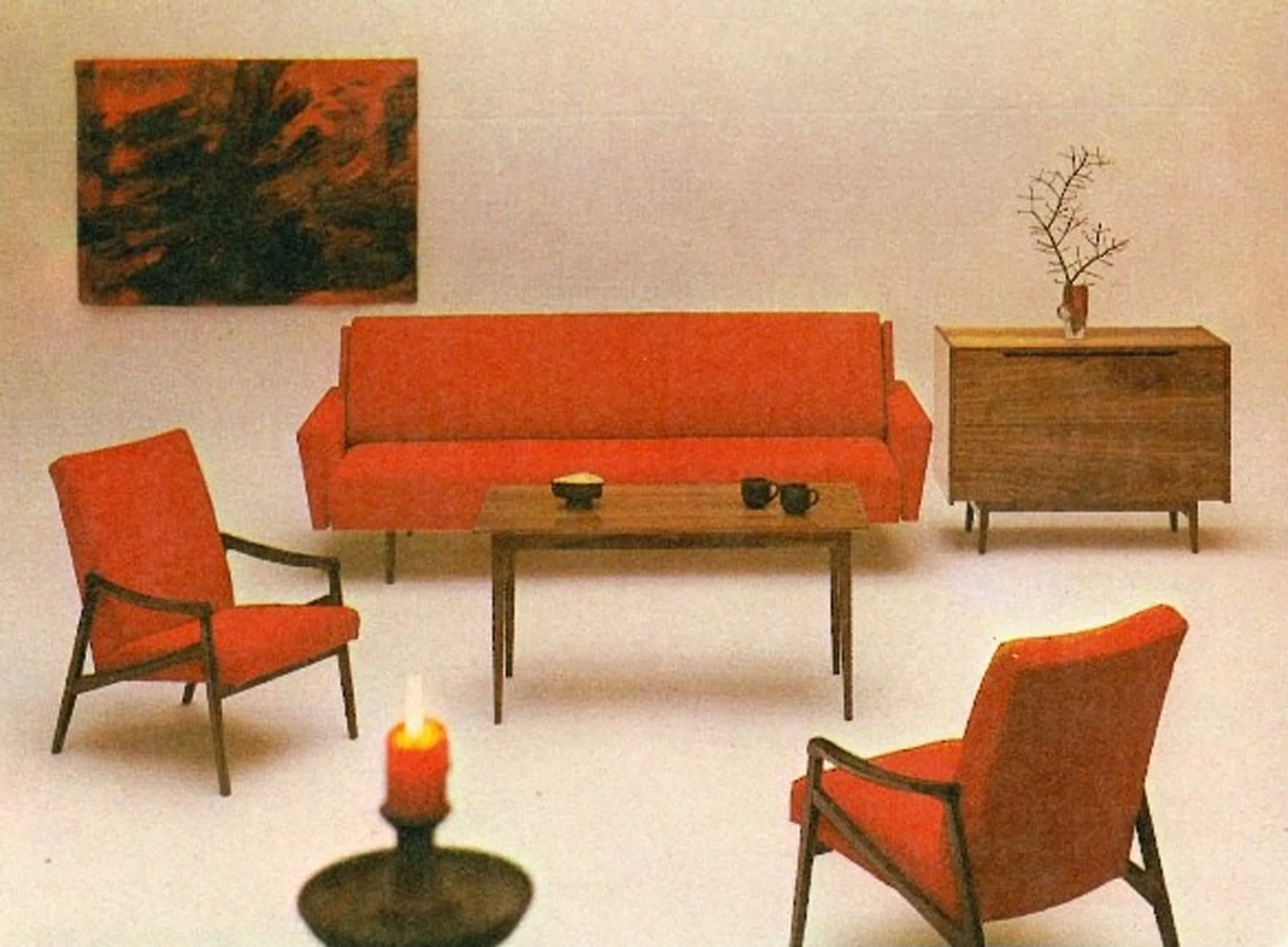
Interiér Praha catalogue interior featuring furniture designed by Jiří Jiroutek, Czechoslovakia, 1960s, By Barnabas archive.
Jiroutek continued to develop furniture for Interiér Praha throughout the following decades, designing further cabinets and storage systems as well as tables, seating and complete interior solutions. His work combined a strong sense of visual composition with a practical understanding of construction and mass production. This balance between design and functionality is one of the reasons his furniture continues to feel remarkably contemporary today.
In 1968, Jiroutek met IKEA founder Ingvar Kamprad during Kamprad’s visit to Czechoslovakia. Impressed by Jiroutek’s technical knowledge and ideas about furniture construction, Kamprad invited him to work for IKEA in Sweden. From 1969 to 1972, Jiroutek contributed to the development of furniture construction and flat-pack solutions, gaining valuable insight into international furniture production and distribution.
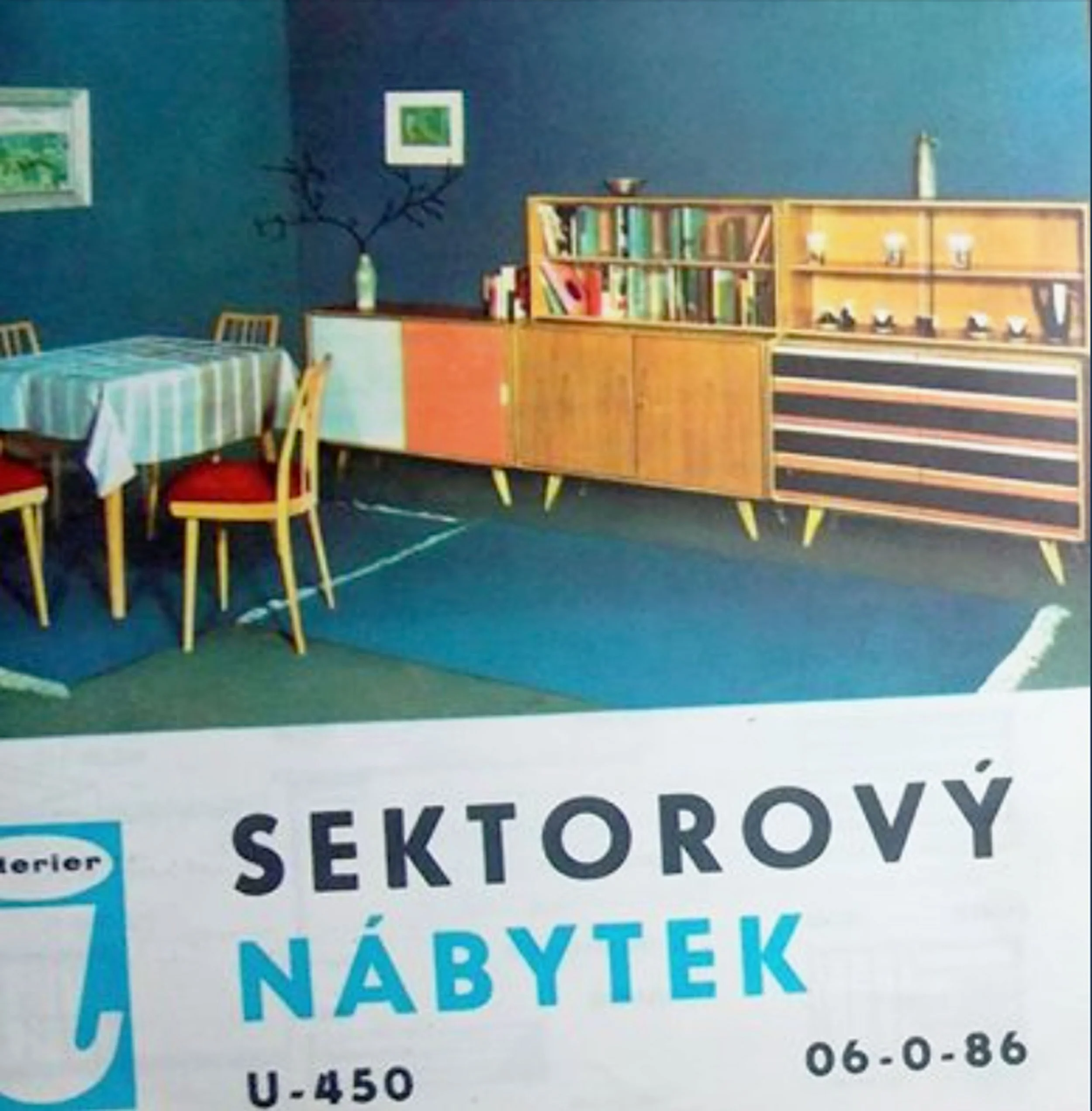
Original Interiér Praha advertisement featuring furniture by Jiří Jiroutek, Czechoslovakia, 1960s. By Barnabas archive.
After returning to Czechoslovakia, Jiroutek was no longer allowed to work as a designer at Interiér Praha and subsequently worked in sales and international trade. In 1992, he established his own Atelier Jiroutek, focusing primarily on interiors for banks and insurance companies. Remarkably, he continued designing well into old age.
Today, Jiří Jiroutek’s furniture is highly sought after by collectors and enthusiasts of Czech and European Mid-Century Modern design. The enduring appeal of the U-450 series lies not only in its distinctive Brussels Style aesthetic, but also in the intelligence of its construction: compact proportions, modularity, practical storage and carefully considered details make these pieces as useful today as they were when they first appeared.
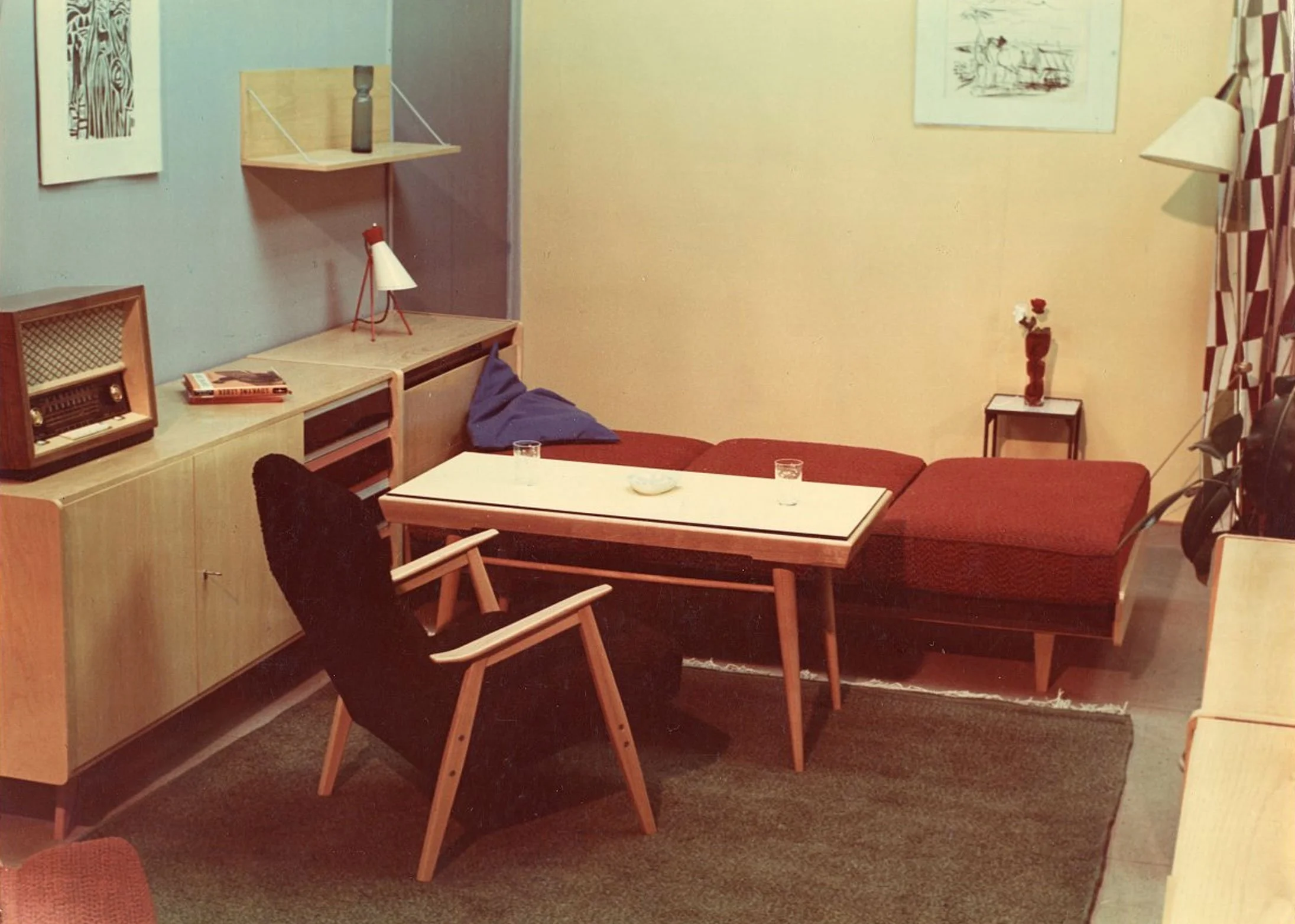
Czechoslovak interior featuring furniture by Jiří Jiroutek for Interiér Praha, 1960s. By Barnabas archive.
Jiri Jiroutek at By Barnabas
At By Barnabas, we are particularly interested in Jiroutek’s furniture for this combination of design, functionality and timeless character. We carefully select original pieces, preserving their history while giving them a new place in contemporary interiors.
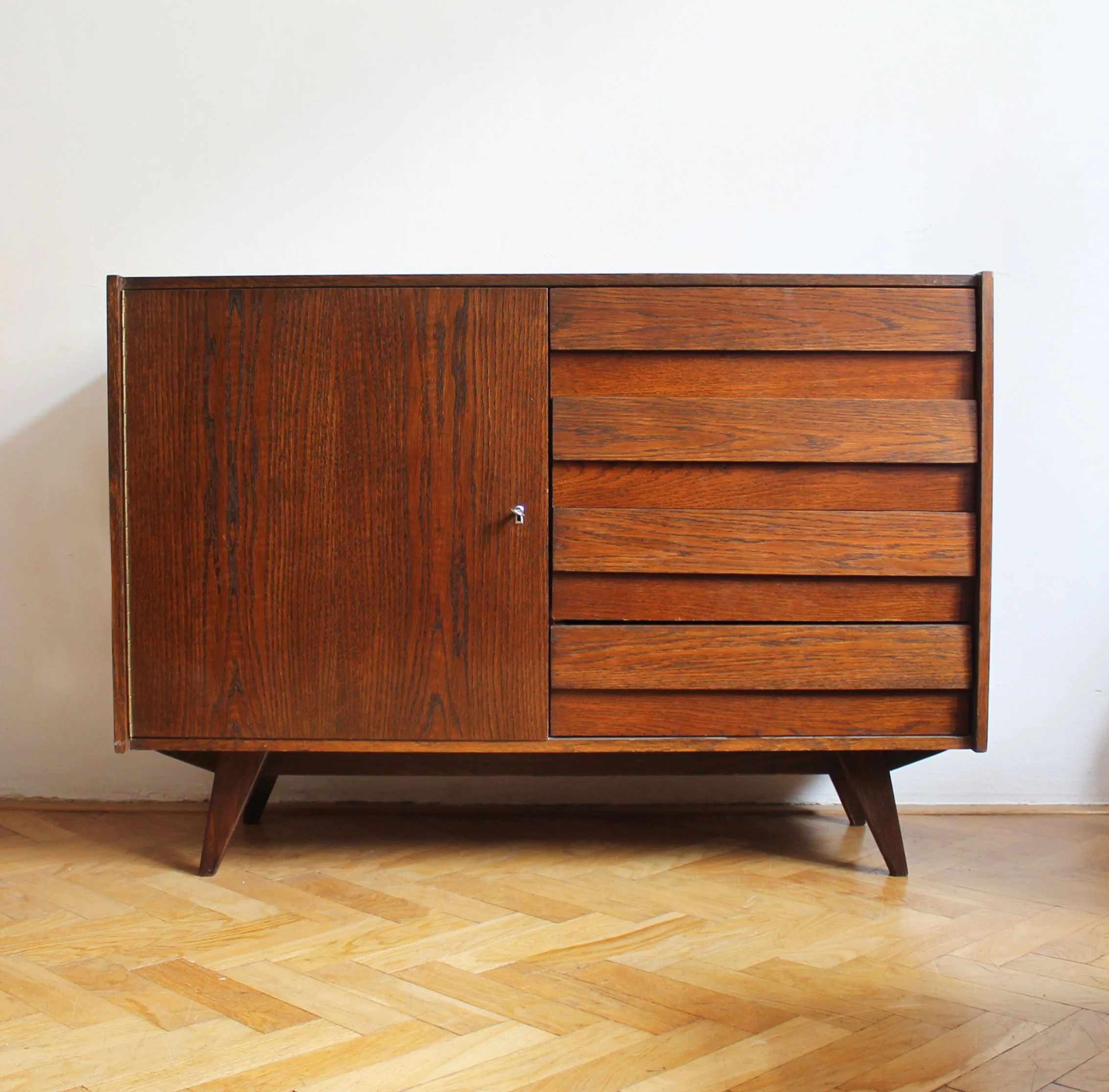
The U-458 sideboard is an elegant piece and a distinctive example of Czechoslovak Mid-Century Modern design. Available here
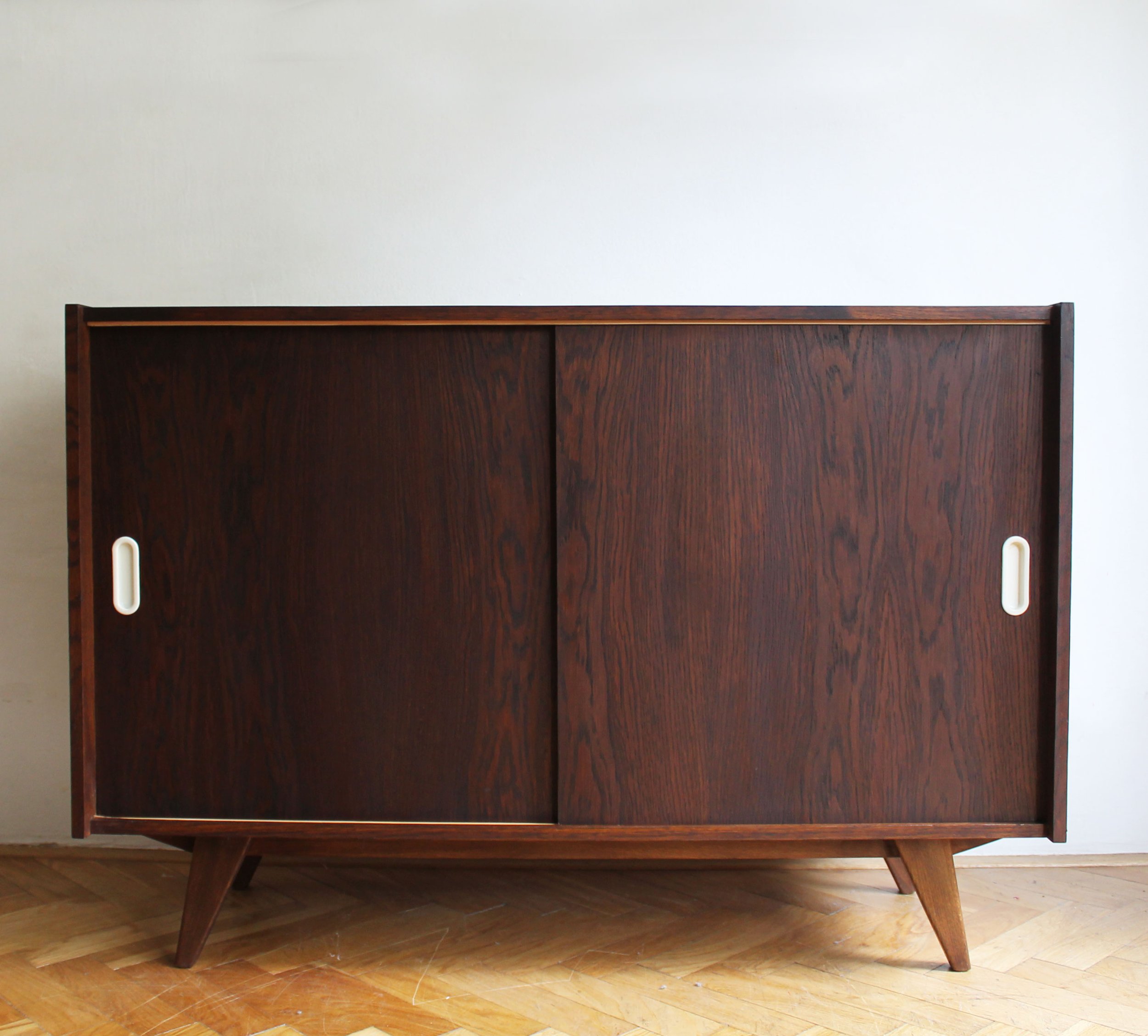
This U-450 sideboard is a fine example of Jiří Jiroutek’s celebrated modular furniture design. Its fully veneered construction is complemented by two sliding doors with the white recessed handles, opening onto a spacious interior with an adjustable shelf. Available here
Antonin Suman (1924–1998)
Antonín Šuman was one of the most influential figures in post-war Czechoslovak furniture design and a central personality in the history of TON. Working primarily with bentwood, he helped transform a long-established manufacturing tradition into a lighter, more expressive language suited to modern interiors.
Although Šuman remains less familiar internationally than designers such as Jindřich Halabala or Jiří Jiroutek, his furniture was produced in considerable numbers and became part of everyday life throughout Czechoslovakia. His chairs, armchairs, tables and rocking chairs combined technical intelligence with elegant proportions, gentle curves and an unmistakable sense of character.
Today, his finest designs are increasingly appreciated by collectors for their sculptural quality, comfort and distinctly Central European interpretation of Mid-Century Modernism.
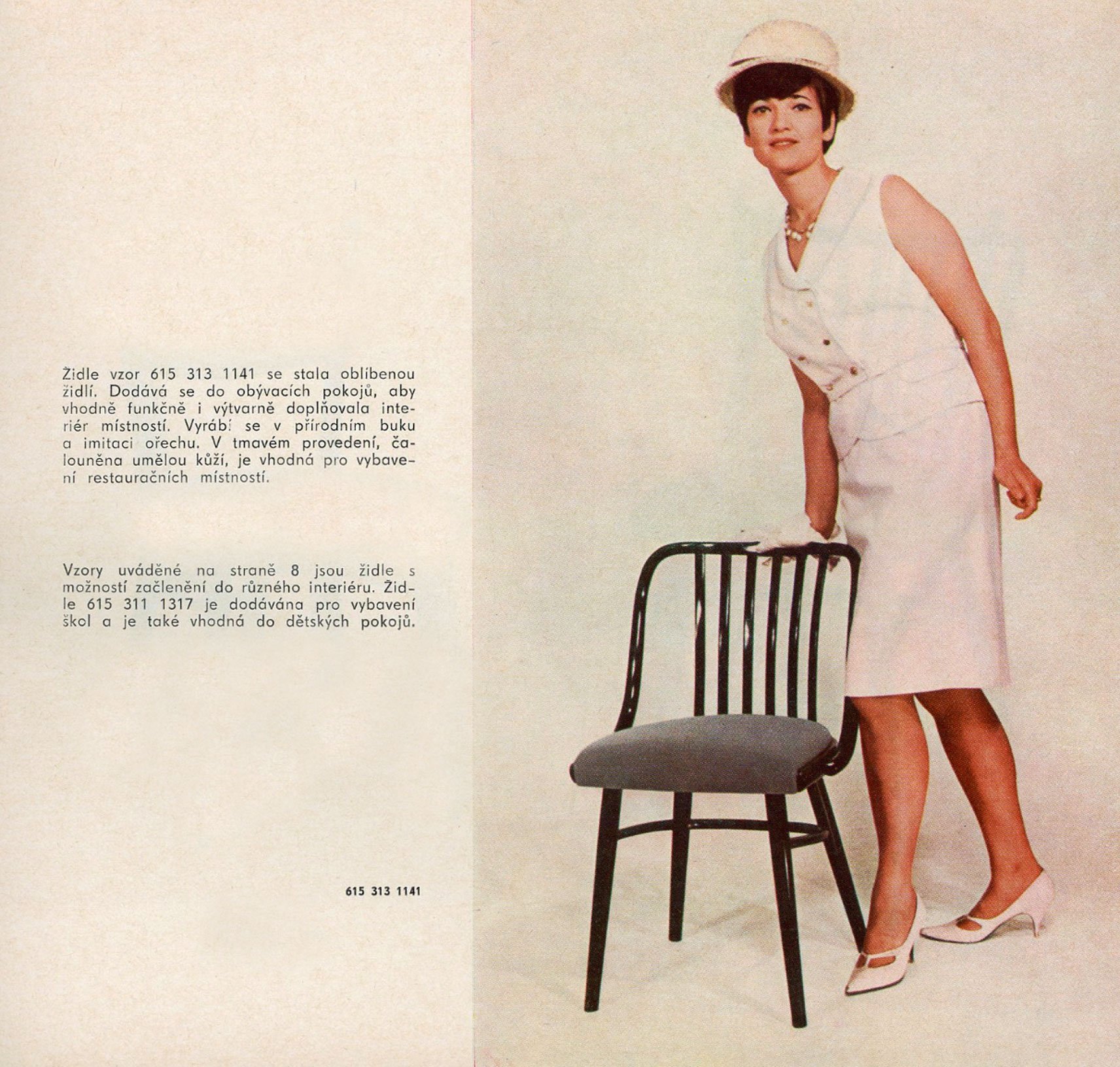
Antonín Šuman dining chair, model 141, illustrated in an original TON furniture catalogue, 1960s, By Barnabas archive.
A New Language for Bentwood
Šuman’s importance lies partly in his ability to respect the heritage of bentwood furniture without treating it as something fixed in the past.
Instead, he explored how traditional bending techniques could be adapted to the changing visual culture of the post-war period. Familiar materials and methods were given lighter proportions, more open silhouettes and increasingly playful forms.
His furniture often reveals a careful balance between straight and curved elements. Slender legs support broad, gently shaped backrests, while sculpted openings and sweeping wooden lines give otherwise practical chairs a distinctive graphic quality.
Some designs possess a visual lightness and organic character associated with Scandinavian furniture of the period. Šuman’s work, however, remained firmly rooted in Czechoslovak manufacturing traditions and in TON’s long experience of working with bent beech.
The result was furniture that felt contemporary without abandoning the knowledge embedded in the factory’s earlier production.
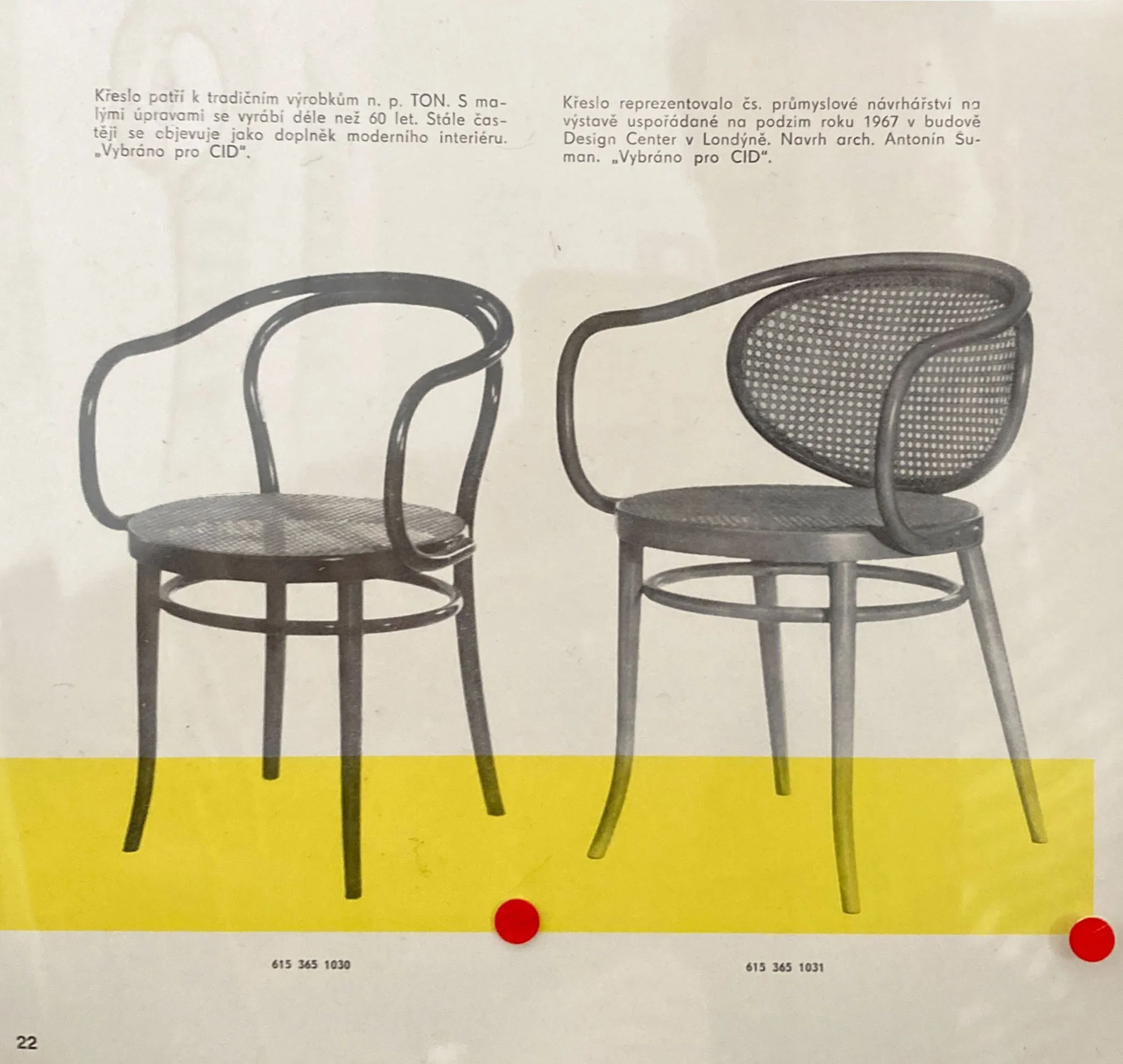
Original TON furniture catalogue, Czechoslovakia, 1960s. Furniture designed by Antonín Šuman. By Barnabas archive.
Chairs for Modern Czechoslovak Interiors
Seating formed the heart of Šuman’s work. He designed dining chairs, armchairs, lounge chairs and rocking chairs, continually experimenting with the relationship between construction, comfort and visual identity.
Among his documented designs are the Model 140 chair from the late 1950s, the Model 141 armchair, the Model 603 kitchen chair and the expressive Model 1582 rocking chair. Although each was created for a different setting, they share Šuman’s interest in shaping wood around the body and reducing a chair to a small number of clearly defined elements.
His dining chairs are particularly characteristic. Many feature curved or moulded plywood backrests whose generous shapes contrast with slender wooden frames. Others use openings within the backrest to create memorable silhouettes while reducing visual weight.
These details were not applied as decoration. They emerged from the structure and use of the chair itself, giving the furniture personality while allowing it to remain practical, comfortable and suitable for serial production.
Šuman also revisited established TON models, including descendants of the celebrated Thonet chairs No. 14 and No. 18. His adaptations helped prepare these historical designs for changing methods of manufacture and for a new generation of interiors.
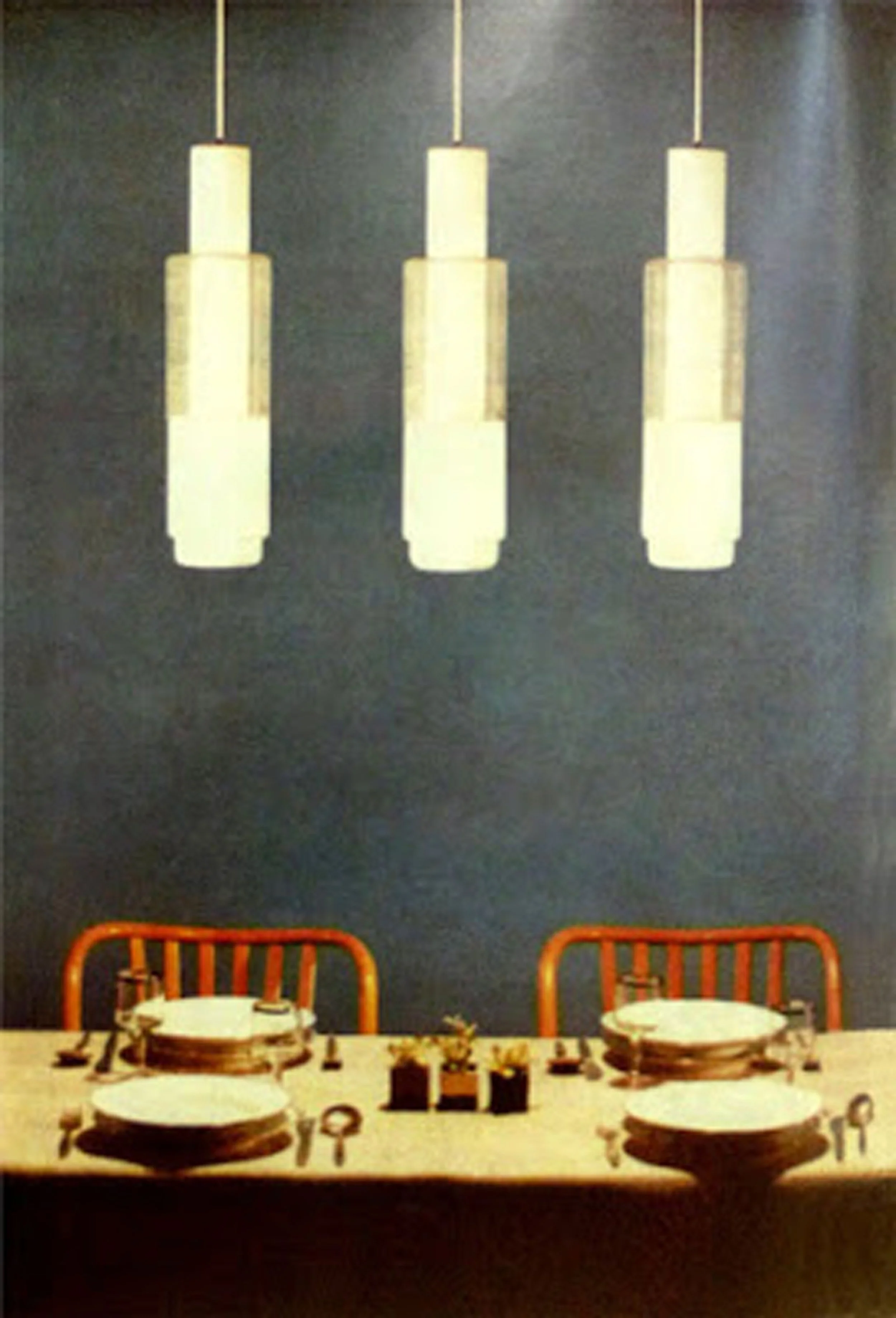
Antonín Šuman dining chairs in an original TON advert, Czechoslovakia, c. 1960s. By Barnabas archive.
The Legacy of Antonin Suman
Šuman retired from TON in 1983 and died in 1998. Despite the remarkable extent of his work, his name remained relatively unfamiliar outside specialist circles for many years.
This is gradually changing. Surviving examples are increasingly recognised not simply as anonymous vintage chairs but as the work of a thoughtful and highly productive designer who played an essential role in the development of post-war Czechoslovak furniture.
Šuman’s work represents a fascinating meeting point between Thonet’s nineteenth-century bentwood heritage and the optimism of Mid-Century Modern design. His furniture is functional and approachable, yet often surprisingly sculptural. Its appeal comes not from unnecessary ornamentation, but from the sensitive shaping of wood, the rhythm of its construction and the subtle individuality of each form.
Nearly a century after his birth, Šuman is now receiving the wider attention his contribution deserves. His designs remain comfortable, practical and full of character - furniture created for everyday life that has quietly become an important part of Czech design history.
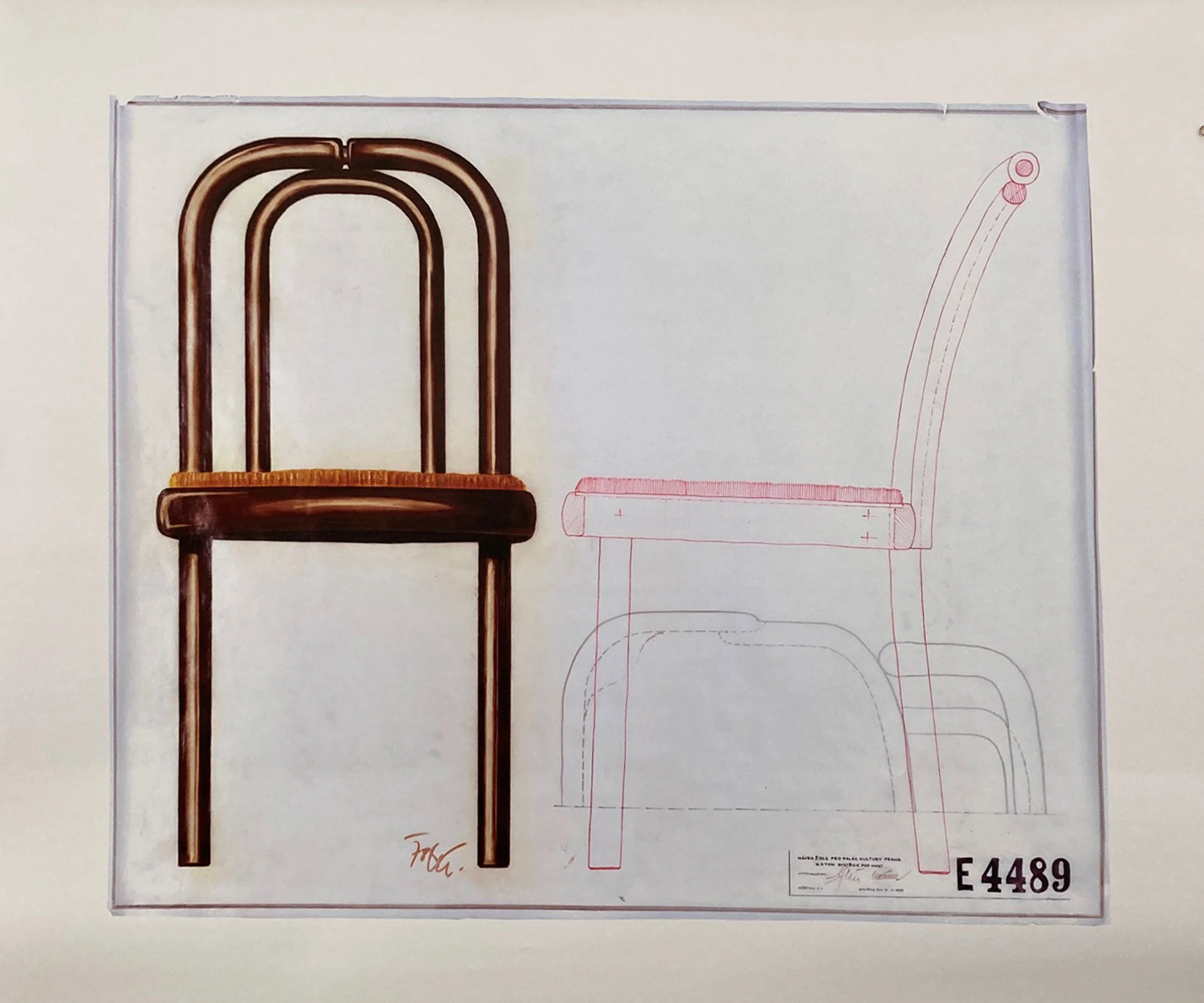
Original drawings by Antonin Suman, By Barnabas archive.
Antonin Suman at By Barnabas
At By Barnabas, we are particularly drawn to Antonín Šuman’s ability to give practical furniture such a strong and recognisable personality. His chairs combine carefully considered construction with organic shapes, warm natural materials and beautifully balanced proportions.
Over the years, a number of original Šuman designs have passed through our collection, including dining chairs and armchairs produced in former Czechoslovakia during the 1950s and 1960s.
Each piece is carefully examined and sensitively restored in our Brno workshop, with close attention paid to preserving its original character. New upholstery is selected to complement the form of the chair while allowing it to sit naturally within a contemporary interior.
Below you will find Antonín Šuman furniture currently available from By Barnabas, together with selected pieces from our archive.
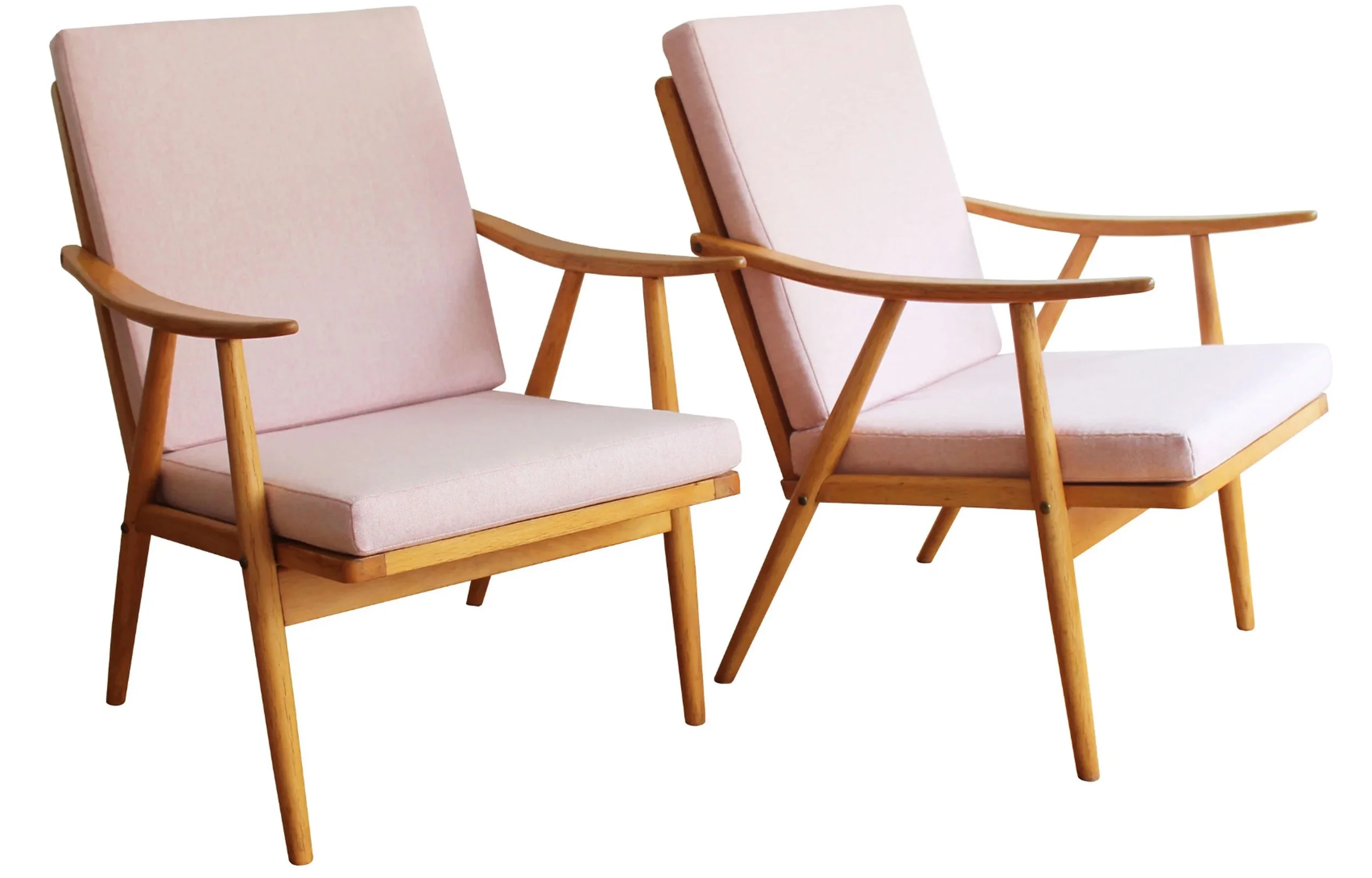
Set of two Mid-Century armchairs with new light pink fabric. These chairs were clearly inspired by Scandinavian aesthetics. The slick, organic shaped armrest with precise details are the main design feature. The armchairs have been re-upholstered with the best quality fabric by Kirkby Design. Sold and safely delivered to a design-conscious home in Paris, France.
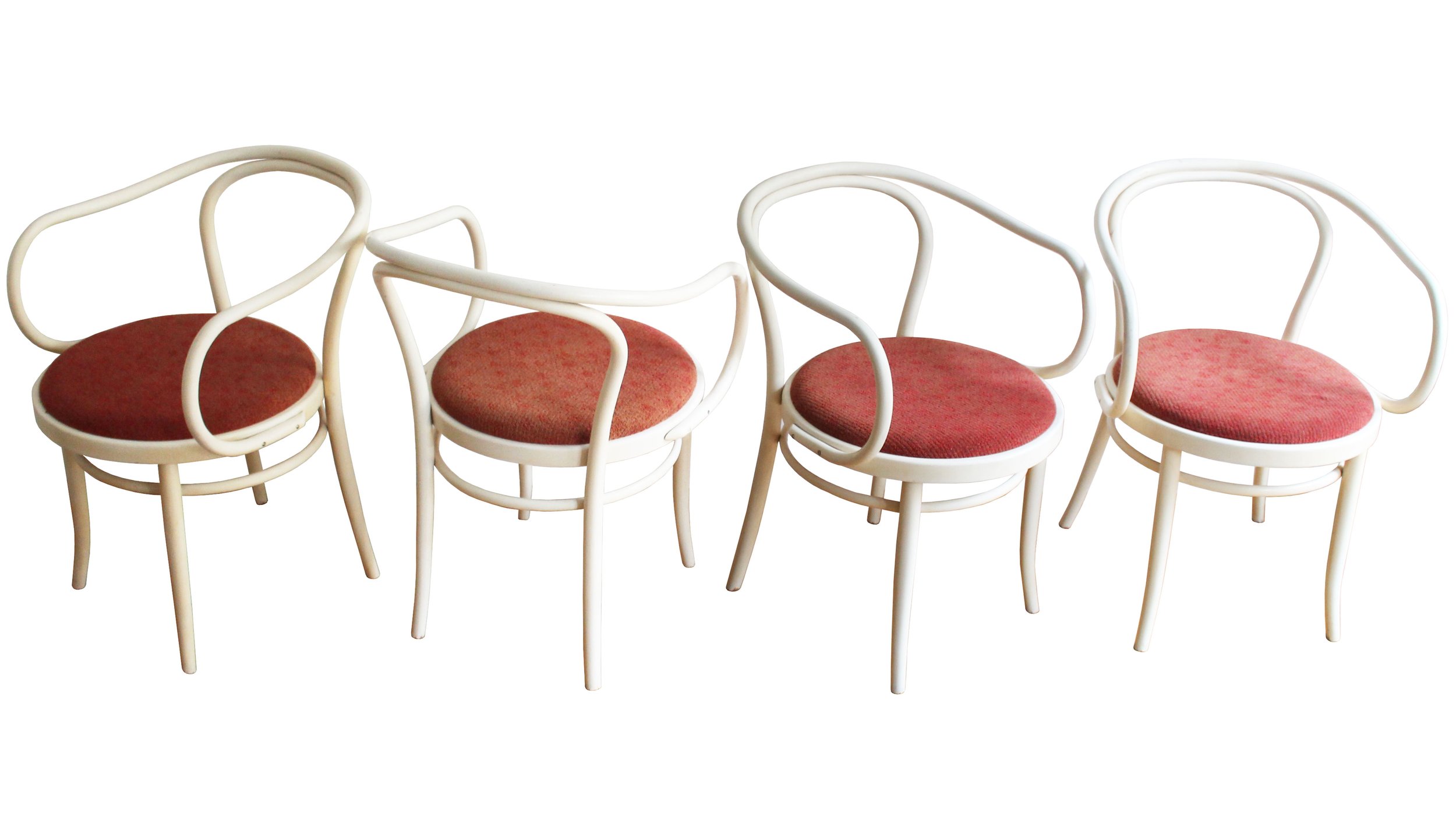
This model was originally designed by Gebruder Thonet at the end of 19th Century. We can find it in various Thonet sales catalogues under different titles but in general this chair is mostly known as model B9. The main design feature of these chairs is definitely the backrest and armrests (in this version slightly modified by Antonin Suman) which is beautifully bent into this neat organic shape which is the greatest tradition of the Thonet trademark technique. The other significant feature is the round shaped seat with red-pink cushion. This set is available here
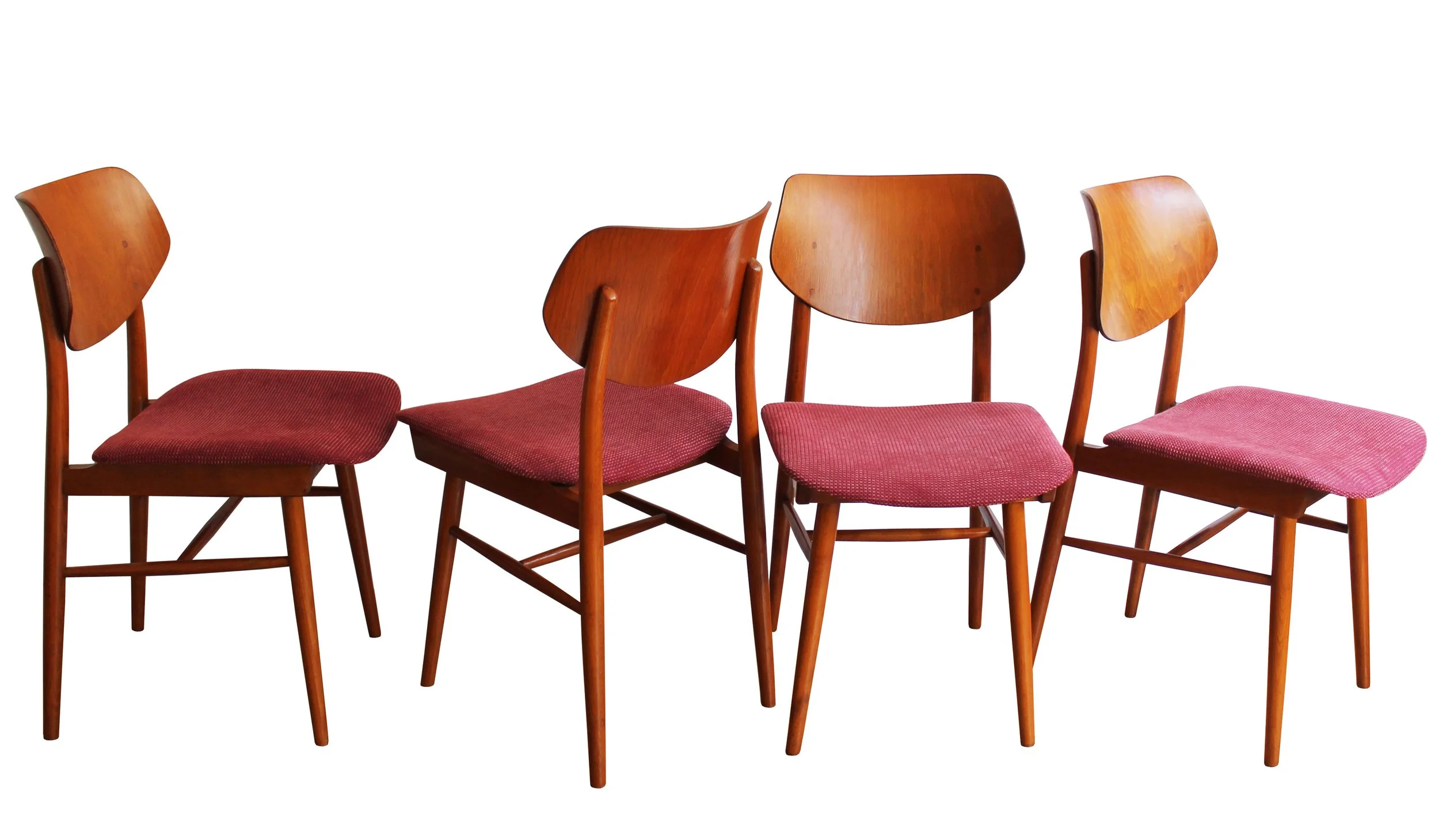
This set of four dining chairs produced in 1965. Their design represents the lighter, more organic direction taken by Czechoslovak furniture during the post-war period. Each chair has a solid beech frame with gently tapered cylindrical legs, supporting stretchers and angled rear uprights. A curved plywood backrest follows the body while keeping the overall silhouette visually light. The warm honey-brown finish is complemented by the original burgundy-red textured upholstery. This set is available here
Quisque iaculis facilisis lacinia. Mauris euismod pellentesque tellus sit amet mollis.