
Modernist Cantilevered Chair by Anton Lorenz


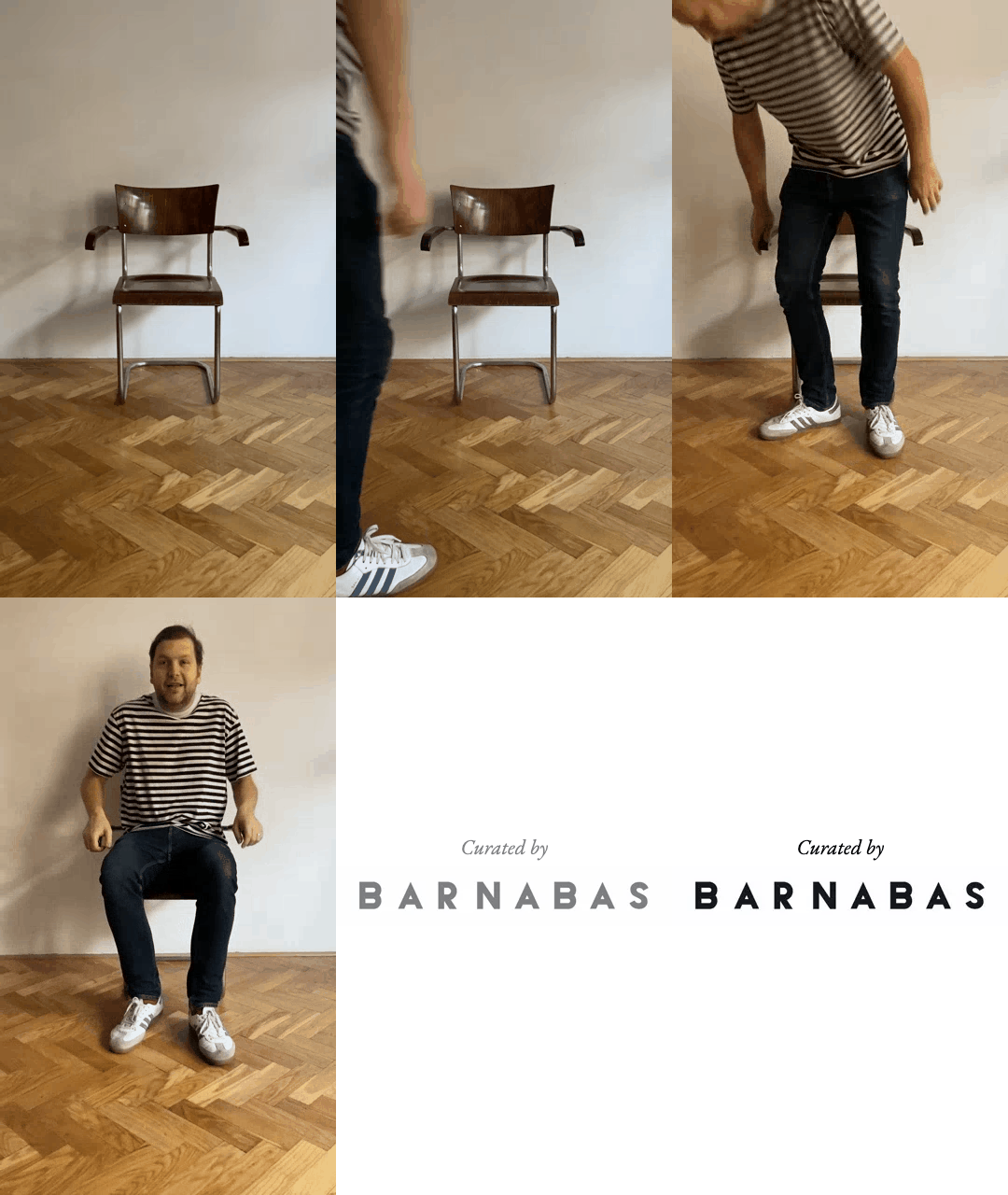


Modernist Cantilevered Chair by Anton Lorenz
An original Czechoslovak cantilever chair based on Anton Lorenz’s development of the pioneering tubular-steel seating introduced during the late 1920s.
Manufactured by Kovona during the late 1940s, the chair combines a chromed tubular-steel frame with warmly figured walnut-veneered plywood. Its remarkably light, balanced profile captures the radical simplicity of early European Modernism.
About the Chair
This chair is an elegant example of the cantilever principle that transformed European furniture design during the interwar period. By eliminating the traditional rear legs, the continuous tubular-steel frame creates a distinctive floating appearance and allows the seat a subtle degree of flexibility.
The warm walnut veneer provides a refined contrast to the cool chromed steel. Curved armrests soften the chair’s strict geometry, while the generously proportioned seat and gently shaped backrest make it practical for use as a dining, desk or occasional chair.
This example was produced in Czechoslovakia by Kovona during the late 1940s, at the former Slezák furniture works. Related versions appeared in Slezák catalogues under the model references K10 and KT10/P.
Design & History
The first cantilever chair constructed from tubular steel was developed by Dutch architect Mart Stam and presented in the Weissenhof Estate exhibition in Stuttgart in 1927.
Anton Lorenz subsequently played an important role in developing, patenting and commercially producing cantilever furniture through his company Desta. The addition of armrests transformed the uncompromising original concept into a more comfortable and versatile chair while preserving its radical structural clarity.
The design later became part of the production associated with Thonet and several Central European manufacturers, including Slezák and its post-war successor Kovona.
Details
Quantity: One chair
Period: Late 1940s
Origin: Czechoslovakia
Designer: Anton Lorenz
Manufacturer: Kovona
Model: Related to Slezák K10 / KT10-P
Materials: Walnut-veneered plywood and chromed tubular steel
Condition
The chair remains in very good vintage condition.
The chromed tubular-steel frame displays only minimal surface wear. The wooden elements retain an attractive patina, with visible signs of age and previous use principally on the seat.
The construction is stable and the chair is ready for everyday use. Please refer to the photographs for a detailed record of its condition.
Dimensions
Width: 58 cm
Depth: 52 cm
Height: 80 cm
Seat height: 45 cm
Delivery & Returns
The chair will be carefully packed and shipped from our studio in Brno, Czech Republic.
EU shipping: €80, confirmed at checkout
We also ship worldwide using trusted international couriers. Please contact us for a tailored shipping quote outside the EU.
EU customers have a 14-day right of withdrawal. Please see our Terms & Conditions for full details.
If you would like to check anything before ordering - from condition and dimensions to delivery - Martin and Amy are always happy to help before and after your purchase.
Why We Like It
The chair feels both historically important and entirely contemporary. Its continuous steel frame gives it an almost weightless appearance, while the curved armrests and walnut veneer introduce warmth and comfort. It is an exceptionally versatile piece of functional Modernist design.
Read the Story Behind the Design
This Kovona chair belongs to a revolutionary design lineage shaped by experimentation, rivalry and a landmark dispute over authorship. Read The Chair Without Back Legs: Mart Stam, Marcel Breuer and the Battle for the Cantilever Chair to discover the roles played by Stam, Breuer, Mies van der Rohe and Anton Lorenz in its development.
Quisque iaculis facilisis lacinia. Mauris euismod pellentesque tellus sit amet mollis.