
1950s TON No. 515 Dining Chair, Attributed to Oswald Haerdtl
1950s TON No. 515 Dining Chair, Attributed to Oswald Haerdtl
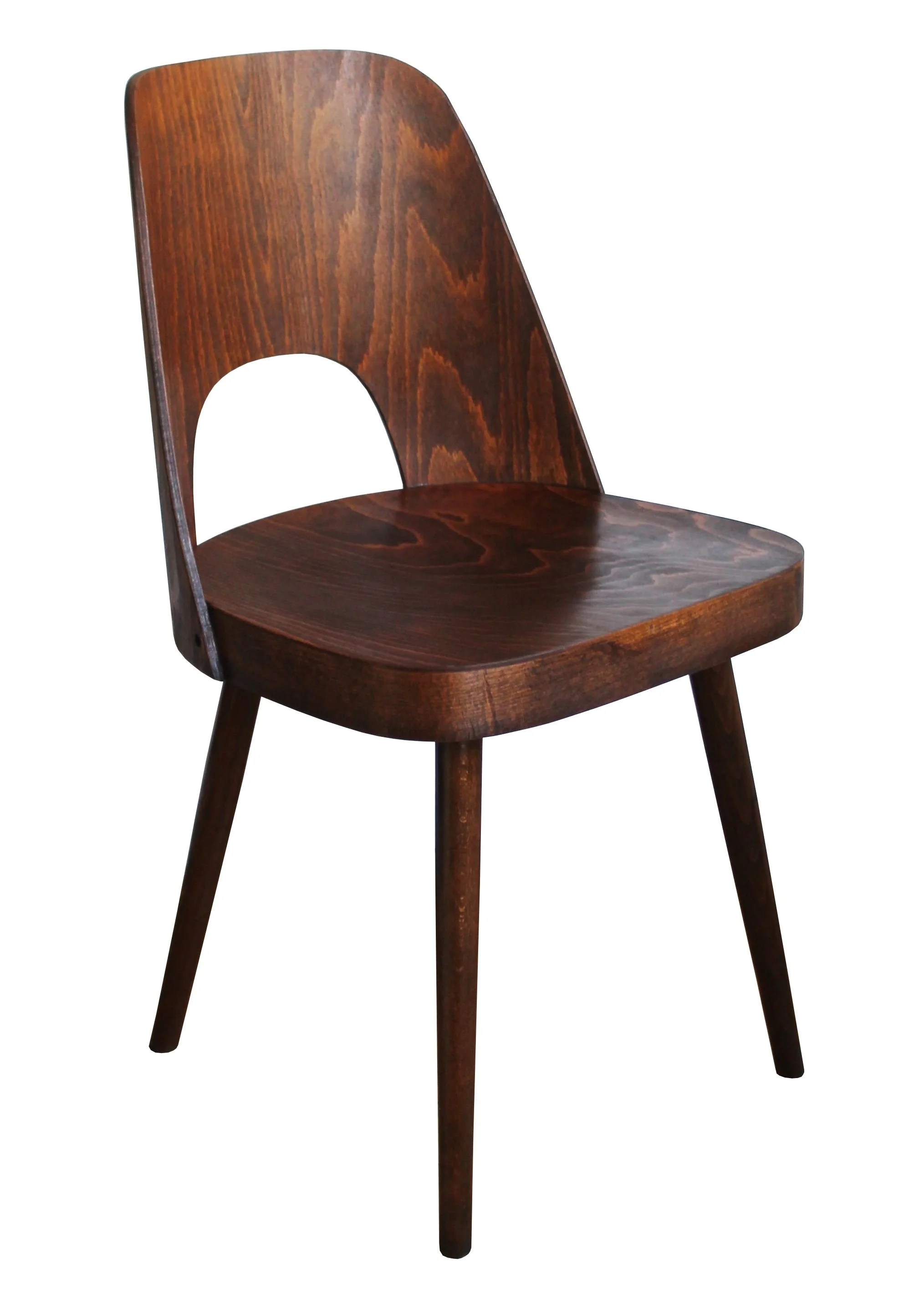
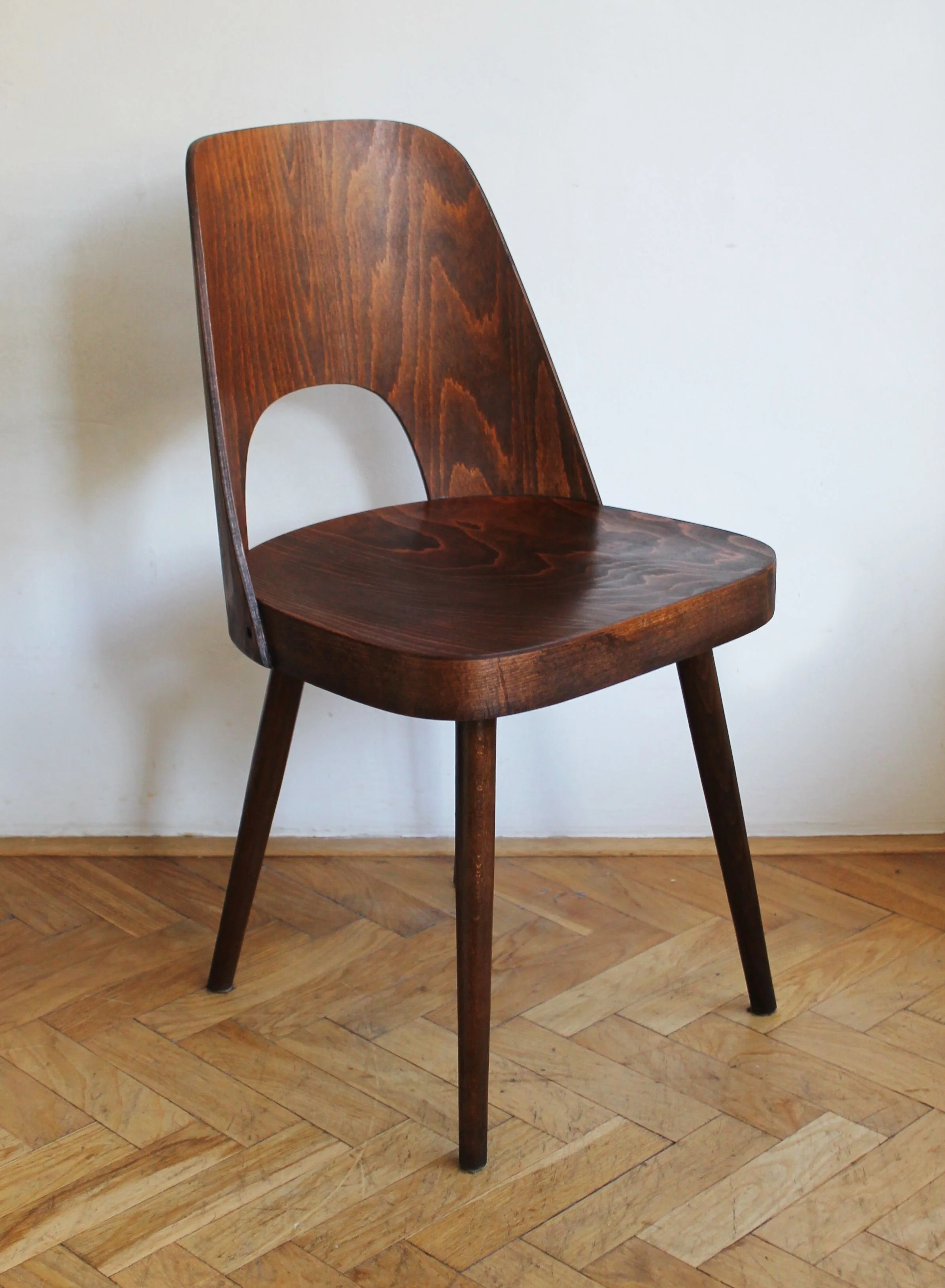
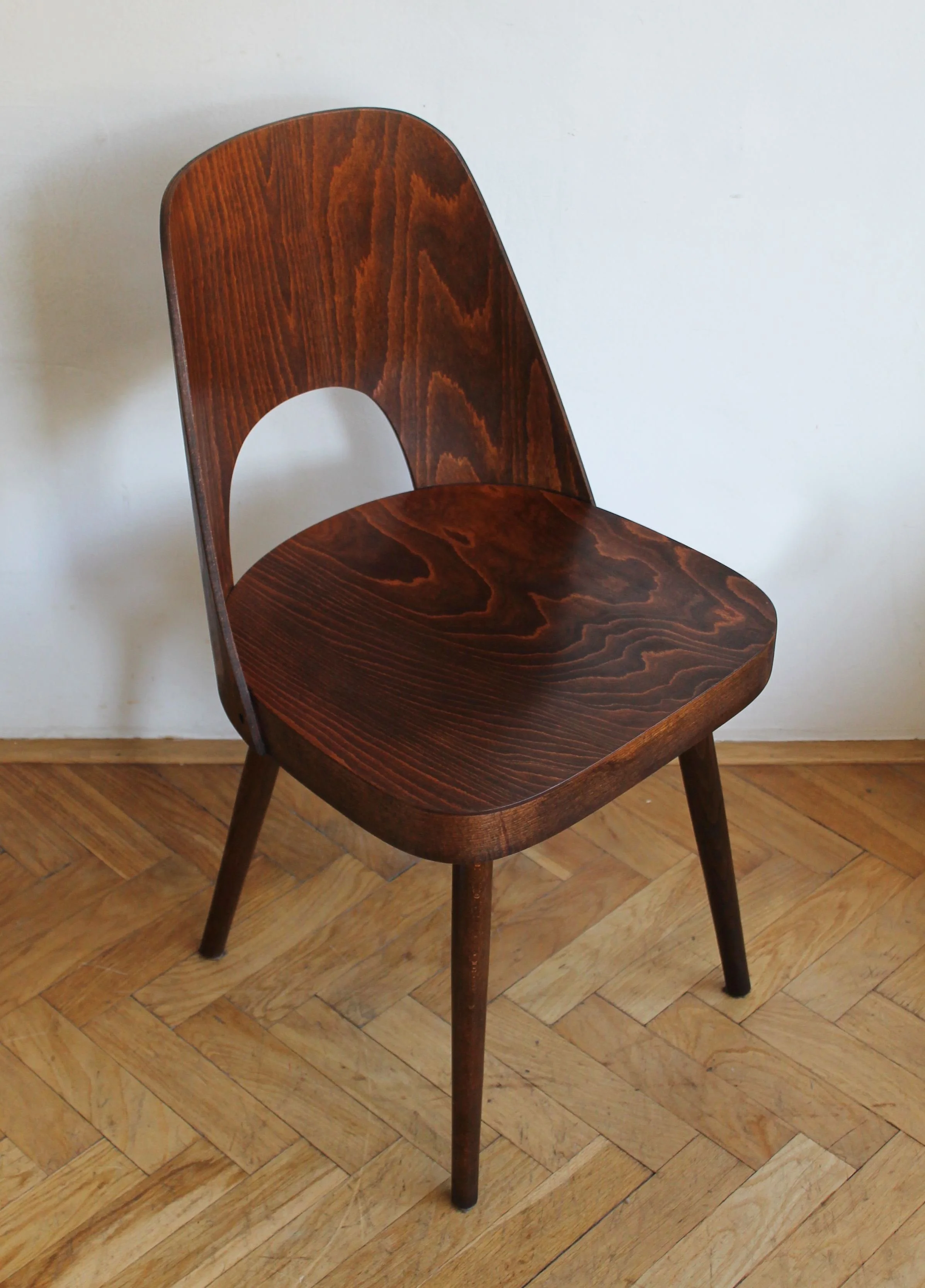
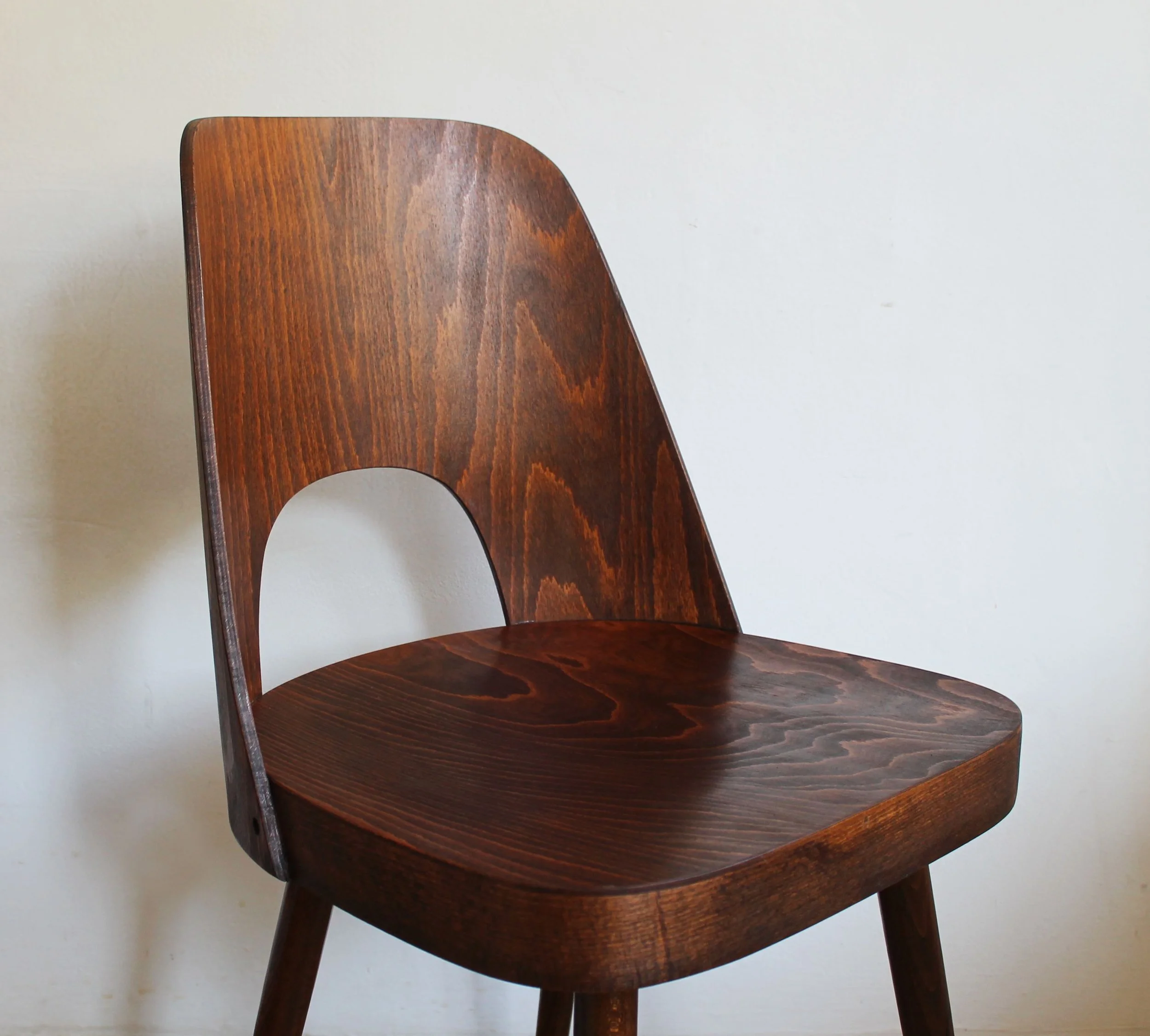
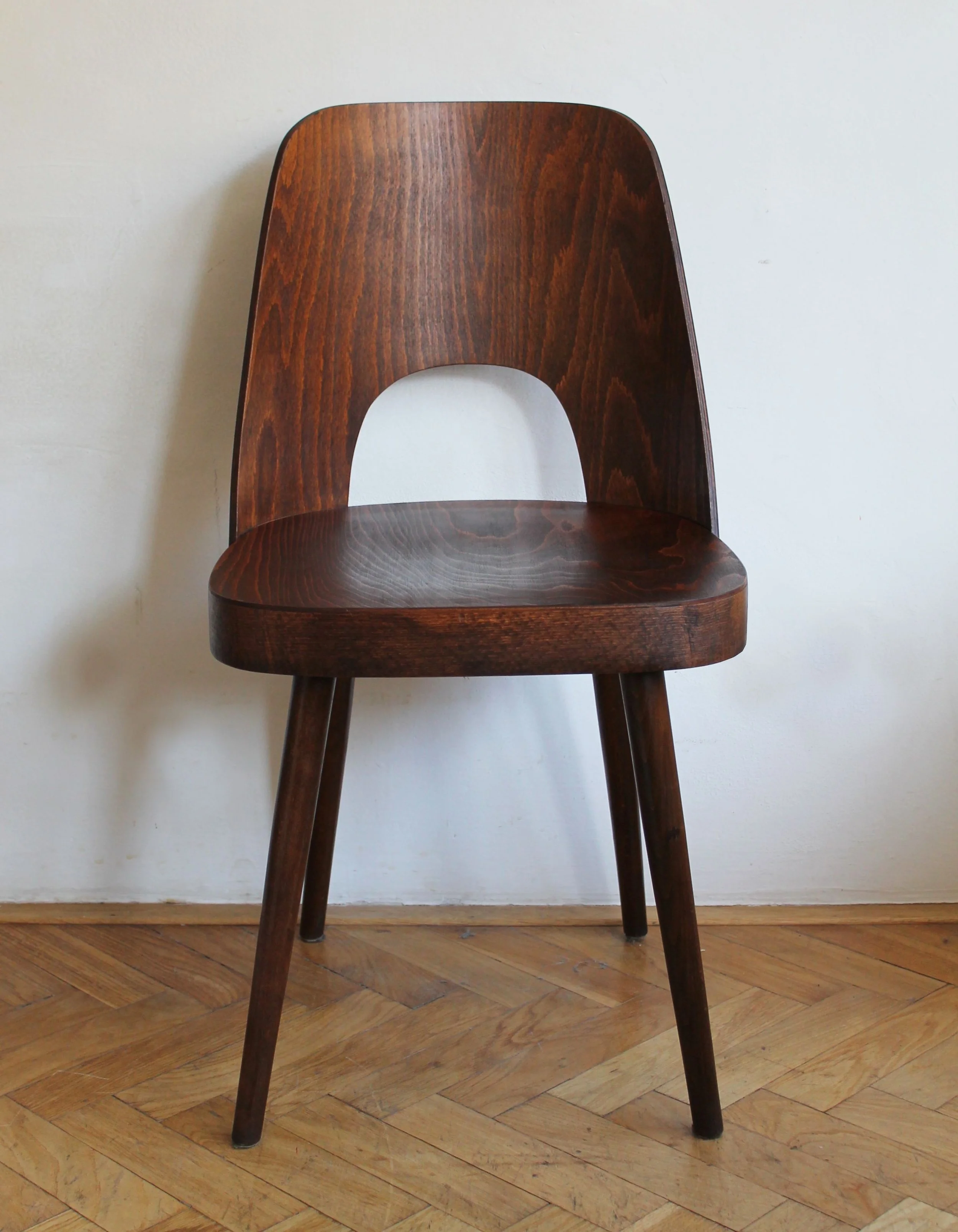
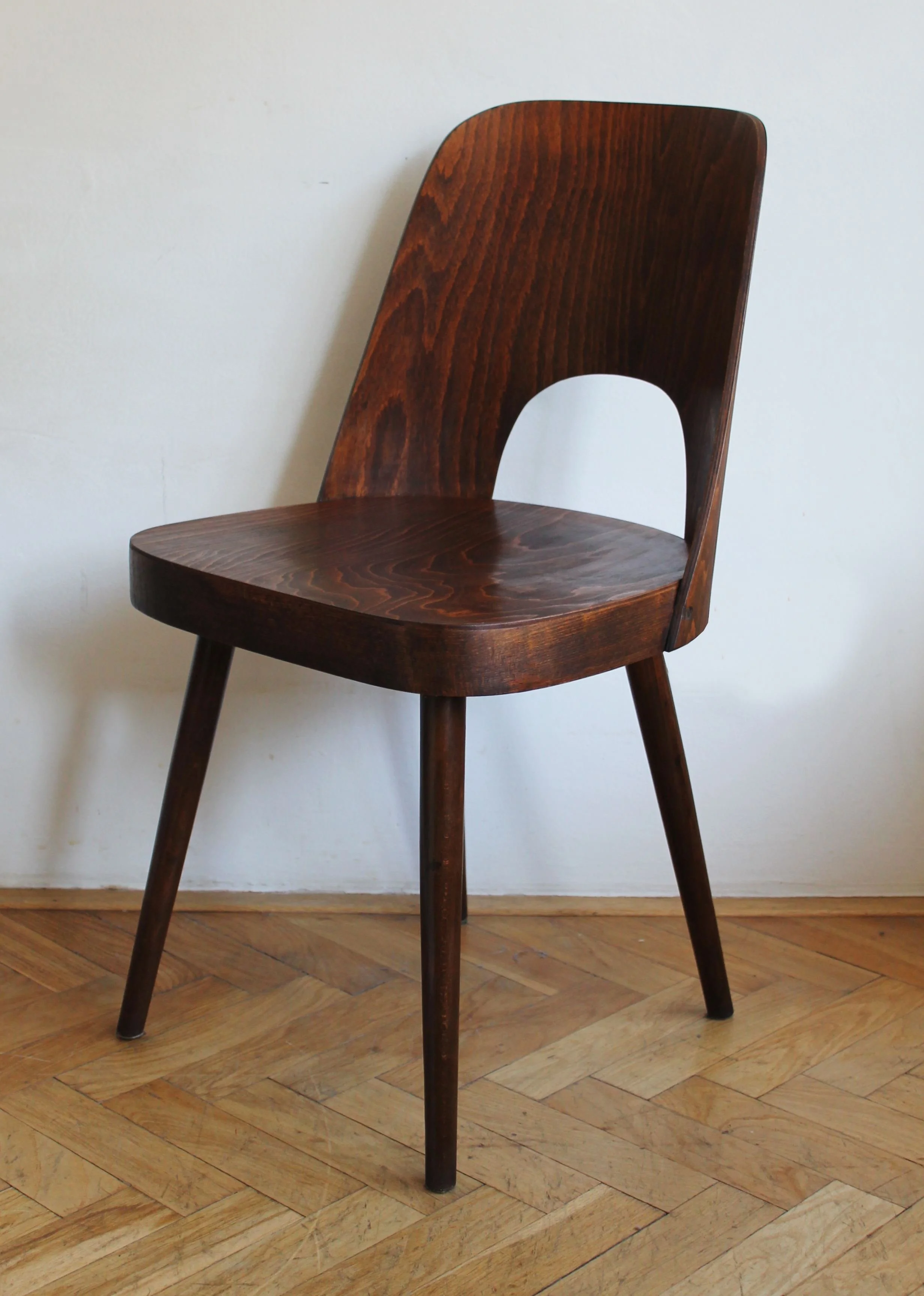
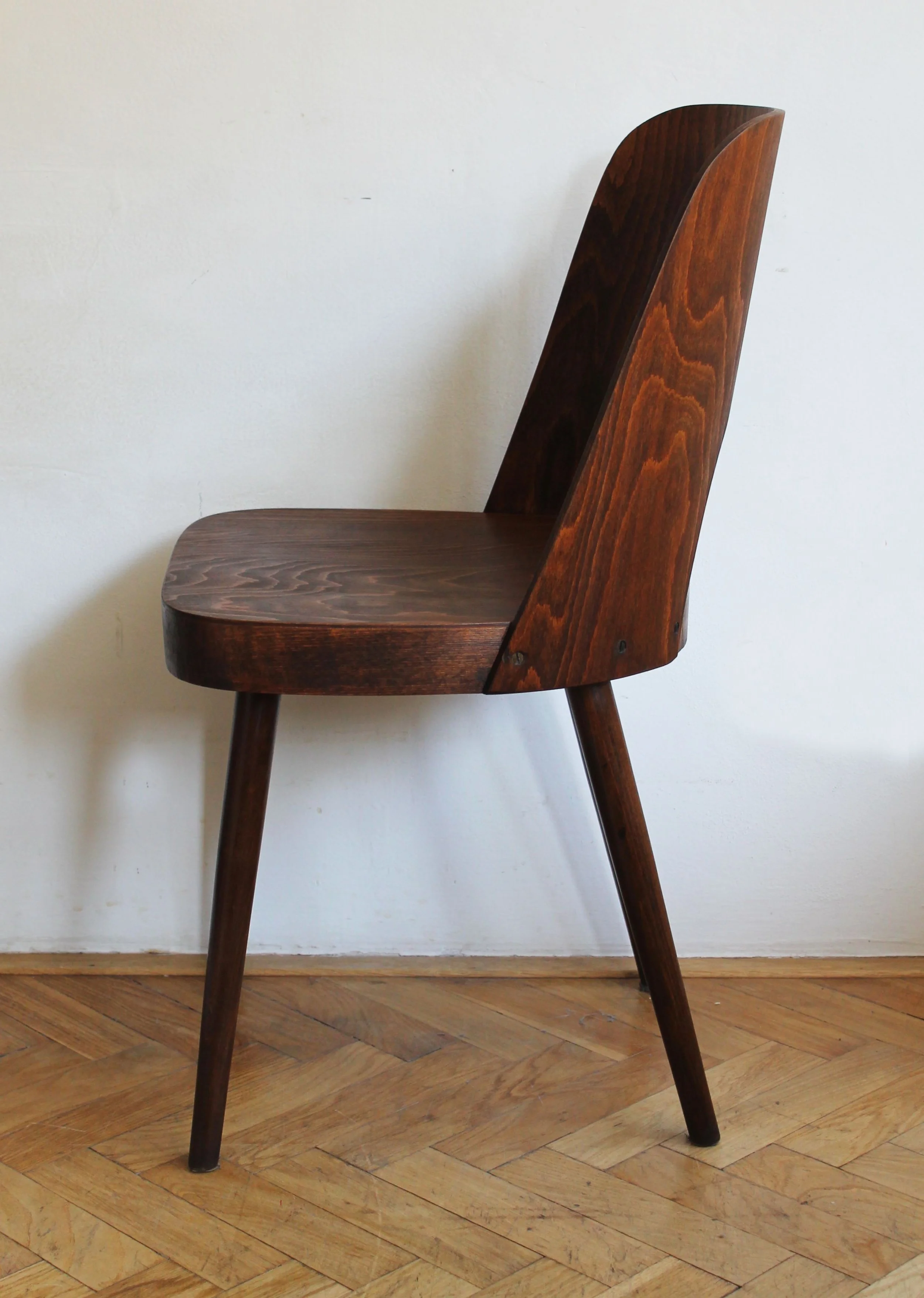
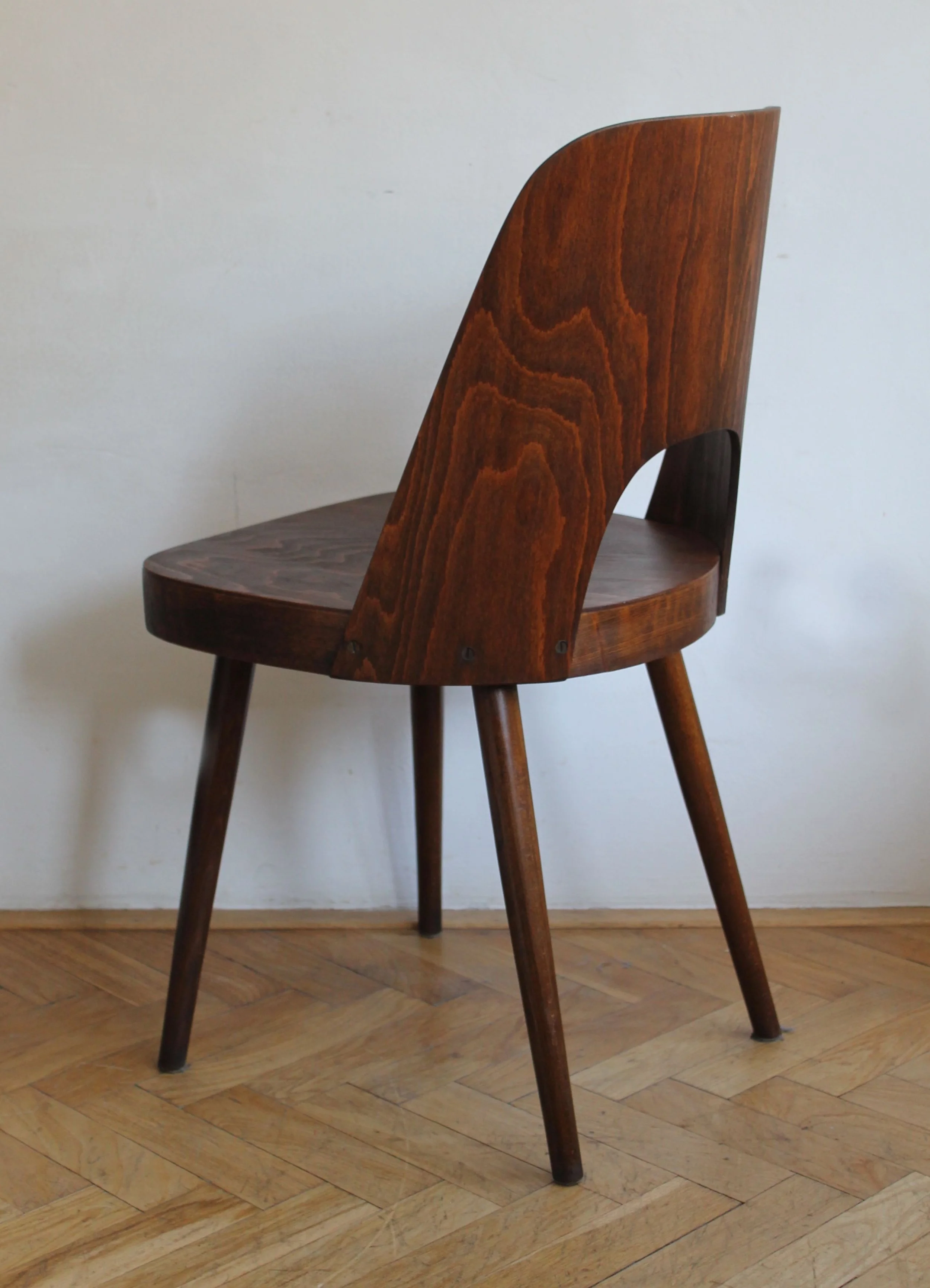
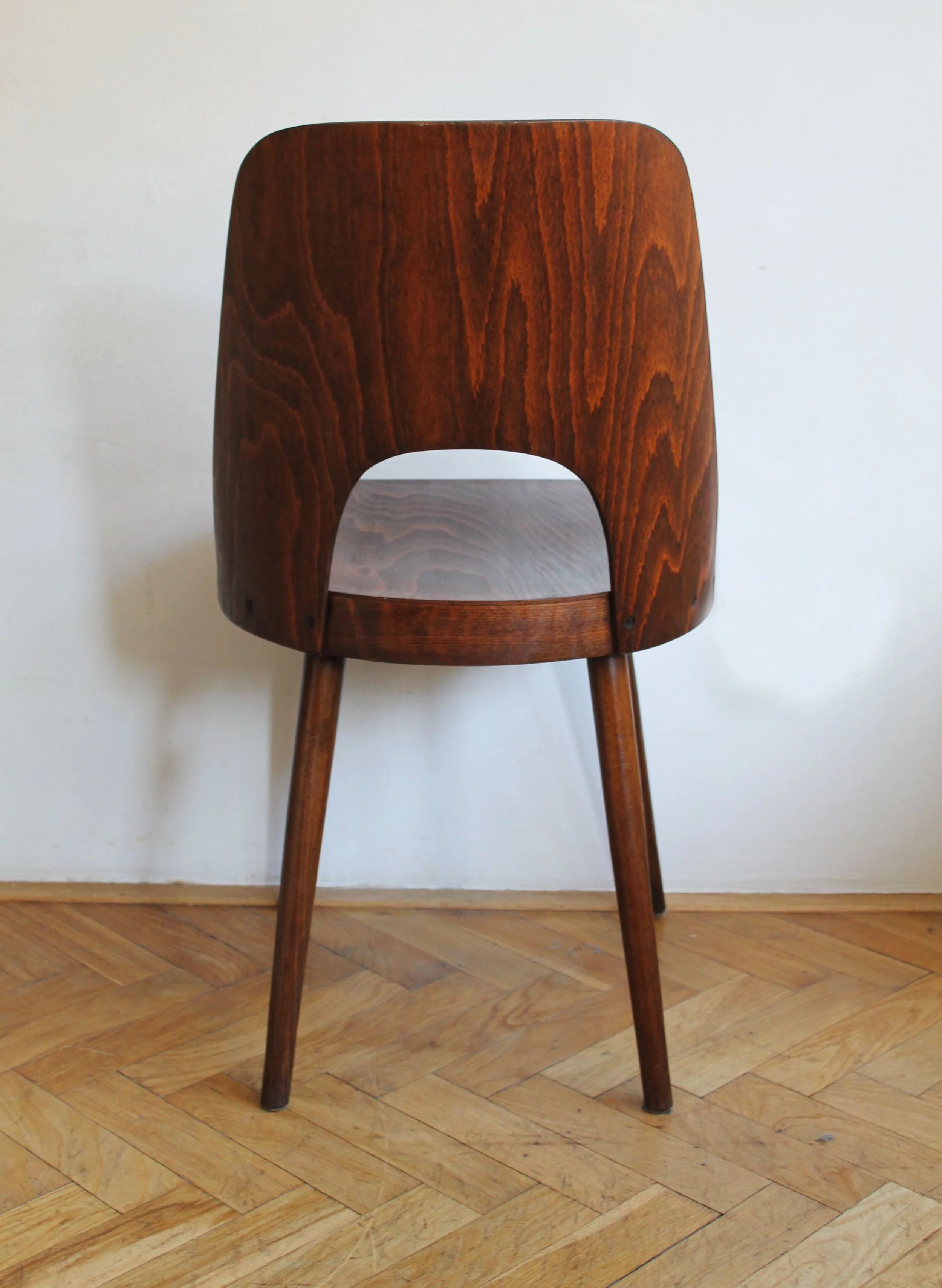
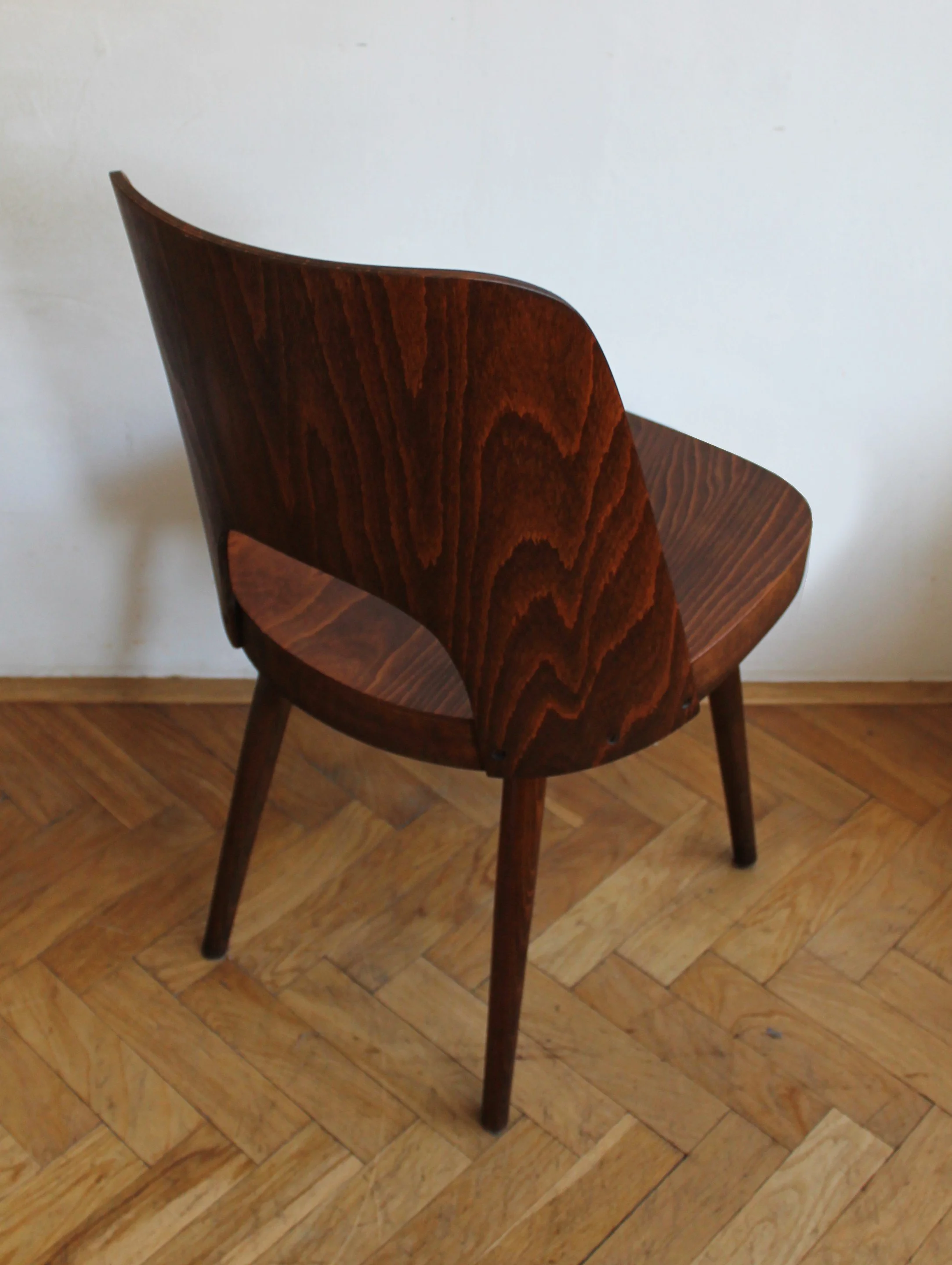
A mid-century dining chair produced by TON in former Czechoslovakia, attributed to Oswald Haerdtl. Model No. 515 combines a curved plywood backrest, an arched opening and slender, splayed legs. Particularly striking on this example is the expressive wood grain, with dark, flowing patterns across the seat and back. The original TON paper label survives beneath the seat.
About the Chair
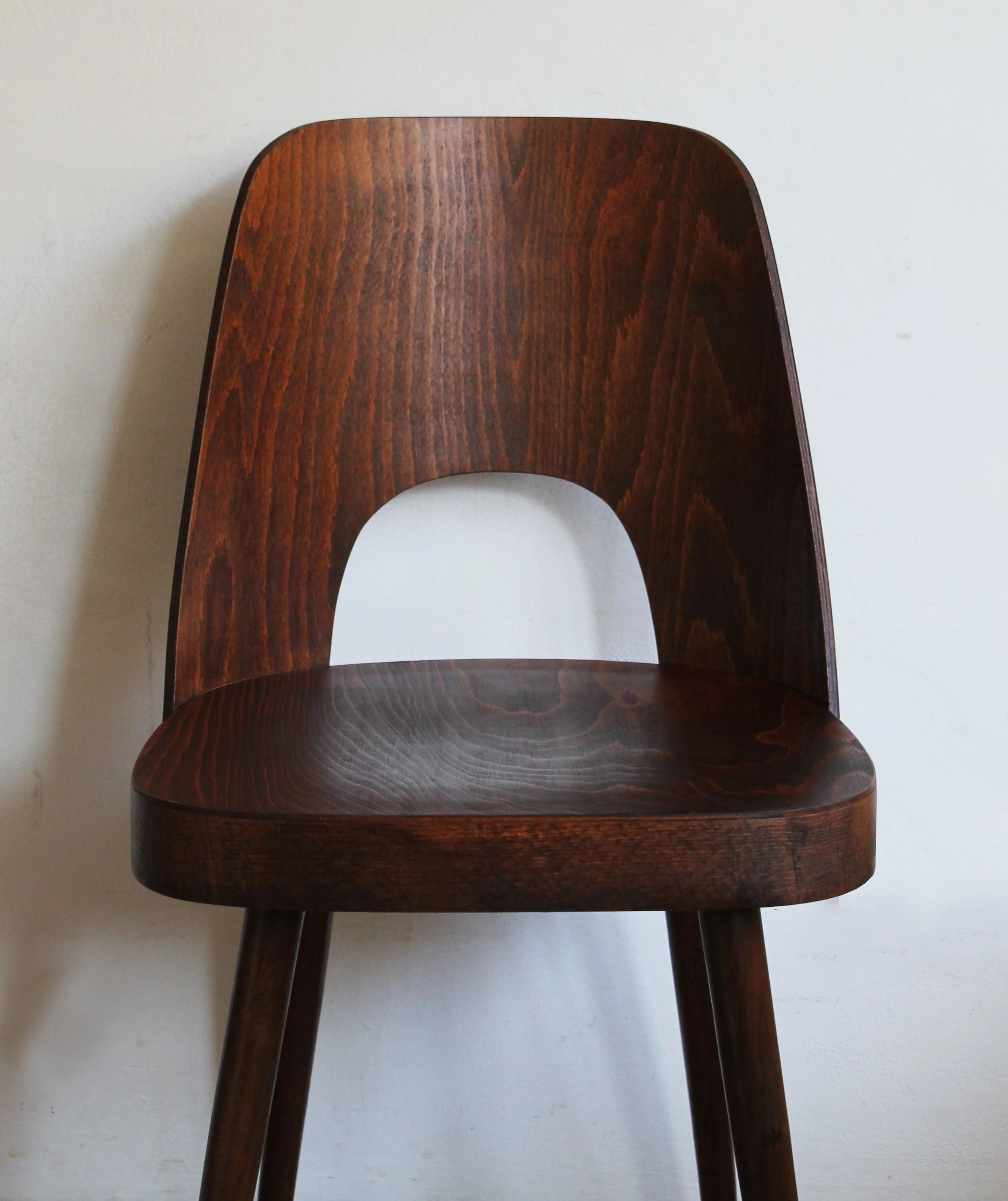
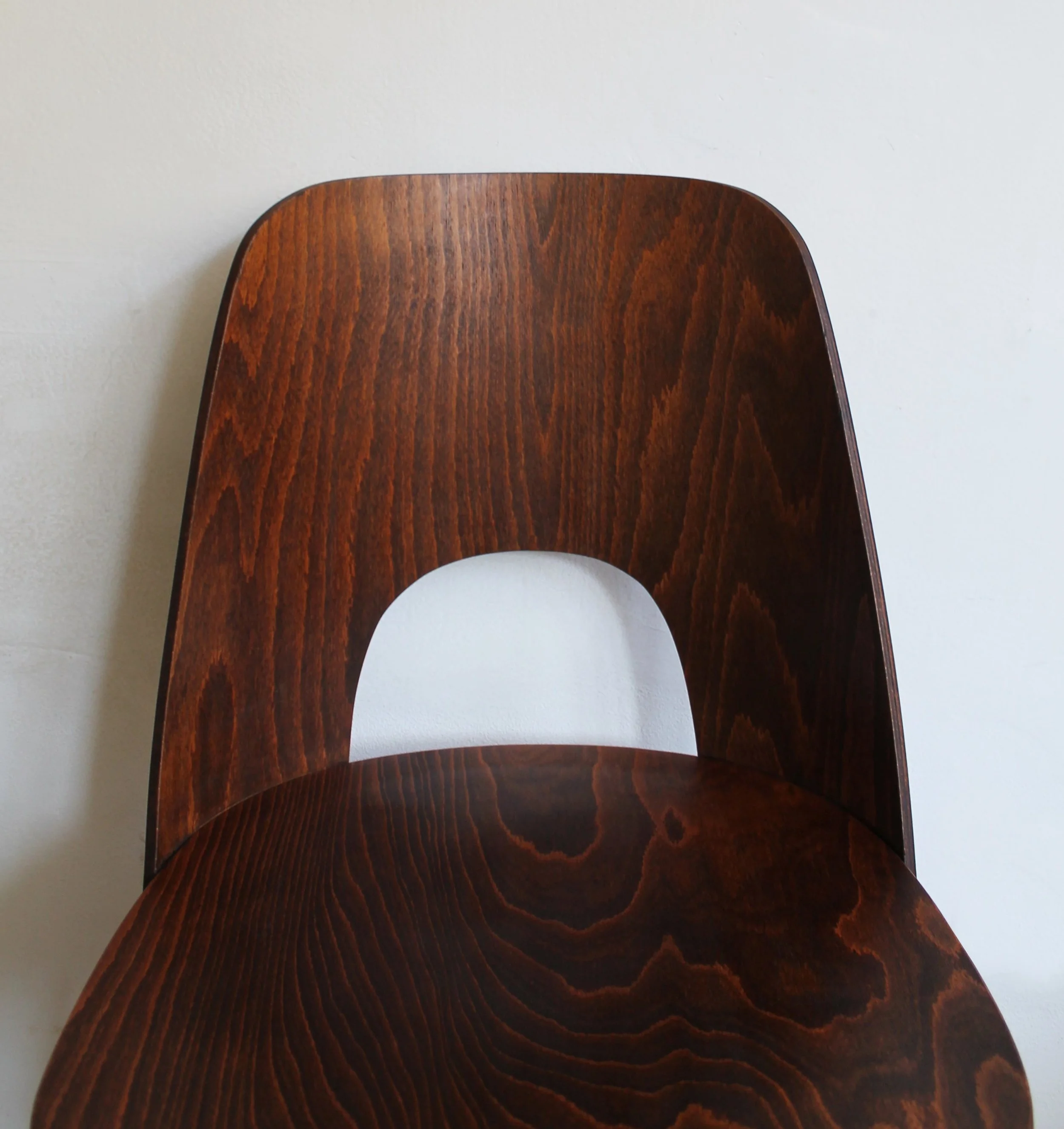
The character of this chair comes from the relationship between its simple outline and richly patterned surfaces. The broad backrest curves gently around the sitter, while an arched cut-out opens the space above the seat, giving the design a distinctive silhouette.
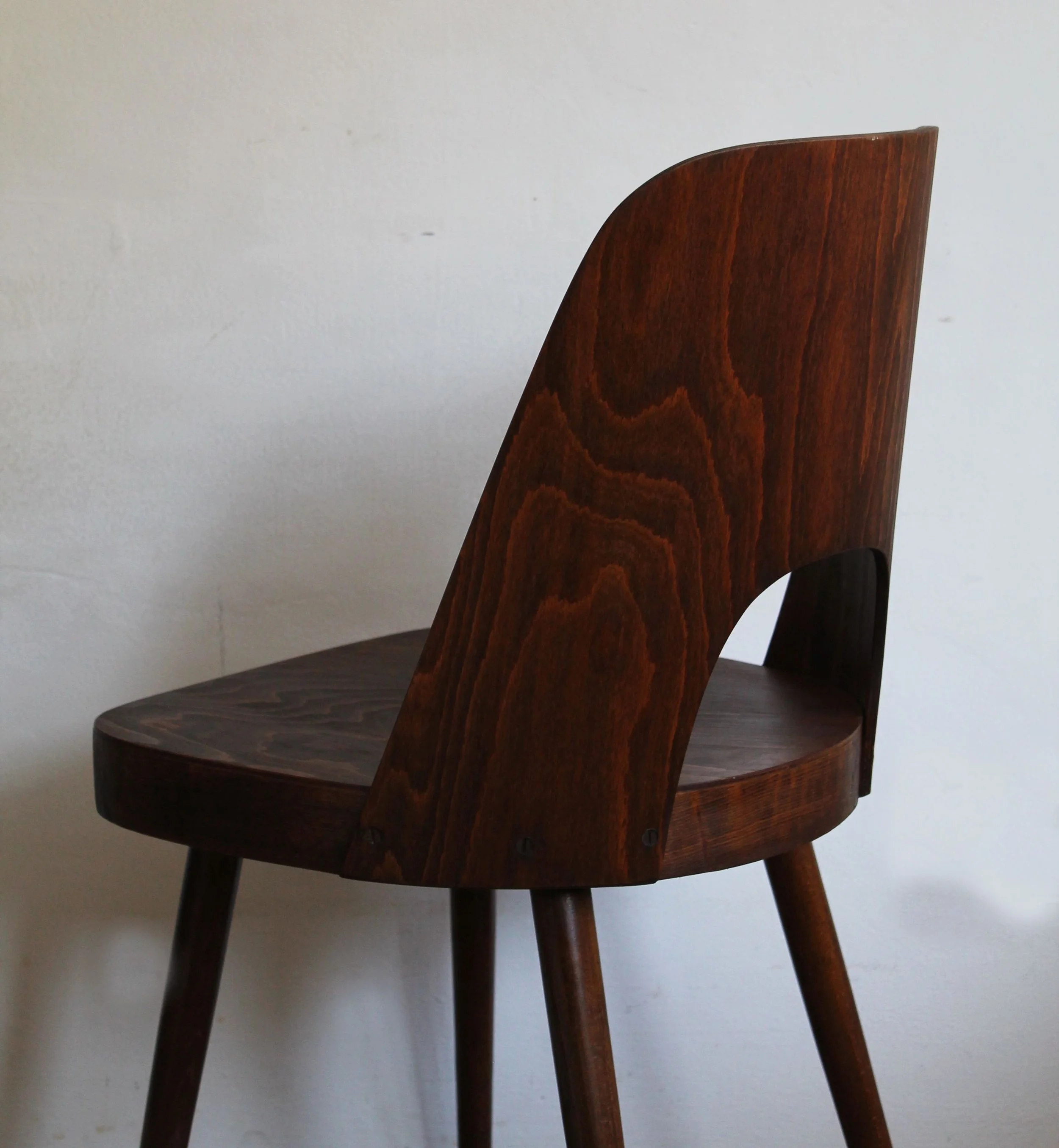
A dark brown finish brings out the grain in warm amber and deeper chocolate tones. Fine vertical lines across the backrest give way to broad, rippling patterns over the shaped seat. Rounded edges and tapered beech legs complete a design with a light, well-balanced appearance.
Its compact proportions make it equally suited to a dining table, a small desk or an occasional place elsewhere in the home.
Design & History
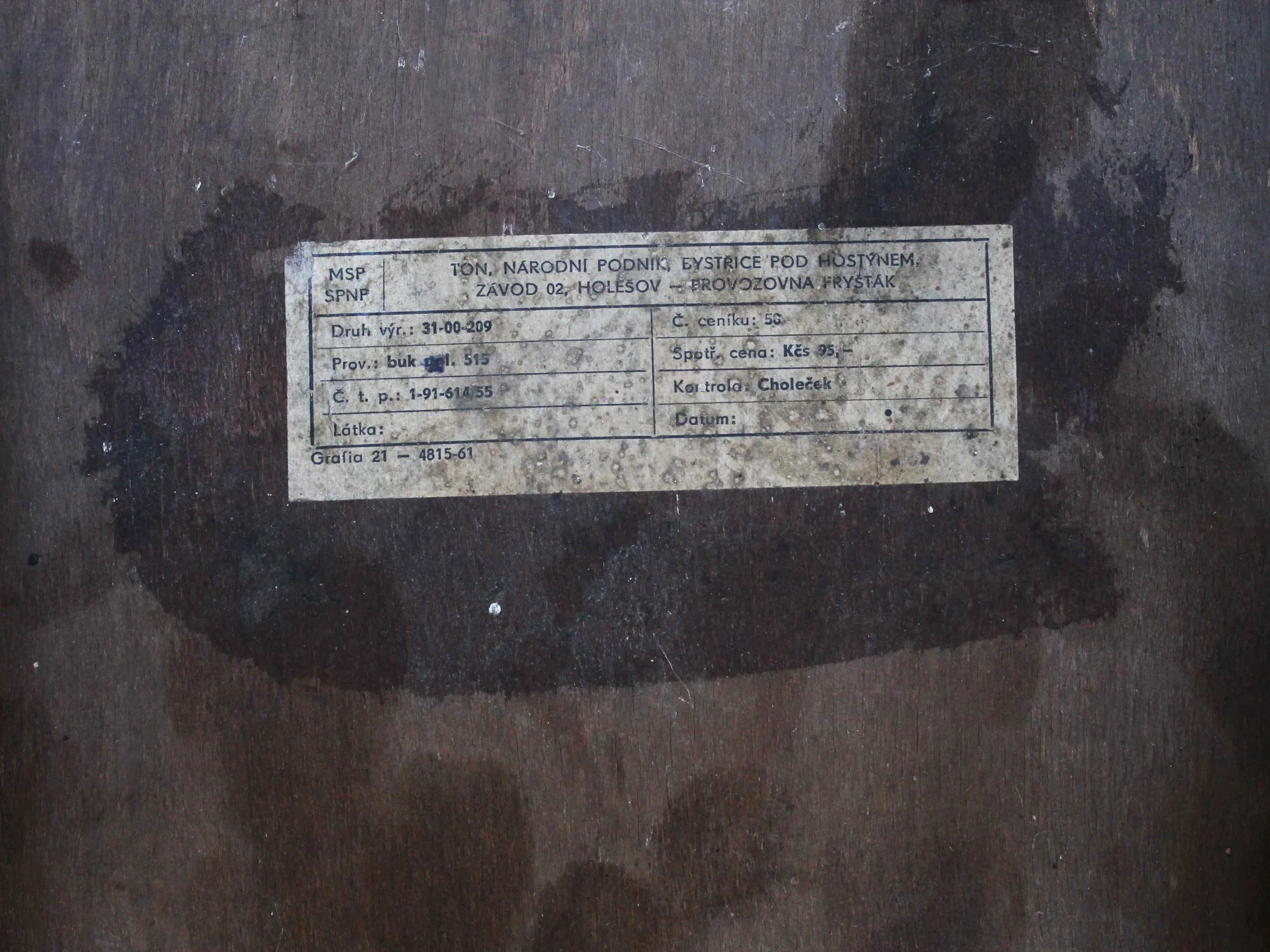
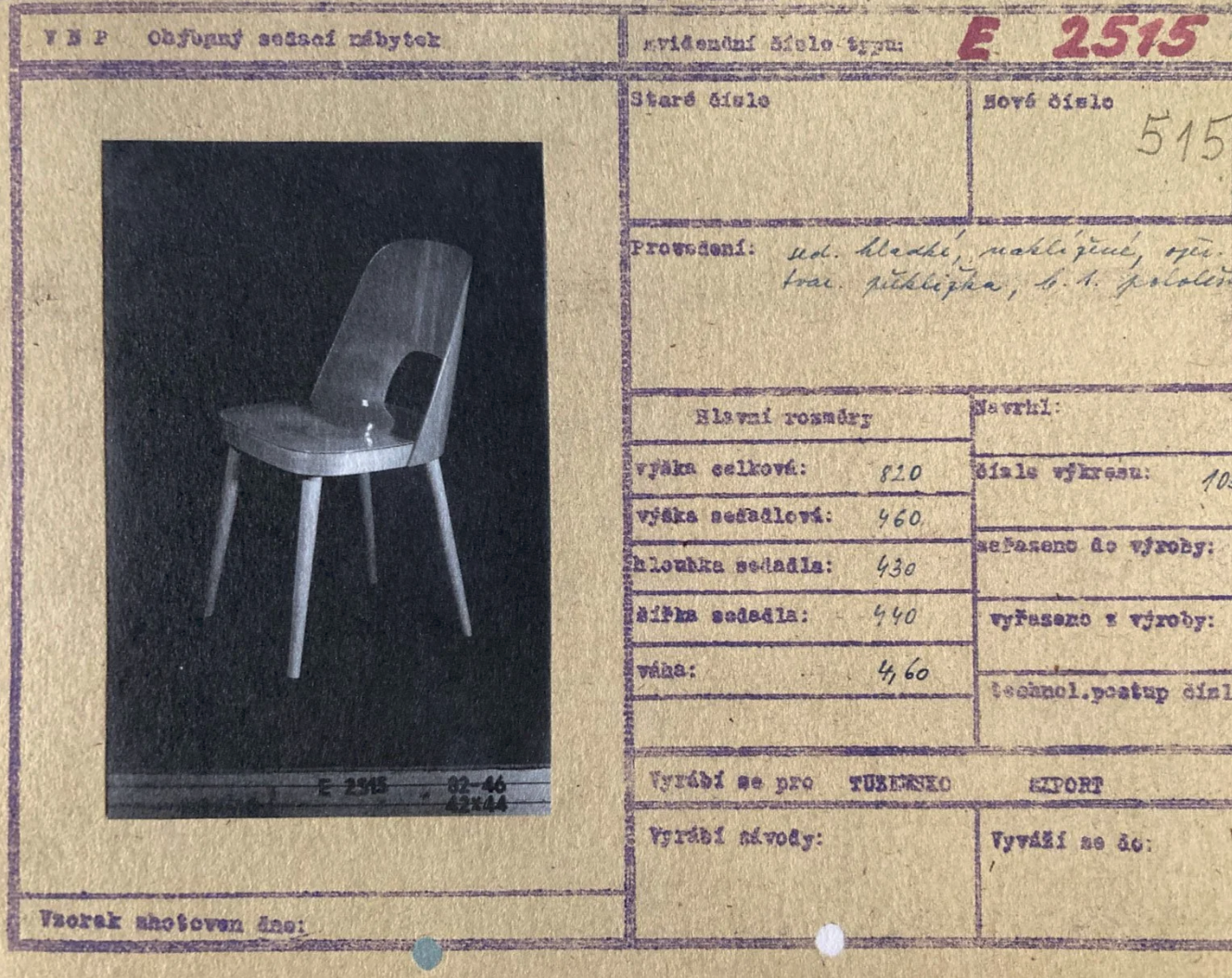
The No. 515 model is attributed to Austrian architect and designer Oswald Haerdtl. This example was manufactured by TON in former Czechoslovakia and retains its original paper label, identifying the model number and the company’s Fryšták production site.
The chair combines moulded plywood with solid beech elements, allowing the seat and backrest to take on broad, gently curved forms. Its economical construction and careful proportions reflect the practical approach to furniture design associated with the mid-century period.
Details
Quantity: One chair
Period: 1950s
Origin: Czechoslovakia
Designer: Attributed to Oswald Haerdtl
Manufacturer: TON
Model: No. 515
Materials: Beech and moulded plywood
Finish: Dark brown
Markings: Original TON paper label beneath the seat
Condition
The chair is in very good vintage condition, with minor surface wear and a light patina consistent with its age and use. The wood retains its pronounced grain and warm tonal variation, and the original manufacturer’s label remains attached beneath the seat.
Please refer to the photographs for a detailed record of its condition.
Dimensions
Width: 44 cm
Depth: 48 cm
Height: 82 cm
Seat height: 46 cm
Delivery & Returns
The chair will be carefully packed and shipped from our studio in Brno, Czech Republic.
EU shipping: €40, confirmed at checkout.
We also ship worldwide using trusted international couriers. Please contact us for a tailored shipping quote outside the EU.
EU customers have a 14-day right of withdrawal. Please see our Terms & Conditions for full details.
If you would like to check anything before ordering - from condition and dimensions to delivery - Martin and Amy (info@bybarnabas.com) are always happy to help before and after your purchase.
Why We Like It
The grain makes this particular chair stand out. Long, close-set lines rise through the backrest, while wider, almost contour-like patterns spread across the seat. Together with the arched opening and softly rounded edges, they give a modest everyday chair a surprisingly graphic presence.
Quisque iaculis facilisis lacinia. Mauris euismod pellentesque tellus sit amet mollis.