
At the beginning of the 20th century, Bystřice pod Hostýnem was known mainly for woodworking and the legacy of Thonet. But while bentwood furniture still defined the interiors of the Austro-Hungarian world, a young locksmith named Robert Slezák was already looking toward a different future - one made from steel, chrome and industrial precision.

Robert Slezak Company Logo
Slezák began modestly. In 1908, he opened a small workshop with only the most basic equipment and a single worker. At first, he produced metal fittings and everyday hardware, but the rapid changes happening across Europe soon transformed the direction of the company. Modernist architecture, industry and new manufacturing technologies were beginning to influence how people lived, and furniture was changing with it.
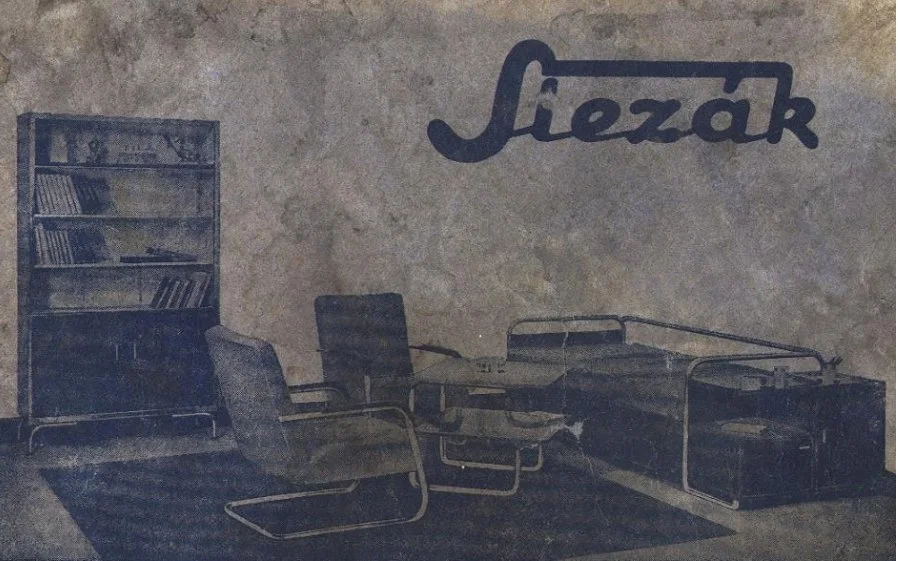
Cover of a Robert Slezák Furniture Catalogue, 1930s
Where traditional wooden furniture felt heavy and decorative, metal offered something cleaner and more progressive. Slezák recognised this shift early. His first furniture designs were still rooted in more traditional metal craftsmanship - iron and brass beds, chairs and tables, often combined with wooden elements. But as modernism began reshaping European architecture and interiors during the 1920s and 30s, the factory gradually evolved toward a more functional aesthetic centred around tubular steel, chrome plating and lighter industrial forms.
By the early 1930s, Slezák was producing chromed tubular steel furniture that reflected the wider European fascination with modern living. It was furniture designed to feel practical, hygienic and visually light, while still retaining an elegance in proportion and detail.
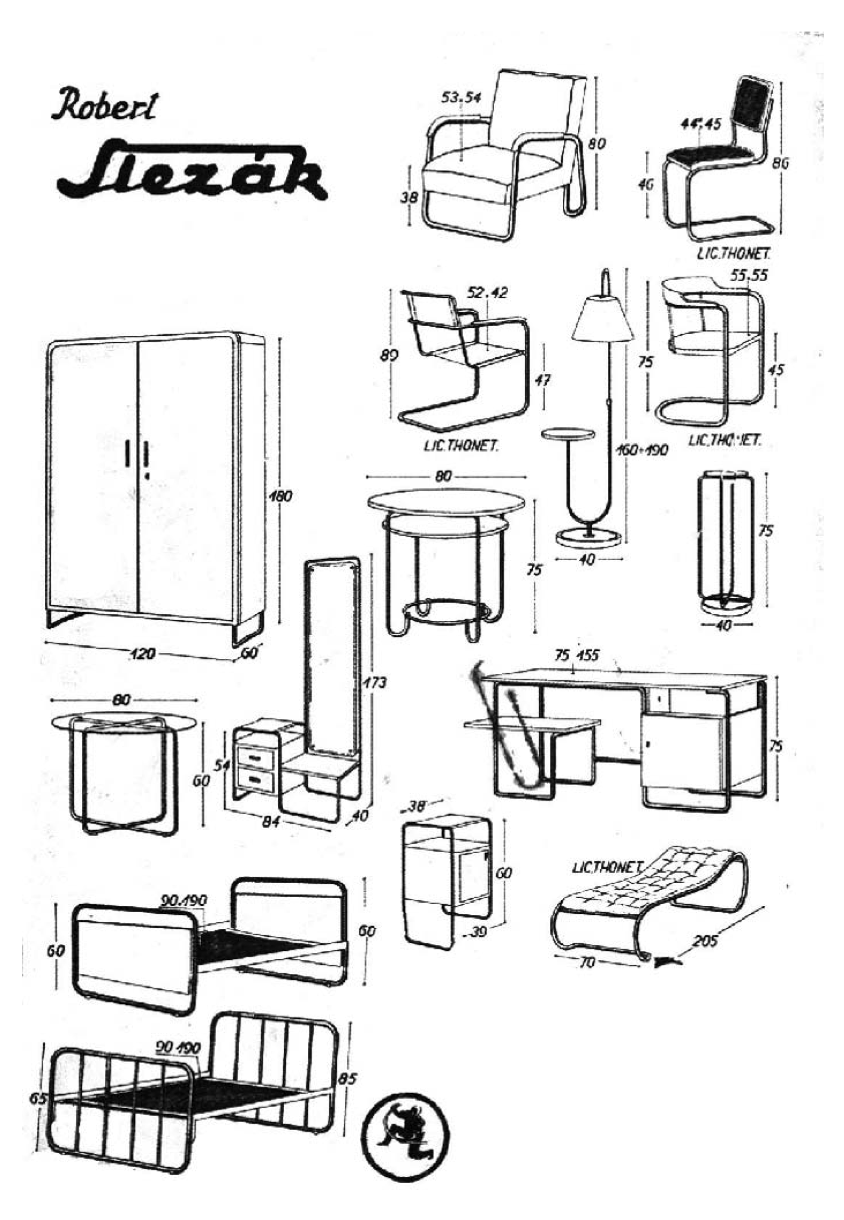
Robert Slezák Furniture Catalogue, 1930s
What distinguished the Slezák company was not only its embrace of modern design, but the quality of its production. The factory invested heavily in new technologies and manufacturing processes, allowing it to produce furniture that could compete with some of the leading European makers of the period. Great attention was paid to durability, surface finishing and precision workmanship, qualities that remain visible in surviving pieces today.
Slezák was also among the first furniture manufacturers in the region to introduce advanced galvanic surface treatment using layers of copper, nickel and chrome. This gave the furniture a depth, resistance and clarity that simpler finishes could not achieve. As demand for modern tubular steel furniture grew, the factory expanded its chroming facilities and developed an increasingly sophisticated production process centred around polished steel, bent metal and carefully engineered construction.
Even today, many surviving pieces still retain the remarkable quality of their original chrome surfaces - a testament to the technical ambition of the factory as much as its design sensibility.
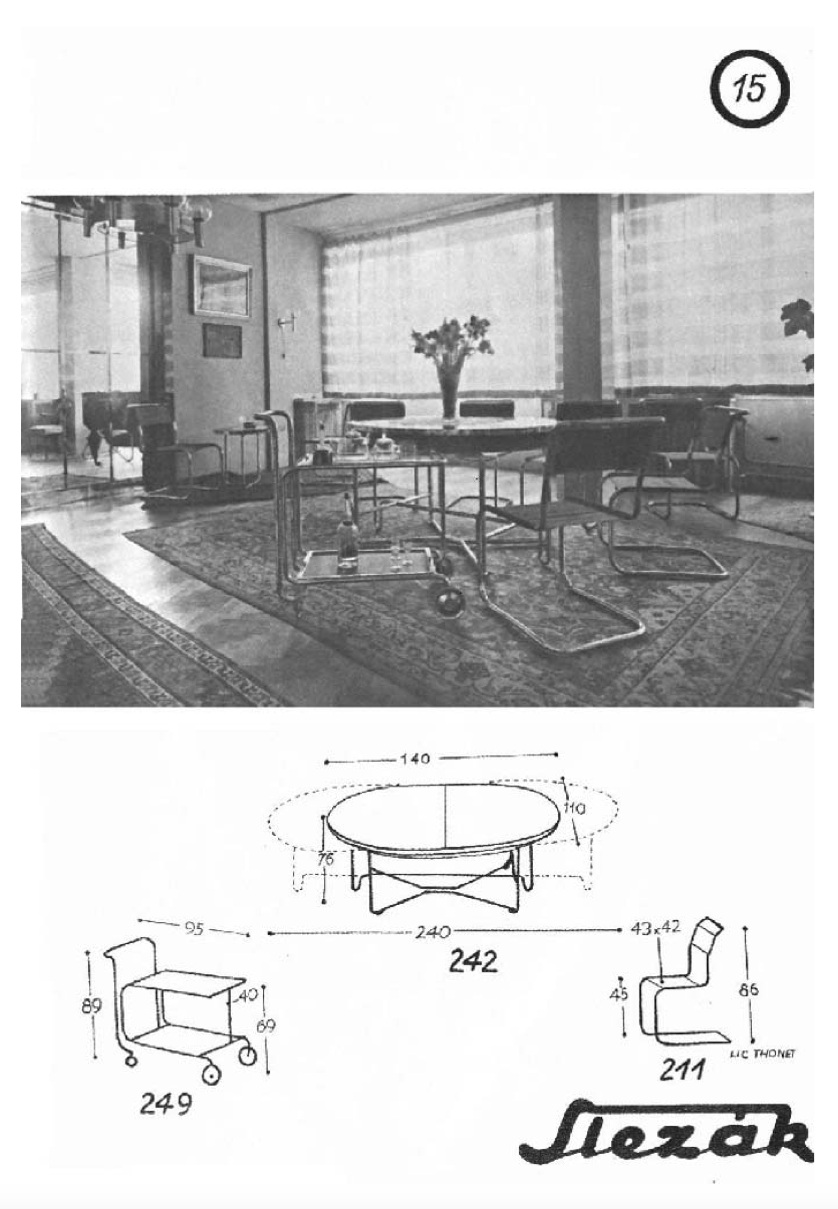
Page from a Robert Slezák Furniture Catalogue, 1930s
As the factory expanded, so did its influence. During the early 1930s, Slezák obtained a licence to produce cantilever seating made from seamless steel tubing, one of the defining furniture typologies of European modernism at the time. The factory simultaneously expanded its production of chromed tubular steel furniture, including chairs, armchairs, tables, shelving and coat stands, reflecting the growing demand for lighter and more functional interiors.
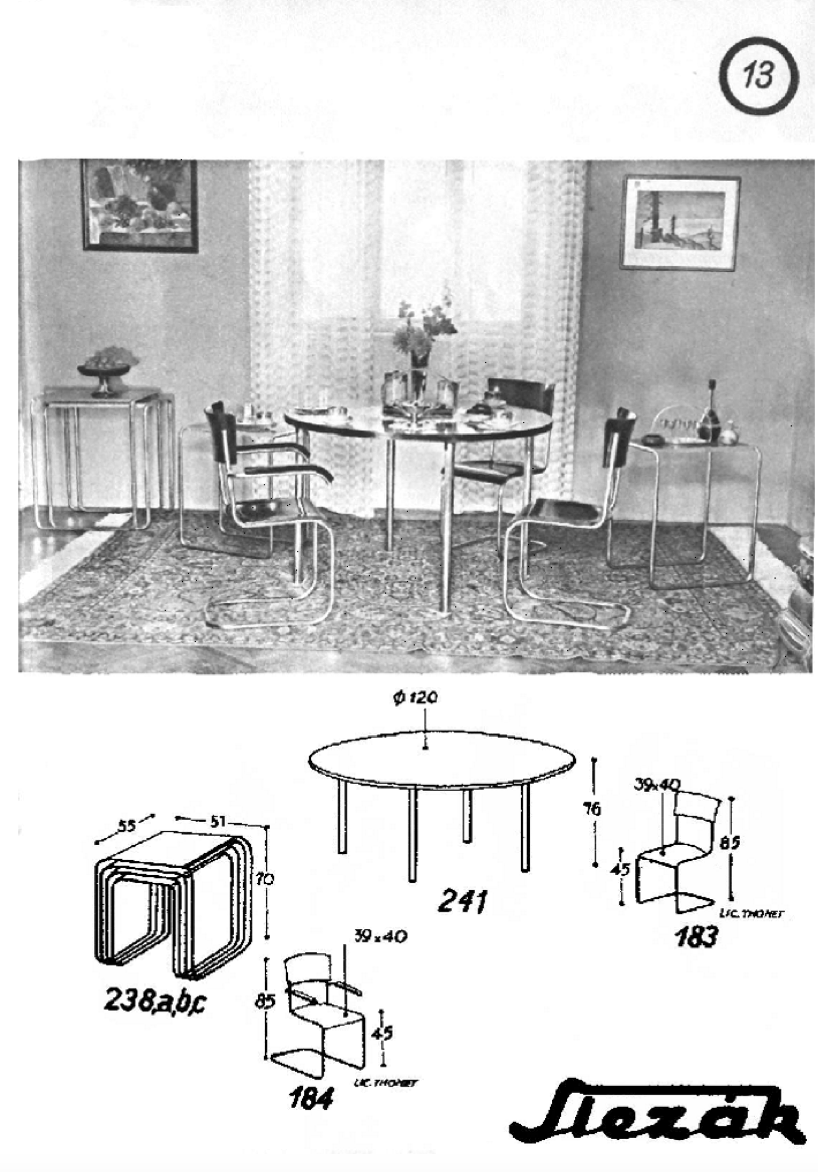
Selections from a Robert Slezák Catalogue
A major turning point came in 1931, when the company secured a large commission from Baťa. Tomáš Baťa selected Slezák’s modern metal furniture to furnish the rapidly expanding network of Baťa shoe stores being opened across Czechoslovakia. The collaboration brought enormous visibility to the factory and positioned Slezák among the most important producers of modern furniture in the country. It also marked the beginning of a longer business relationship between Robert Slezák and Baťa, whose vision of modern living aligned closely with the clean, industrial aesthetic emerging from the Bystřice factory.
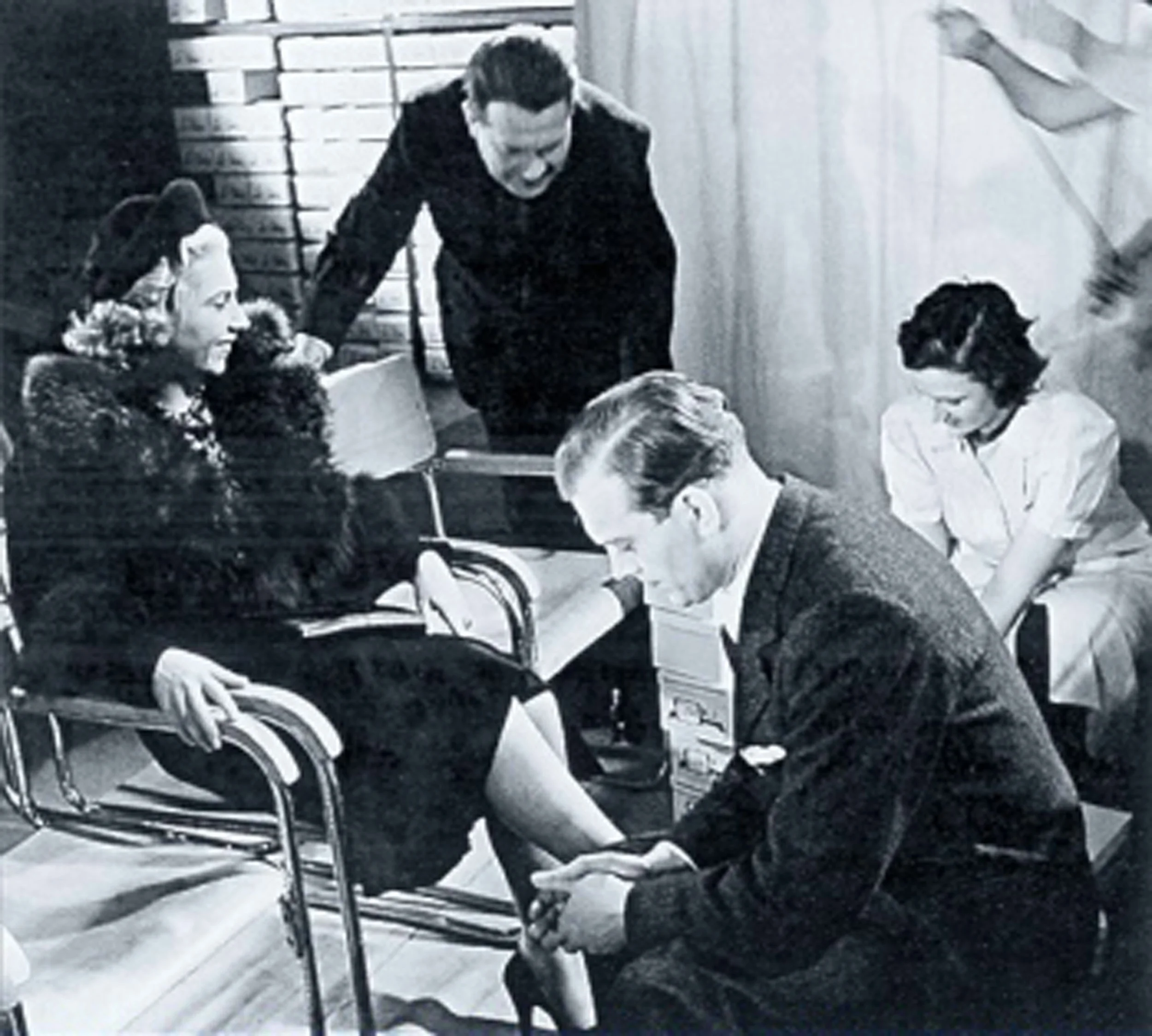
Baťa Advertising Campaign, 1930s
Like many manufacturers of the period, Slezák’s factory existed within a wider European design movement. Some pieces were developed in-house, others were produced under licence or clearly inspired by the work of larger companies and architects already shaping modernist furniture across Europe. Influences from Thonet, the Bauhaus and designers such as Marcel Breuer or Mart Stam can often be traced in the tubular steel forms and chromed structures produced in Bystřice pod Hostýnem.
But this is precisely what makes the story of Slezák important within Czech design history. The factory helped bring the language of European modernism into everyday interiors across Czechoslovakia. Through schools, hospitals, cafés, public institutions and private homes, these ideas became part of ordinary life rather than isolated architectural experiments.
What survives today is not only a record of modernist aesthetics, but also of how industrial production translated ambitious design ideas into practical, widely used objects.
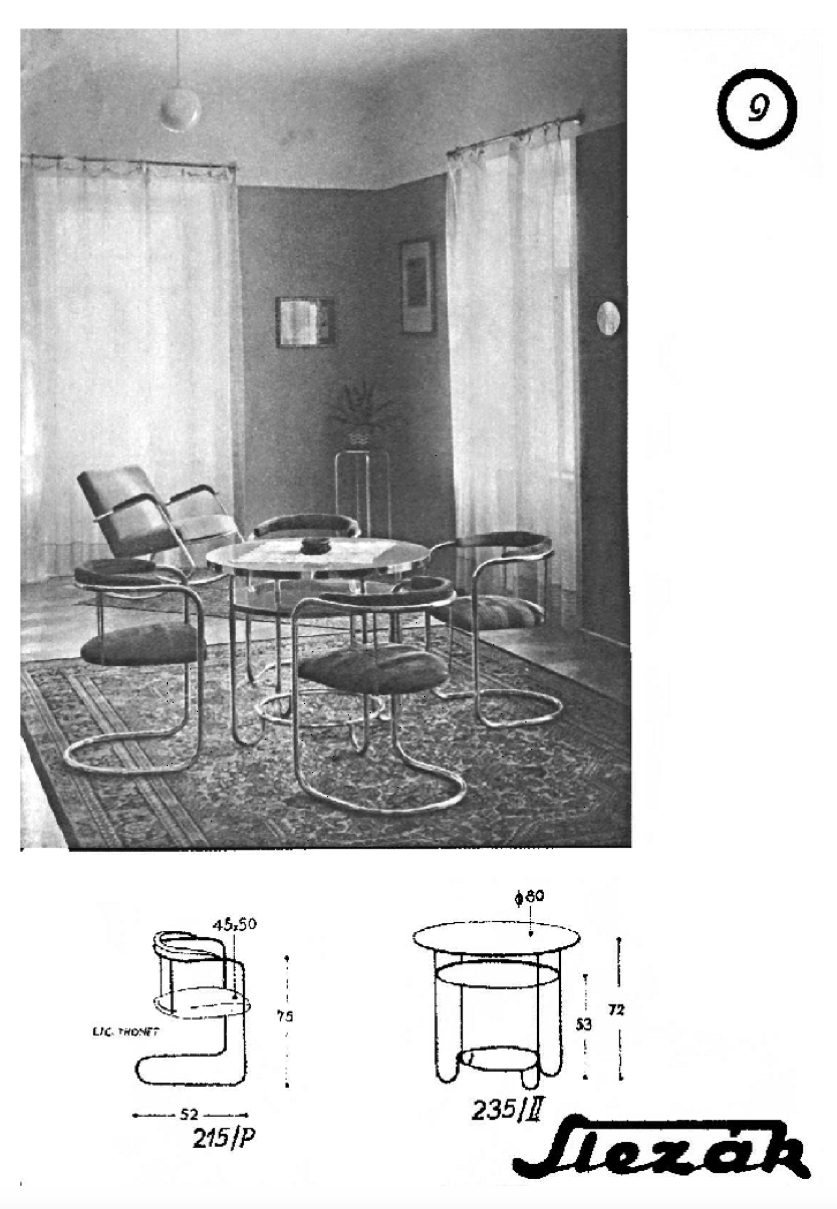
Selections from a Robert Slezák Catalogue
In many ways, the story of Robert Slezák mirrors the story of modern Czech furniture itself: a movement away from ornament and tradition toward clarity, industry and functional beauty.

Furniture Catalogue, c. 1930s
