When two original 1970s stadium benches from the Vodova Sports Hall in Brno came into the By Barnabas collection, it was their provenance that first caught our attention.
Researching the building, however, led us somewhere unexpected - to the remarkable story of its architect, Mojmír Korvas (1923–2004), whose work remains surprisingly little known today. The Vodova Sport hall in Brno was built between 1969 - 1975 and has an interesting history.
Vodova Sports Hall, Brno
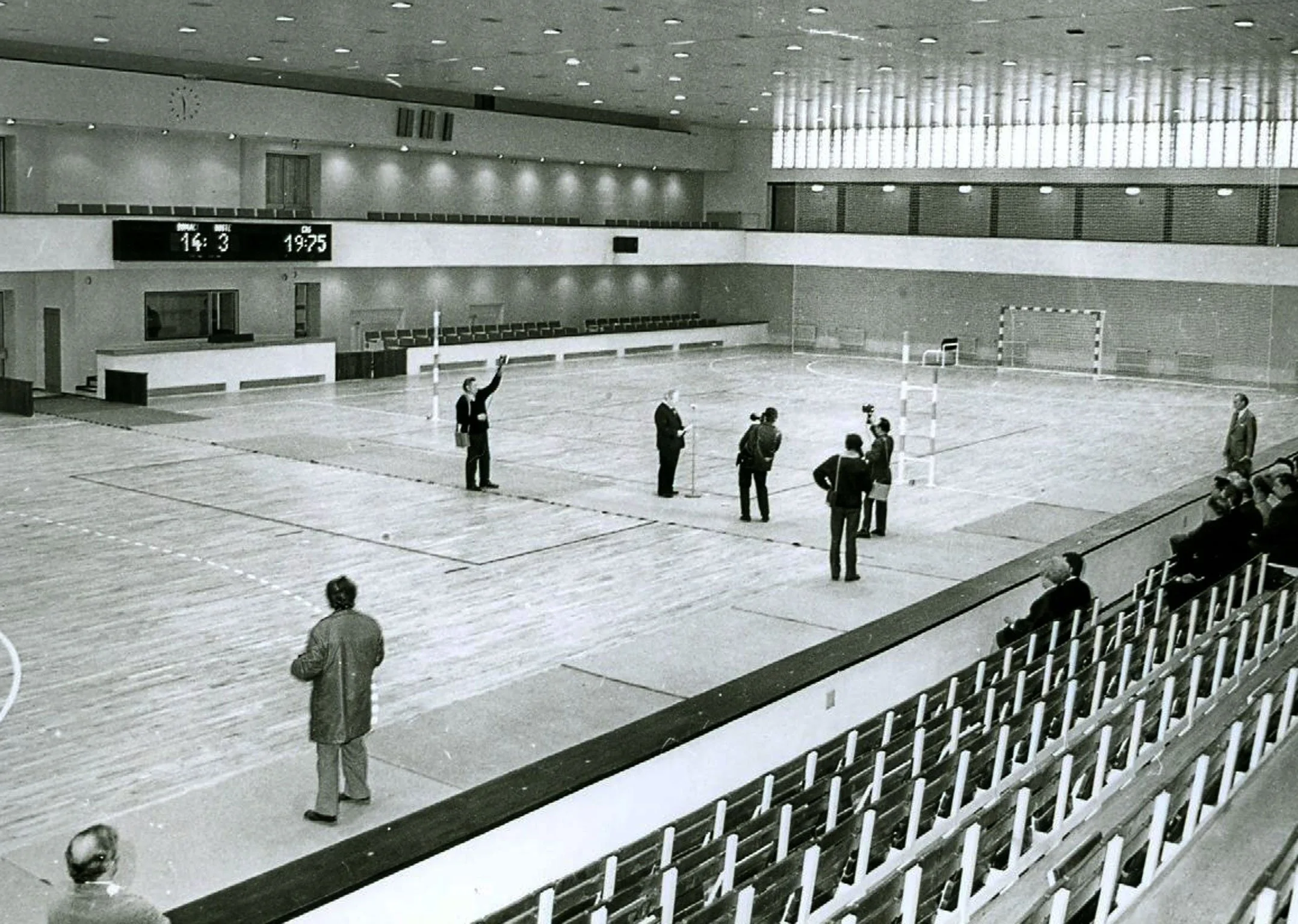
The sports hall on Vodova Street in Brno-Královo Pole was built between 1969 and 1975, based on a design by Mojmír Korvas that was subsequently developed by architect Jan Kruml as Korvas’s career had been profoundly affected by his political persecution. The hall formed part of a larger sports complex and remains in use today.
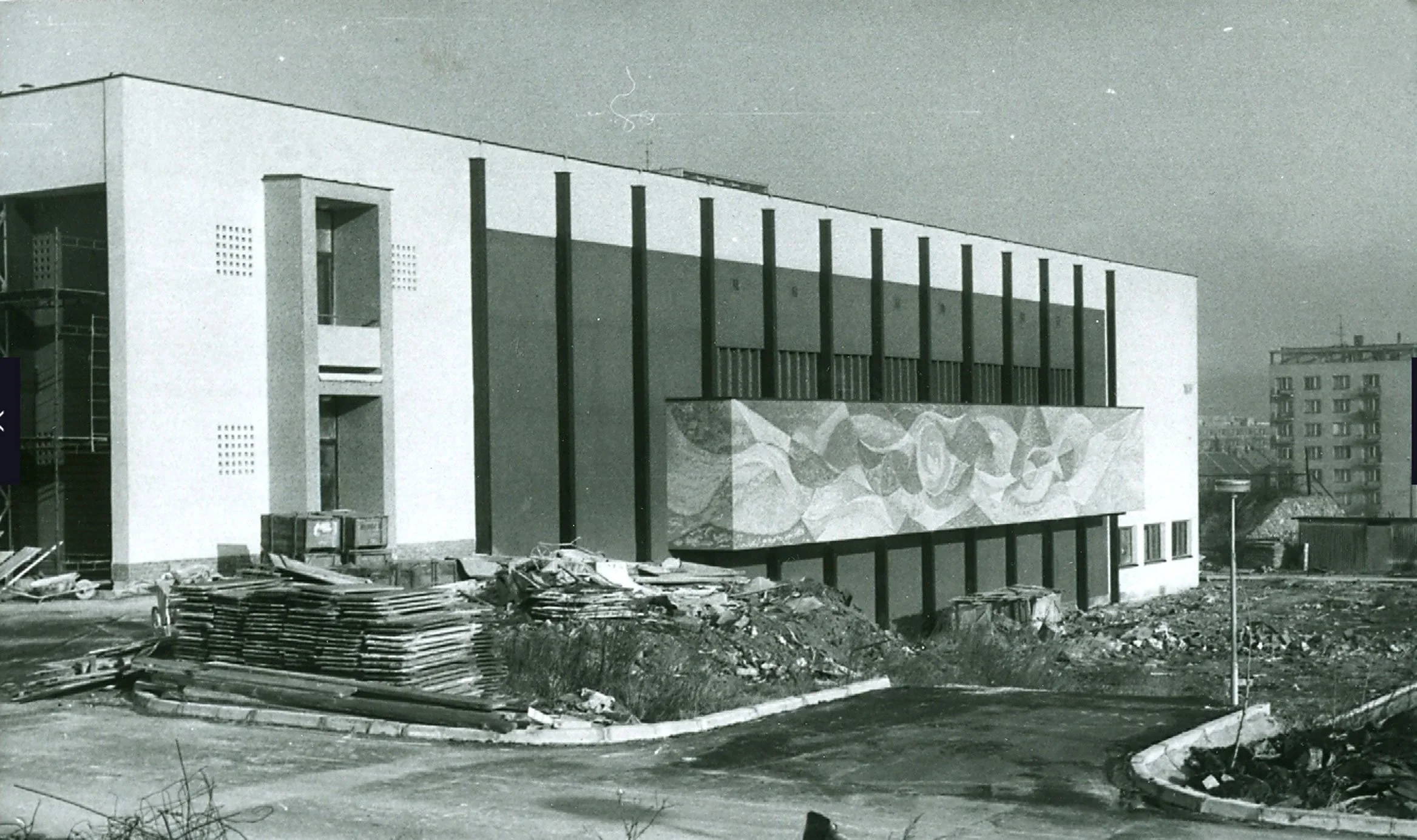
Vodova Sports Hall, Brno, 1976. Image source: Muzeum města Brna / Encyklopedie Brna.
There is an interesting connection between the building and its architect. Before establishing his architectural career, Korvas was himself an accomplished sportsman, representing Czechoslovakia in both handball and basketball.
His life, however, was dramatically interrupted by the political events that followed the Communist takeover of Czechoslovakia.
In 1949, Korvas was convicted of treason because of his anti-communist views and sentenced to five years in prison. He was held in several prisons and labour camps, including Mírov and the uranium-mining region of Jáchymov, before finally being released in November 1954.
After returning to Brno, he was initially able to find work only as a labourer at Královopolská strojírna. He continued designing privately, however, and eventually became the company's in-house architect. It was during this period that some of the most interesting work of his career emerged.
Architecture for Sport
Sport became a recurring theme in Korvas's architecture.
In the late 1960s, he was responsible for the architectural form of the reconstruction of the Brno Velodrome, undertaken in preparation for the 1969 World Cycling Championships. The project included new facilities and the distinctive covered grandstands that still define the character of the velodrome today.
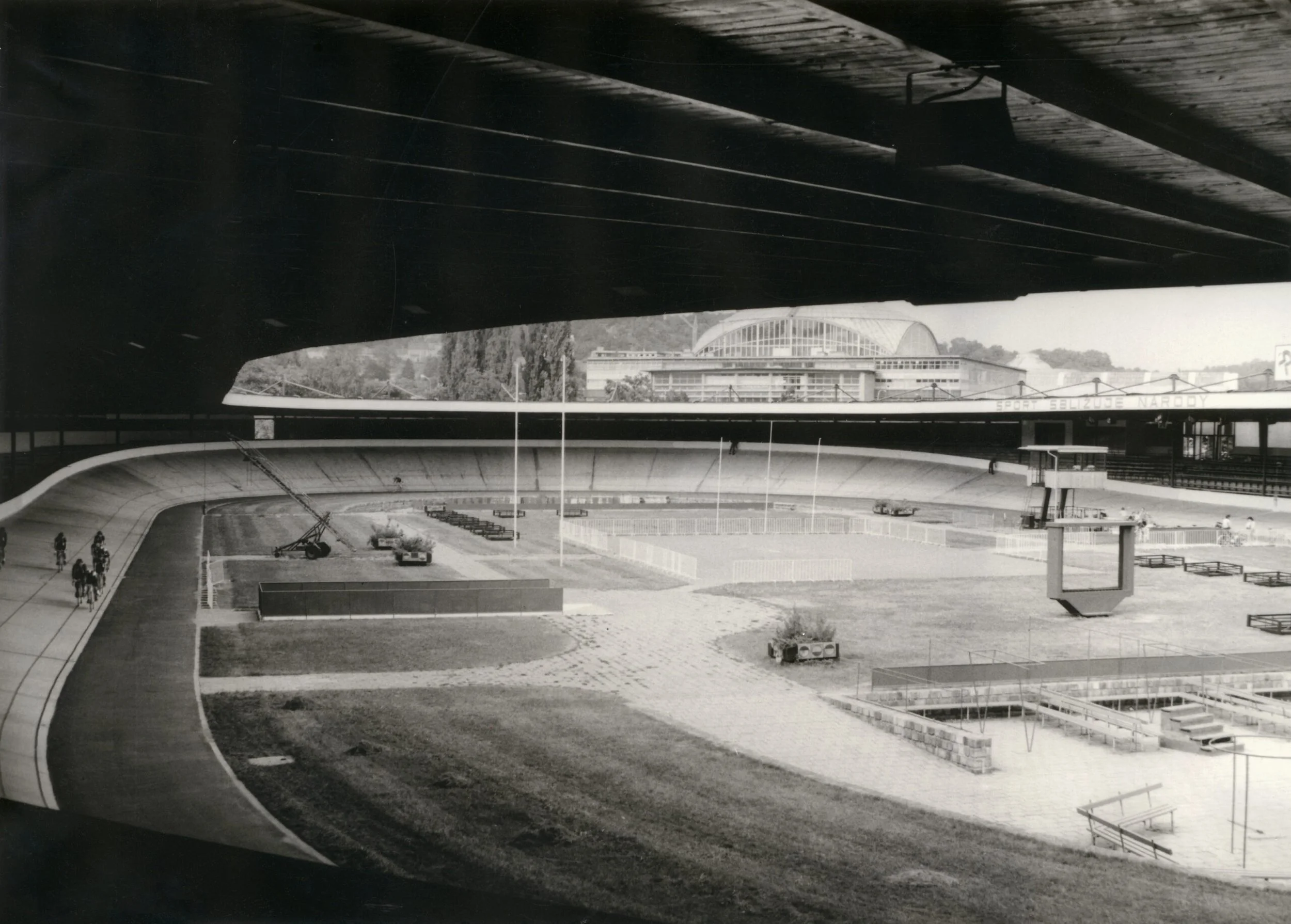
Brno Velodrome. Image source: Brno Architecture Manual (BAM).
Shortly afterwards came his design for the sports complex on Vodova Street.
There is something particularly interesting about this trajectory: a former Czechoslovak national sportsman, whose sporting and architectural career had been interrupted by political imprisonment, eventually returned to designing some of Brno's most distinctive sporting architecture.
Beyond the Stadium
Korvas's work was by no means limited to sports buildings.
In 1957 he designed the wonderfully austere Babí lom Lookout Tower, north of Brno. Built largely by volunteers and completed in 1961, its simple concrete structure remains one of his most recognisable works.
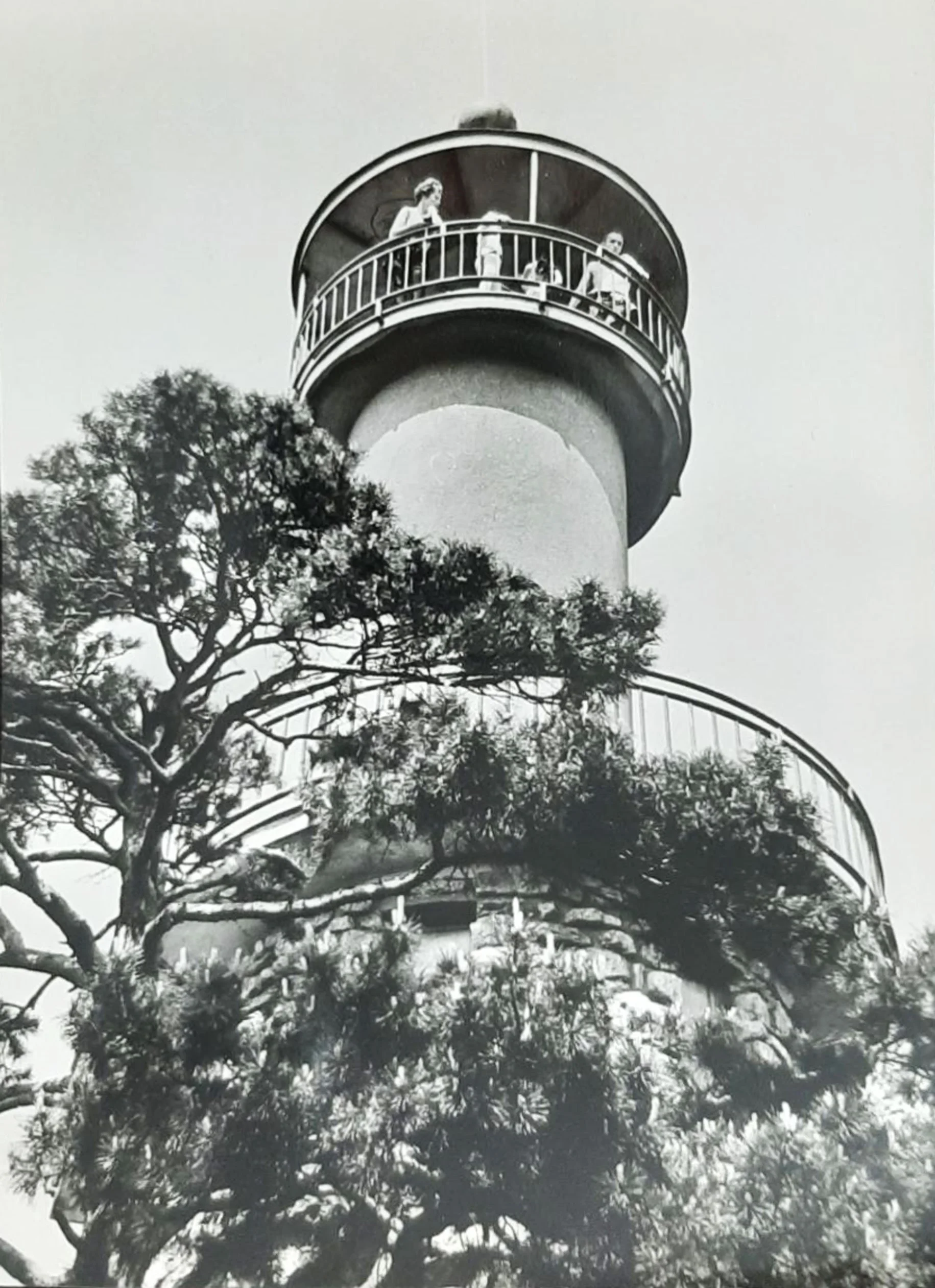
Modernist Lookout Tower at Babí lom. Image source: By Barnabas archive.
He also contributed to the steel structure of the Czechoslovak pavilion for Expo 67 in Montreal, participated in the design of the distinctive SKI Hotel in Nové Město na Moravě, and later designed the Church of St Vojtěch in Otrokovice. The Brno Architecture Manual considers the latter the culmination of his architectural career.
Korvas also had a fascinating personal connection to another chapter of Brno's architectural history. In 1948 he married fashion designer Alena Fuchsová, daughter of Bohuslav Fuchs, one of the most important figures of Czech interwar modernist architecture.
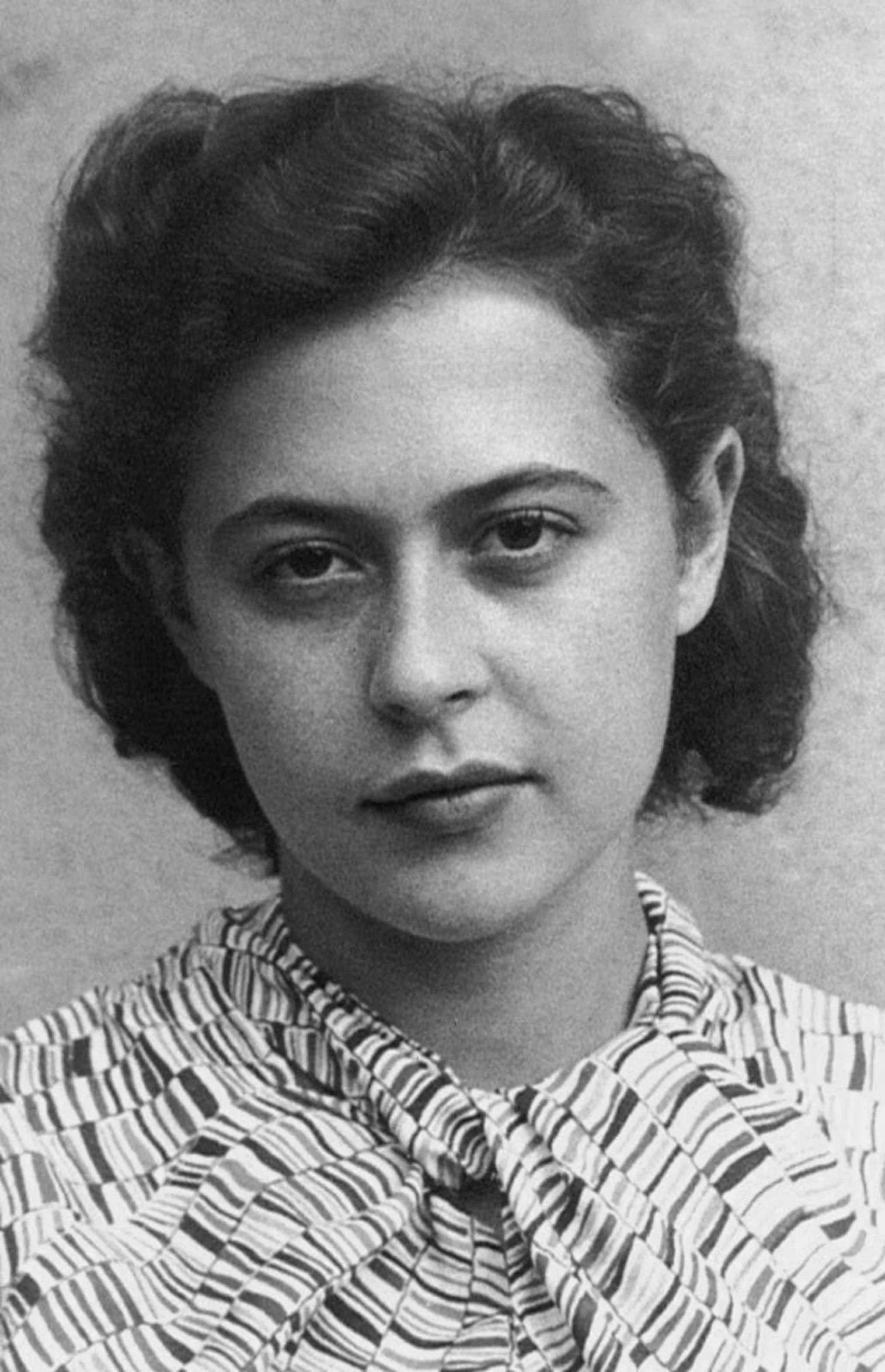
Fashion designer Alena Fuchsová. Image source: Muzeum města Brna / Encyklopedie Brna.
Despite this remarkable life and body of work, Korvas's name remains far less familiar than many of his Brno contemporaries.
The Vodova Benches at By Barnabas
Our own connection to this story began with something much more modest.
We were fortunate to acquire two original stadium benches from the Vodova Sports Hall, removed during refurbishment of the building.
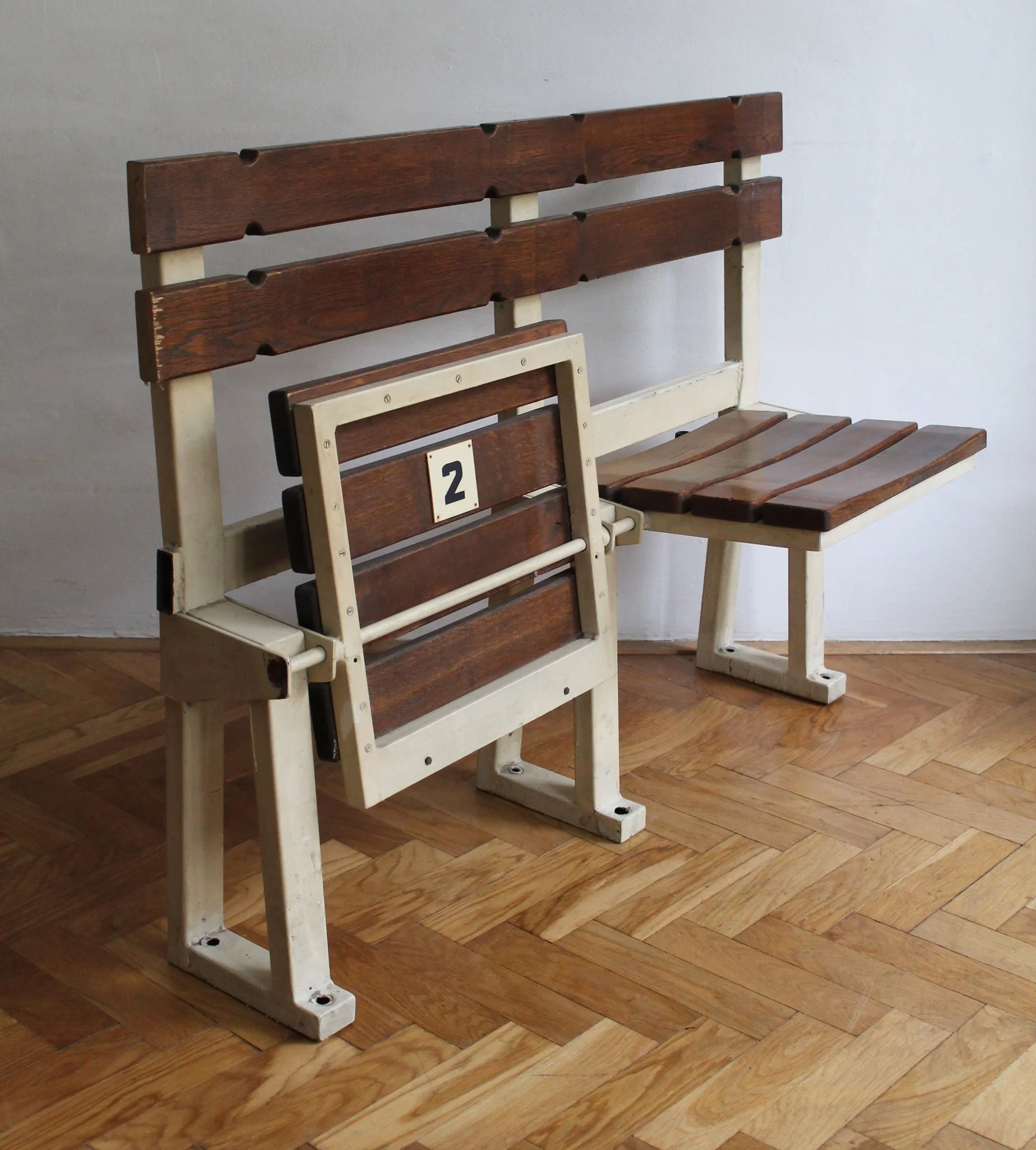
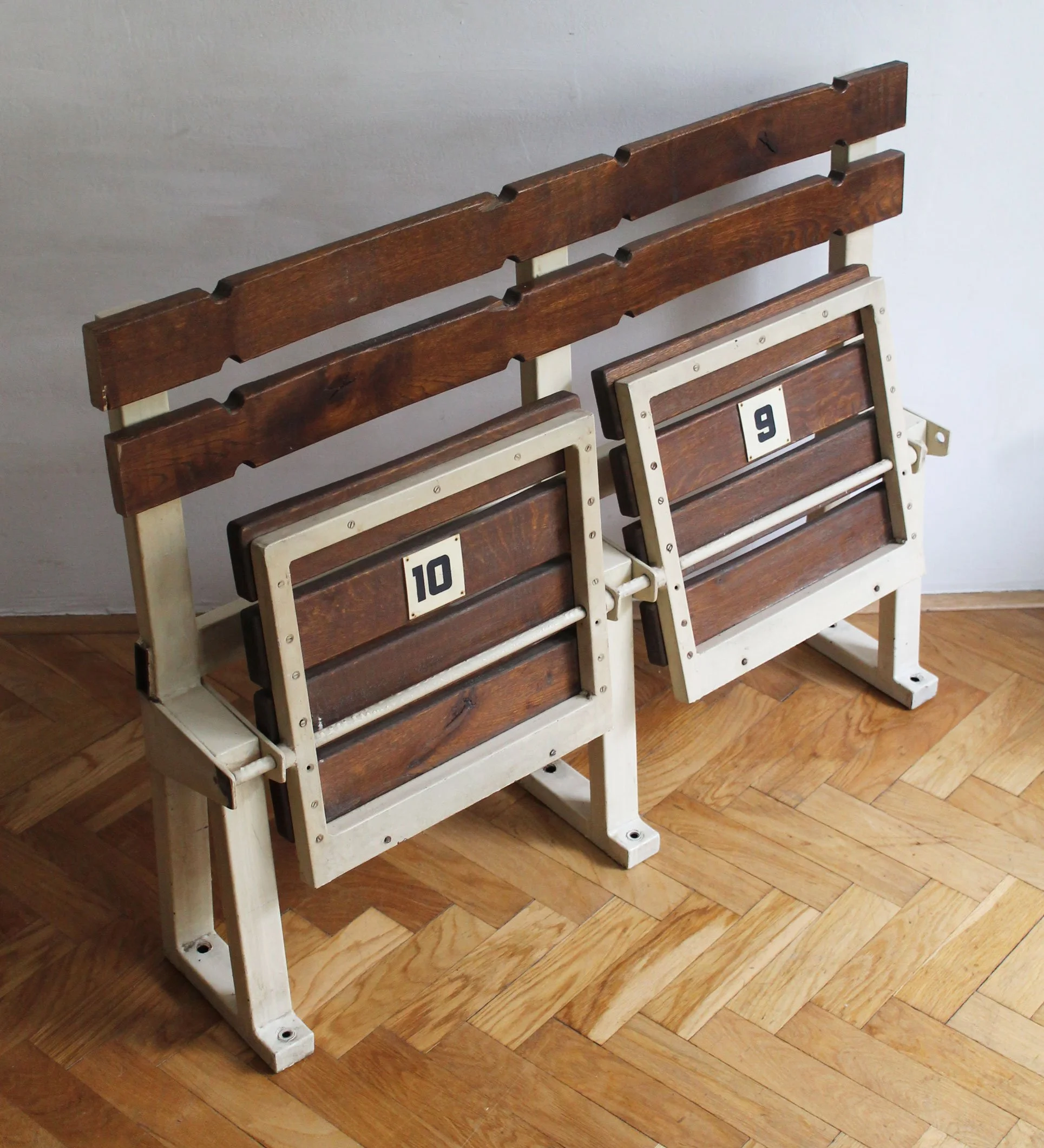
Original 1970s stadium bench from Vodova Sports Hall, Brno. Image source: By Barnabas archive.
The benches were designed and produced in Czechoslovakia during the 1970s. Their construction is straightforward and extremely robust: a substantial cream-painted steel frame supports beech seats and backrests stained dark brown.
The individual seats can be folded from horizontal to vertical position — a simple practical solution for stadium seating.
What makes the design particularly appealing to us are the semicircular cut-outs in the wooden backrests. It is a small detail, but one that visually softens the otherwise heavy construction and gives this piece of institutional furniture an unexpectedly expressive character.
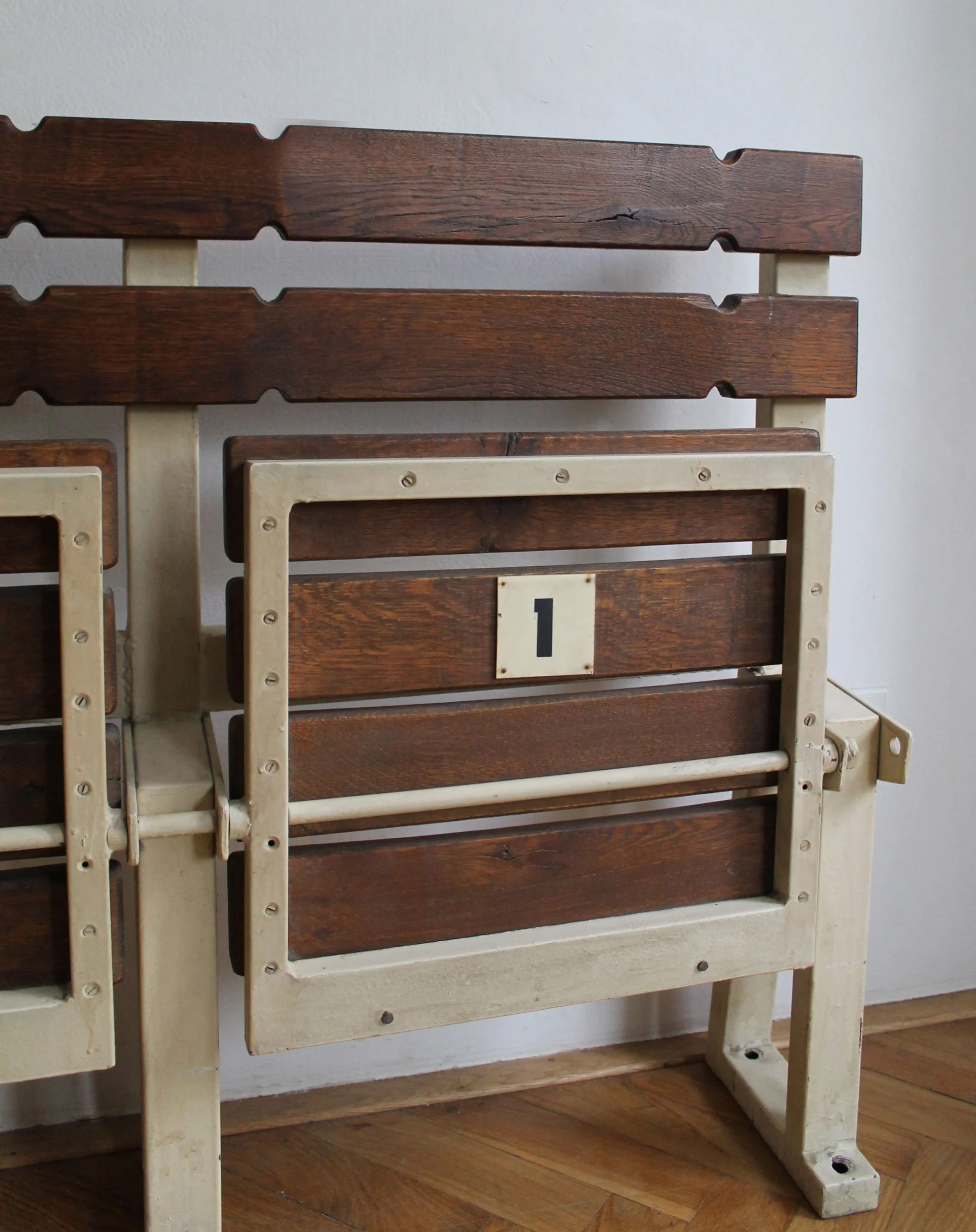
Detail of the solid steel frame and beech seating. Image source: By Barnabas archive.
The bench is made of solid metal frame painted in cream colour with beech seats and backrests stain in dark brown. The seats no. 1 and no. 2 can be easily adjusted from horizontal to vertical position. There are some cut out semicircles on the wooden parts of the backrest that softens the overall robust design of the bench and adds a more expressive form to the whole piece. Discover more about the benches in our archive.
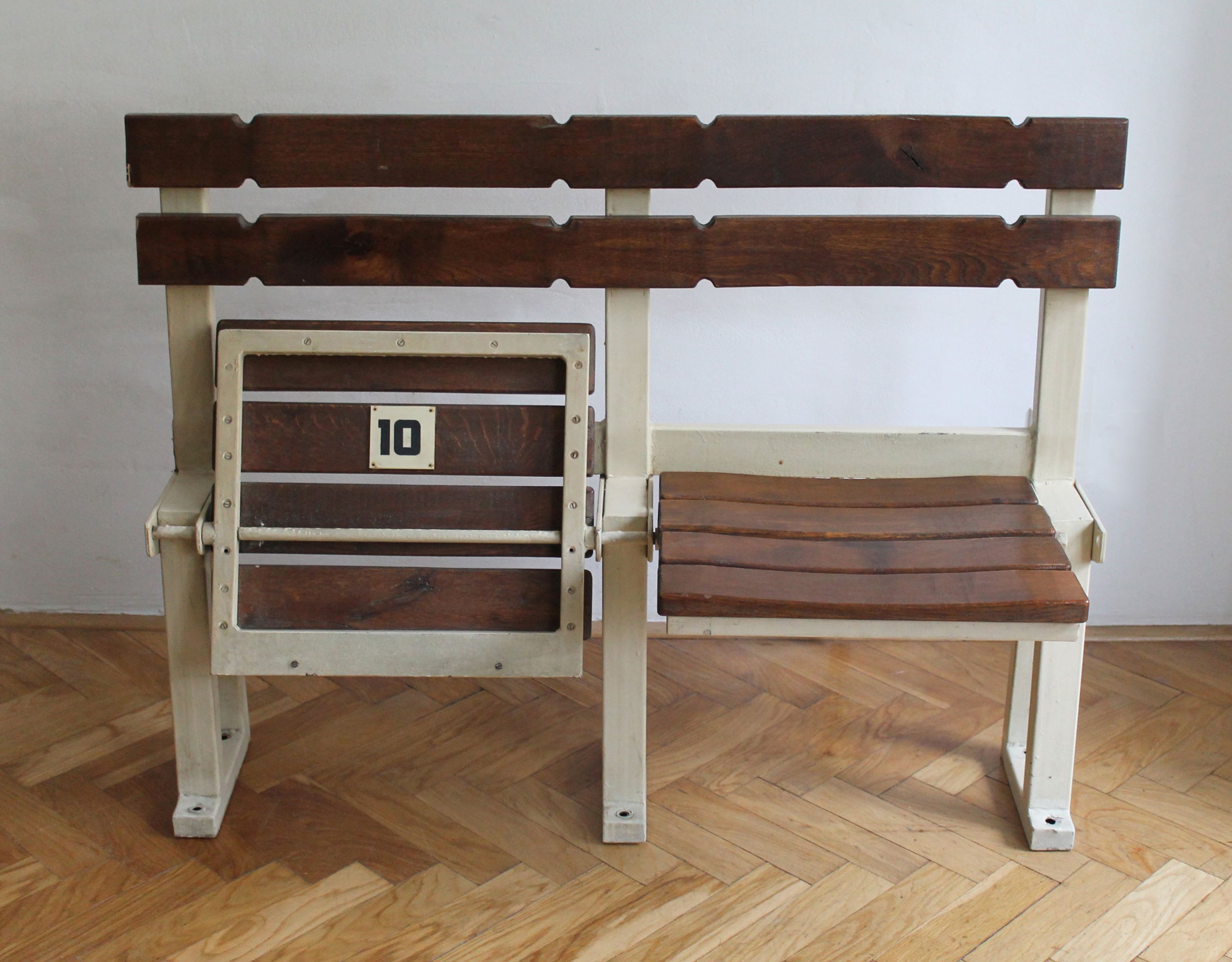
Original 1970s stadium bench, seats no. 10 and 11, from Vodova Sports Hall, Brno. Image source: By Barnabas archive.
We have not found evidence establishing who designed the benches themselves, so we would not attribute them directly to Korvas. What we do know is that they formed part of the interior of the sports hall created from his architectural project.
And perhaps that is what makes them most interesting.
They were never intended to be collectible design objects. They were simply part of the everyday fabric of a public building - made to withstand decades of spectators, sporting events and constant use.
Yet following the history of these two rather modest benches led us from a 1970s sports hall to Babí lom, the Brno Velodrome, Expo 67 and ultimately the remarkable life of Mojmír Korvas.
Sometimes an ordinary piece of furniture is enough to reopen a much larger story.
Written and researched by Martin Dohnálek, By Barnabas.